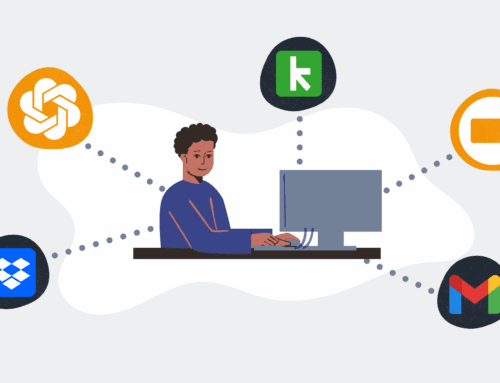
Navigating the Data Deluge: How a Single Source of Truth Eliminates Operational Chaos
In today’s fast-paced business environment, organizations are inundated with data from countless sources: CRM, HRIS, project management tools, marketing platforms, finance software, and more. While each system promises efficiency, the reality for many leaders is a fragmented landscape of information, leading to operational chaos rather than clarity. The dream of data-driven decisions often turns into a nightmare of conflicting reports, manual reconciliation, and missed opportunities. At 4Spot Consulting, we’ve seen firsthand how this “data deluge” can cripple even the most promising businesses, costing them precious time, revenue, and employee morale.
The Hidden Costs of Fragmented Data
The absence of a cohesive data strategy isn’t just an inconvenience; it’s a significant drain on resources. Imagine an HR team manually verifying candidate data across three different platforms, or a sales manager making critical forecasting decisions based on outdated CRM entries. This isn’t just hypothetical; it’s the daily reality for many companies struggling with disconnected systems. Each manual data transfer introduces the risk of human error, each siloed piece of information creates blind spots, and every moment spent reconciling discrepancies is a moment lost from strategic, high-value work.
When Disjointed Systems Undermine Growth
Consider the impact on key business functions. For HR and recruiting, a lack of a single source of truth means inconsistent candidate experiences, compliance risks, and an inability to accurately track talent pipelines. In operations, it translates to inefficient workflows, delayed project deliveries, and a constant scramble to find the “right” version of information. For leadership, it obscures the true performance metrics, making strategic planning a guesswork exercise rather than an informed decision-making process. These challenges are particularly acute for high-growth B2B companies with $5M+ ARR, where scalability demands precision and predictability, not constant firefighting.
Embracing the Single Source of Truth (SSoT) Paradigm
The solution to this fragmentation is the establishment of a Single Source of Truth (SSoT). An SSoT isn’t just a database; it’s a strategic framework that centralizes all critical business data, ensuring that every department operates from the same, accurate, and up-to-date information. It’s about creating a unified ecosystem where data flows seamlessly, eliminating redundancies and fostering a culture of clarity and confidence.
What SSoT Means for Your Operations
Implementing an SSoT means moving beyond basic integrations to a holistic system design. It involves identifying core data points—customer information, employee records, financial transactions, project statuses—and establishing a primary, authoritative system for each. Secondary systems then either pull from or push to this central source, always maintaining consistency. This approach dramatically reduces data inconsistencies, improves data quality, and provides a reliable foundation for analytics and reporting. For example, rather than having candidate data in an ATS, a spreadsheet, and an email system, an SSoT ensures it lives definitively in one place, accessible and accurate across all relevant touchpoints.
The Pillars of Effective SSoT Implementation
Successful SSoT implementation hinges on several key pillars: robust data governance, clear data ownership, and powerful integration tools. Data governance defines who can access, modify, and utilize data, ensuring integrity and security. Data ownership clarifies accountability for the accuracy and completeness of specific data sets. And powerful integration platforms, like Make.com—a tool we frequently leverage—are essential for automating the flow of information between disparate systems, such as your CRM (Keap or HighLevel) and your project management tools or HR platforms. Without these pillars, even the best intentions for data unification can falter.
4Spot Consulting’s Approach: Building Your SSoT with OpsMesh
At 4Spot Consulting, we don’t just talk about SSoT; we build it. Our overarching automation strategy framework, OpsMesh, is designed to create this integrated data ecosystem for our clients. We understand that every business is unique, which is why our process begins with a deep dive into your existing infrastructure and challenges.
From OpsMap to OpsBuild: Your Path to Data Clarity
Our journey to your SSoT starts with the OpsMap™—a strategic audit that uncovers inefficiencies, identifies data silos, and maps out automation opportunities specific to your business. This isn’t a theoretical exercise; it’s a hands-on investigation that pinpoints where your data is fragmented and how it’s costing you. Following the OpsMap, our OpsBuild phase implements the necessary automation and AI systems to consolidate your data. We connect your diverse SaaS systems, establishing the authoritative sources and building the automated workflows that ensure data consistency across your entire organization. We’ve helped clients in HR, recruiting, and business services achieve this, dramatically reducing manual work and increasing data reliability.
Realizing the ROI: Beyond Just Data Management
The benefits of an SSoT extend far beyond mere data organization. It fundamentally transforms how your business operates, leading to measurable ROI that impacts your bottom line and employee experience.
The Tangible Benefits of Centralized Intelligence
With an SSoT, you gain unparalleled operational efficiency. Automated data flows mean less human error and fewer hours spent on manual reconciliation, freeing high-value employees to focus on strategic initiatives. Decision-making becomes faster and more accurate, as leaders have immediate access to reliable, real-time insights. Scalability improves dramatically, as new systems and processes can be integrated into a stable data foundation without creating new silos. Moreover, customer and employee experiences are enhanced due to consistent information and streamlined interactions. We’ve seen clients achieve over 240% production increases and save upwards of $1M annually by eliminating the operational chaos that fragmented data once caused. This isn’t just about saving time; it’s about building a resilient, intelligent, and growth-ready organization.
If you would like to read more, we recommend this article: The OpsMesh Advantage: A Holistic Approach to Business Automation