
Post: Keap API Integration Strategy: Ensure Data Backup & Resilience
Keap API Integration: Onboarding Considerations for Backup Users
In today’s data-driven business landscape, your CRM is more than just a contact list; it’s the pulsating heart of your customer relationships, sales pipeline, and marketing efforts. For businesses leveraging Keap, the power lies not only in its robust features but also in its ability to integrate seamlessly with other critical systems. However, for the often-overlooked “backup user” – those whose operational continuity depends on the integrity and accessibility of Keap data – API integration takes on an entirely new level of strategic importance.
At 4Spot Consulting, we frequently encounter scenarios where organizations focus on transactional integrations, missing the larger picture of data resilience and operational redundancy. Integrating Keap via its API isn’t just about moving data from point A to point B; it’s about architecting a fail-safe, ensuring business continuity, and empowering your team, particularly those responsible for data recovery or verification. This demands a proactive, considered onboarding strategy that goes beyond simple connectivity.
Beyond the Basics: Strategic API Integration for Data Resilience
For backup users – whether they are HR professionals needing swift access to applicant data, recruiting teams needing candidate histories, or operations managers ensuring overall data consistency – the true value of a Keap API integration lies in its ability to guarantee data availability even when the primary system faces an outage or a data incident. A reactive approach, where integration is an afterthought, inevitably leads to vulnerabilities. Our focus is on building systems that don’t just work, but work reliably under pressure, minimizing human error and maximizing scalability.
Understanding Your Data Landscape Before Integration
Before any code is written or connector is configured, a thorough understanding of your Keap data landscape is paramount. What specific data points are critical for backup? Is it contact information, deal stages, custom fields, notes, email history, or perhaps campaign interaction data? Each data type may require a different approach to extraction, transformation, and loading (ETL). Mapping these data points, understanding their dependencies, and defining their criticality is the first step towards a resilient integration. Neglecting this foundational step often results in incomplete backups or, worse, data that cannot be effectively restored or utilized when needed most.
Designing for Redundancy and Recovery
The essence of a “backup user” strategy for Keap API integration is redundancy. Where will your data be backed up? A common approach involves integrating Keap with an external database, cloud storage (like Google Drive or SharePoint), or even another CRM for disaster recovery purposes. The frequency of these backups—daily, hourly, or near real-time—must align with your business’s Recovery Point Objective (RPO). Furthermore, consider incremental versus full backups, and robust mechanisms for verifying data integrity post-transfer. This is where low-code automation platforms like Make.com shine, enabling the orchestration of complex data flows, error handling, and validation routines without extensive custom development.
The Human Element: Training and Protocols for Backup Users
Even the most robust API integration is only as effective as the people who manage and rely on it. For backup users, clear protocols and comprehensive training are non-negotiable. They need to understand not just that data is being backed up, but *how* to access it, *how* to verify its integrity, and *what steps to take* in a recovery scenario. This includes understanding dashboards, reports, or external systems that mirror Keap data. Documentation should be thorough, outlining error handling procedures, common troubleshooting steps, and escalation paths. Empowering your team with this knowledge transforms an integration from a technical tool into a strategic asset for business continuity.
Ensuring Data Consistency and Integrity Post-Integration
Data consistency is a continuous effort, not a one-time setup. As your Keap data evolves, so too must your integration strategy. Mechanisms for ongoing data validation are crucial to prevent data drift between Keap and its backup repositories. This might involve reconciliation reports, automated alerts for discrepancies, or regular audits. A well-designed integration should not only transfer data but also ensure its fidelity, guarding against corruption or loss during transit. Our OpsCare framework emphasizes this ongoing optimization and iteration, ensuring your automation infrastructure remains robust and aligned with evolving business needs.
When to Call in the Experts: Bridging the Operational Gap
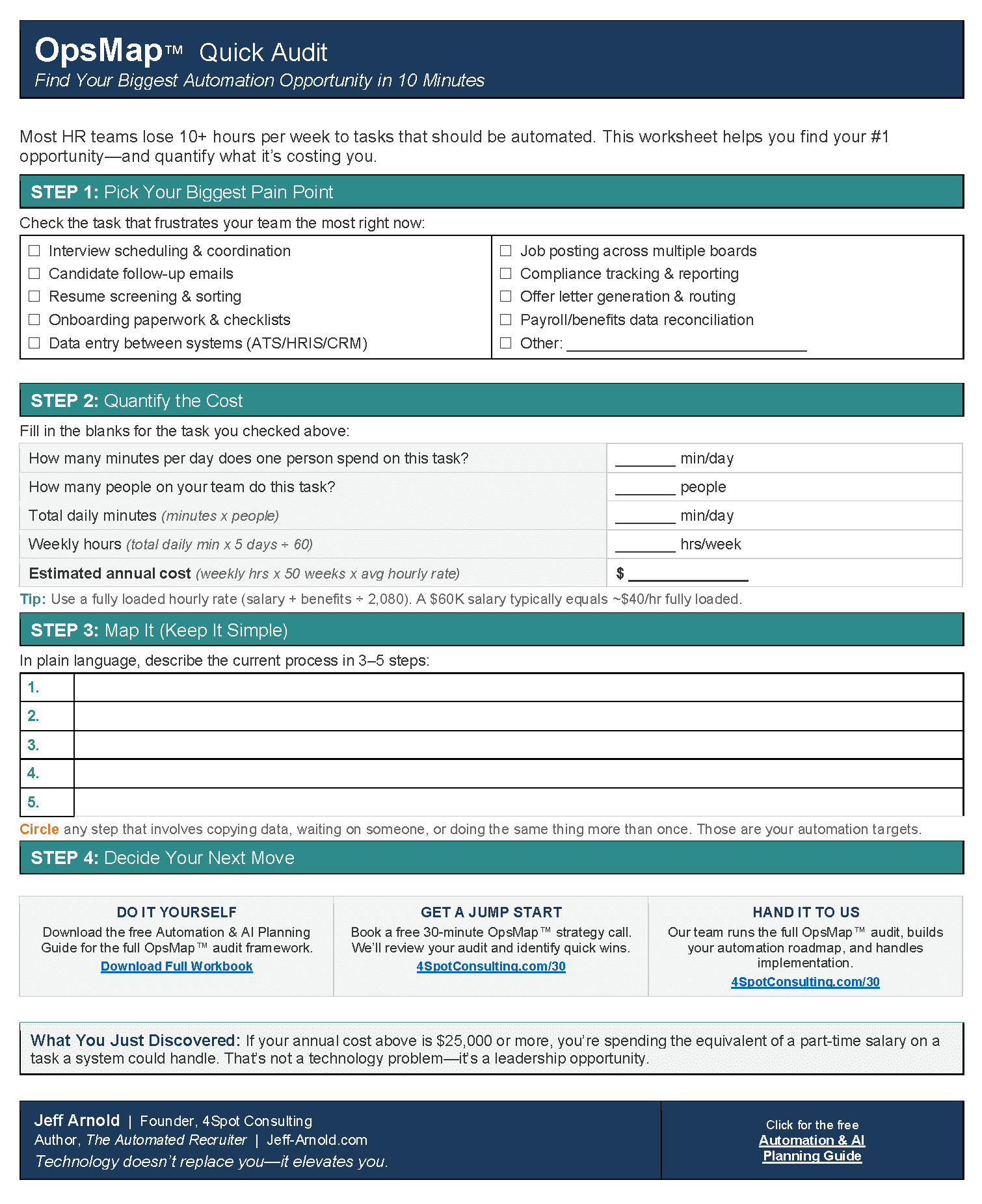
Building a truly resilient Keap API integration, especially one optimized for backup users, demands specialized expertise. It requires not just technical proficiency but a deep understanding of operational workflows, data governance, and business continuity planning. Many businesses attempt to manage these complex integrations internally, only to find themselves grappling with incomplete data, security vulnerabilities, and significant time drains. This is precisely where 4Spot Consulting steps in. Through our OpsMap™ diagnostic, we uncover inefficiencies and identify automation opportunities, leading to an OpsBuild phase where we architect and implement robust, scalable solutions. We don’t just connect systems; we build intelligent operational frameworks that eliminate human error, reduce costs, and increase scalability, ensuring your Keap data—and your business—is always protected.
If you would like to read more, we recommend this article: Keap Data Protection for HR & Recruiting: Your CRM-Backup Guide

RELATED POST