
Post: Master the HighLevel API: Custom Automation & Data Backup
Why Every HighLevel Power User Needs to Master API Basics
HighLevel is an undisputed powerhouse in the world of marketing and sales automation. Its all-in-one platform promises to consolidate tools, streamline operations, and empower businesses to scale. Many users, from agencies to consultants and entrepreneurs, leverage its robust features to manage CRM, email campaigns, funnels, and more. But what happens when you hit the perceived limits of the dashboard? When a unique business process or a specific integration requirement pushes HighLevel’s native UI to its boundaries? This is precisely where understanding the fundamentals of APIs becomes not just an advantage, but a necessity for true HighLevel mastery.
Beyond the Dashboard: The Inherent Limitations of UI-Only Operations
Even the most comprehensive user interfaces, like HighLevel’s, are built with a general use case in mind. They offer a fantastic array of features and integrations that serve the vast majority of users incredibly well. However, no UI can anticipate every conceivable business workflow or integrate perfectly with every niche system on the market. When your business evolves beyond standard operations, or when you encounter a critical third-party tool that HighLevel doesn’t natively support, relying solely on the UI becomes a bottleneck rather than a solution.
The Trap of Manual Workarounds and Bottlenecks
Without API knowledge, the alternative to a missing feature or integration often involves manual workarounds. Picture the scenario: painstakingly exporting data, reformatting it in a spreadsheet, and then importing it into another system. Or perhaps, maintaining critical data in two separate places because a direct sync isn’t possible through the UI alone. These manual processes are not only inefficient but also breeding grounds for human error, data inconsistencies, and significant time drains. For high-value employees, this represents a loss of focus on strategic tasks, eroding the very efficiency and scalability HighLevel aims to deliver.
What APIs Really Are (and Aren’t) for the HighLevel User
The term “API” (Application Programming Interface) often conjures images of complex code and seasoned developers, intimidating many business users. However, for a HighLevel power user, understanding APIs is less about becoming a programmer and more about grasping a powerful concept: how software systems talk to each other. An API is essentially a set of rules and protocols that allows different applications to communicate and exchange data. Think of it as a waiter in a restaurant: you (the application) tell the waiter (the API) what you want from the kitchen (HighLevel’s core database/functionality), and the waiter brings it back to you. It’s the direct, programmatic way to interact with HighLevel’s capabilities, bypassing the visual interface.
Bridging the Integration Gaps
Once you understand this fundamental concept, a world of possibilities opens up. API knowledge enables you to bridge integration gaps that are simply impossible through the standard HighLevel dashboard. Imagine connecting HighLevel with a proprietary HR system to automatically update contact information when an employee’s role changes, or syncing client project data from a specialized project management tool that isn’t a native HighLevel integration. You can pull custom reports that combine HighLevel data with external analytics, automate highly specific lead nurturing sequences based on external triggers, or even create bespoke client portals that leverage HighLevel’s backend data in unique ways.
The Strategic Advantage: Scalability, Customization, and Data Integrity
Mastering API basics translates directly into tangible business advantages: unparalleled scalability, deep customization, and robust data integrity. It means you’re no longer confined to the ‘boxed’ solutions and can truly tailor HighLevel to fit your exact operational footprint and growth ambitions.
Automating the Unautomatable with Make.com and APIs
This is where platforms like Make.com (formerly Integromat) become indispensable for the HighLevel power user. Make.com acts as a visual integration platform that allows you to orchestrate complex workflows by connecting hundreds of applications, including HighLevel, via their APIs—often without writing a single line of code. For instance, you could design a scenario where a new lead captured in a specific external webinar platform automatically creates a contact in HighLevel, assigns them to a specific pipeline, sends a personalized SMS, and then logs the entire event in an external analytics dashboard. This level of granular control and cross-platform automation is typically only achievable by leveraging HighLevel’s API, made accessible and manageable through tools like Make.com.
Protecting Your HighLevel Investment: Data Backup and Beyond
Beyond advanced automation, understanding HighLevel’s API is crucial for establishing true data resilience. While HighLevel has robust internal systems, direct API access is the cornerstone for implementing comprehensive, automated backup solutions for your critical contact, opportunity, and custom field data. Relying solely on platform backups leaves an element of risk, especially if a rapid, granular restore is ever needed. By understanding how to programmatically access and extract your data, you gain the peace of mind that your most valuable asset – your customer data – is truly under your control, offering a crucial layer of protection against unforeseen events or accidental deletions.
4Spot Consulting’s Perspective: Empowering HighLevel Power Users
At 4Spot Consulting, we believe that true mastery of platforms like HighLevel involves looking beyond the surface. It’s about understanding the underlying architecture that empowers custom solutions and bulletproof operations. Mastering API basics isn’t about becoming a developer; it’s about becoming a strategic architect for your business systems. It’s about moving from simply *using* HighLevel to truly *commanding* it, leveraging its full potential to drive efficiency, reduce error, and scale without limits.
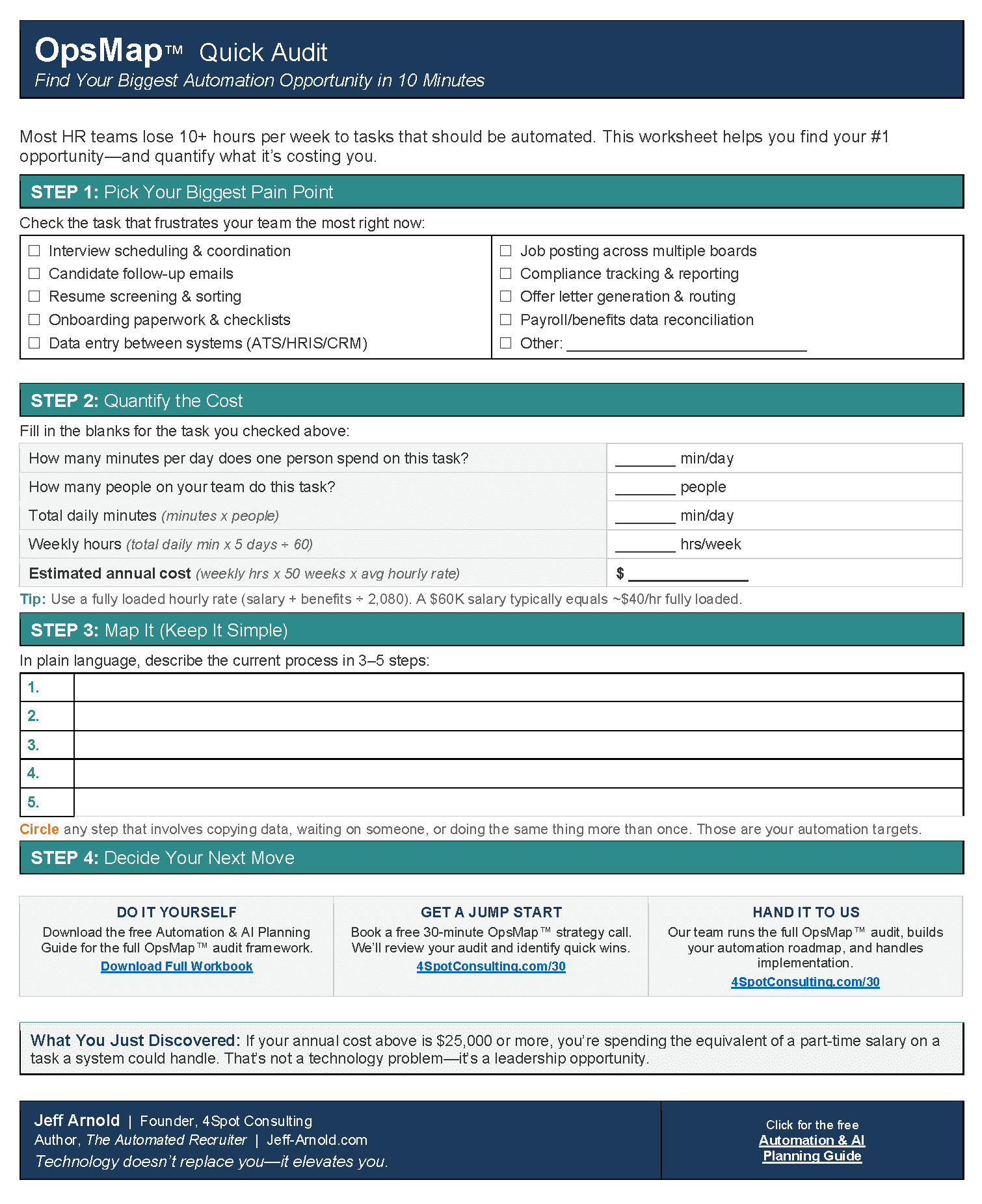
We help HighLevel power users move from frustration over integration gaps and data vulnerabilities to full control and automated resilience. Our OpsMap™ framework is designed to identify where these strategic API integrations can transform your operations, and our OpsBuild™ service turns those possibilities into reality, often using platforms like Make.com to bridge the gap between HighLevel’s UI and its powerful API.
If you would like to read more, we recommend this article: HighLevel & Keap Data Recovery: Automated Backups Beat the API for Instant Restores

RELATED POST