Post: Visual HR Automation: Use Make.com’s Intuitive Canvas
The Future of HR Automation is Visual: Make.com’s Intuitive Canvas
For decades, HR professionals have navigated a labyrinth of paperwork, disparate systems, and manual processes. The promise of automation has always been compelling, yet its implementation often felt like an arcane art, reserved for the technically gifted. But a new era is dawning, one where the power of automation is being democratized, making complex workflows accessible through an intuitive, visual canvas. At the forefront of this revolution for HR is Make.com, offering a paradigm shift in how organizations conceptualize and execute their HR strategies.
At 4Spot Consulting, we’ve witnessed firsthand how a visual approach to automation transforms HR operations from a bottleneck into a strategic advantage. The traditional method of scripting or coding automation required a level of technical expertise often outside the core competencies of HR teams, leading to dependency on IT departments and lengthy development cycles. Make.com fundamentally alters this dynamic, providing a drag-and-drop interface where workflows are built like interconnected LEGO blocks on a digital whiteboard. This isn’t just a minor improvement; it’s a foundational change that impacts scalability, error reduction, and the very agility of an HR department.
Beyond Lists: The Power of Visual Workflow Design in HR
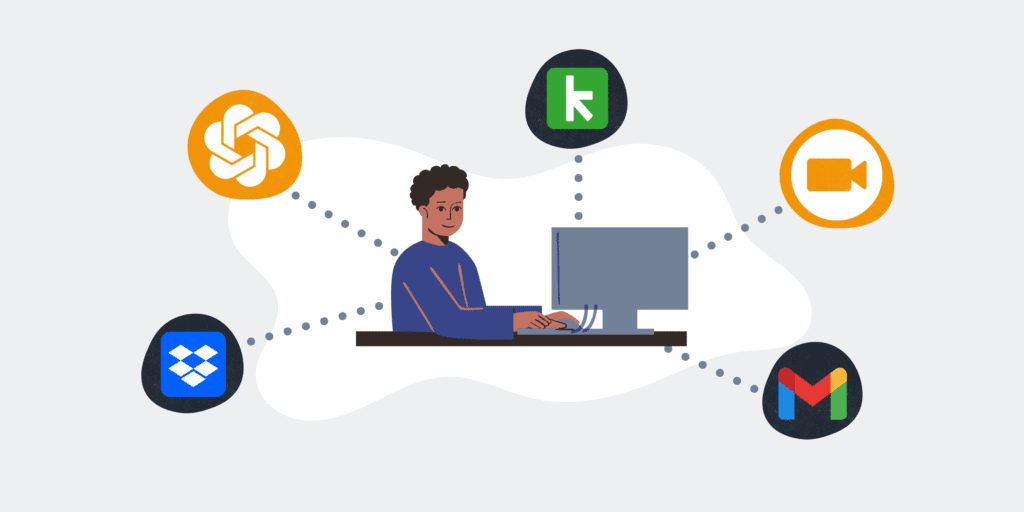
Imagine mapping out your entire recruiting pipeline, from initial applicant submission to offer letter generation and onboarding, not through a series of text-based rules, but as a dynamic flow chart. This is the essence of Make.com’s visual canvas. Each step—receiving an application from a job board, parsing a resume, scheduling an interview, updating a CRM like Keap, or triggering a background check—becomes a distinct module. These modules are then connected by lines, visually representing the data flow and logical progression of tasks. This visual representation isn’t merely aesthetically pleasing; it’s profoundly functional.
Firstly, it enhances comprehension. HR leaders and team members can instantly grasp the entire workflow, identifying potential bottlenecks or areas for optimization at a glance. This clarity fosters collaboration and empowers non-technical staff to contribute meaningfully to process design. Errors, which often hide in the nuanced logic of text-based automations, become glaringly obvious when visually represented. A misplaced connection or a missing step stands out on the canvas, allowing for proactive correction rather than reactive troubleshooting after a process has failed.
Driving Efficiency and Reducing Human Error Through Visual Clarity
The implications for HR are vast. Consider the often-complex dance of onboarding new employees. Multiple departments are involved, various documents need to be signed, access must be granted, and training schedules arranged. Traditionally, this is a multi-step, often manual, and error-prone process. With Make.com’s visual canvas, each of these actions can be orchestrated precisely. An employee’s start date can trigger a sequence of automated tasks: sending a welcome email, provisioning software access, notifying IT, and assigning initial training modules. If any step fails, the visual canvas quickly points to the exact point of failure, enabling rapid resolution.
Furthermore, the visual nature of Make.com encourages a more holistic view of HR processes. Instead of isolated automations, teams begin to see how different functions interconnect. A successful recruitment automation can seamlessly flow into an efficient onboarding automation, which then feeds into performance management systems. This integrated approach, which we champion through our OpsMesh™ framework at 4Spot Consulting, breaks down silos and ensures data consistency across the entire employee lifecycle. The result is not just individual task automation, but a fully automated, synchronized HR ecosystem.
Empowering HR Teams with Self-Service Automation
Perhaps one of the most significant benefits of Make.com’s visual canvas is the empowerment it offers to HR teams. No longer are they solely consumers of technology built by others; they become designers and engineers of their own solutions. With a relatively short learning curve, HR professionals can start building, testing, and deploying their own automations. This capability reduces dependency on overstretched IT departments and accelerates the pace of innovation within HR. When a new compliance requirement emerges, or a new recruiting channel is adopted, the HR team can quickly adapt their existing workflows or build new ones without external intervention.
This self-service automation fosters a culture of continuous improvement. As HR teams gain proficiency with the visual canvas, they begin to identify new opportunities for automation that might have been overlooked by those less familiar with the day-to-day operational nuances. This leads to a virtuous cycle where efficiency begets more efficiency, freeing up HR professionals from repetitive administrative tasks to focus on strategic initiatives, employee engagement, and talent development – the true value-add of human resources.
The Strategic Advantage: From Reactive to Proactive HR
Ultimately, the visual automation provided by Make.com is more than just a tool; it’s a strategic enabler. It allows HR to move from a reactive, administrative function to a proactive, strategic partner within the organization. By automating the mundane, HR leaders gain valuable time and data-driven insights to focus on talent acquisition strategies, employee experience enhancements, and organizational development. The ability to quickly iterate and optimize processes through a clear, visual interface means HR can respond to changing business needs and market dynamics with unprecedented agility.
At 4Spot Consulting, we believe that the future of HR is fundamentally visual, intuitive, and integrated. Make.com’s canvas isn’t just automating tasks; it’s making automation itself a clear, understandable, and manageable process for HR professionals. It’s about giving HR the tools to build their own destiny, transforming their department into a powerhouse of efficiency and strategic impact.
If you would like to read more, we recommend this article: The Definitive Guide: Migrating HR & Recruiting from Zapier to AI-Powered Make.com Workflows

RELATED POST