Post: Make.com vs Custom Code: API Integration Strategy
Make.com vs. Custom Code: Navigating the API Integration Crossroads
In today’s fast-paced digital landscape, seamless API integration is no longer a luxury—it’s a foundational requirement for any business aiming for efficiency, scalability, and competitive edge. Yet, the path to connecting disparate systems, automating workflows, and truly making your tech stack sing often presents a critical dilemma: do you leverage agile, low-code platforms like Make.com, or do you invest in bespoke, custom code development? At 4Spot Consulting, we’ve guided countless organizations through this very decision, recognizing that the optimal choice isn’t about one being inherently “better” than the other, but rather about aligning the solution with your specific strategic objectives and operational realities.
Make.com: The Agile Automation Accelerator for Rapid Integration
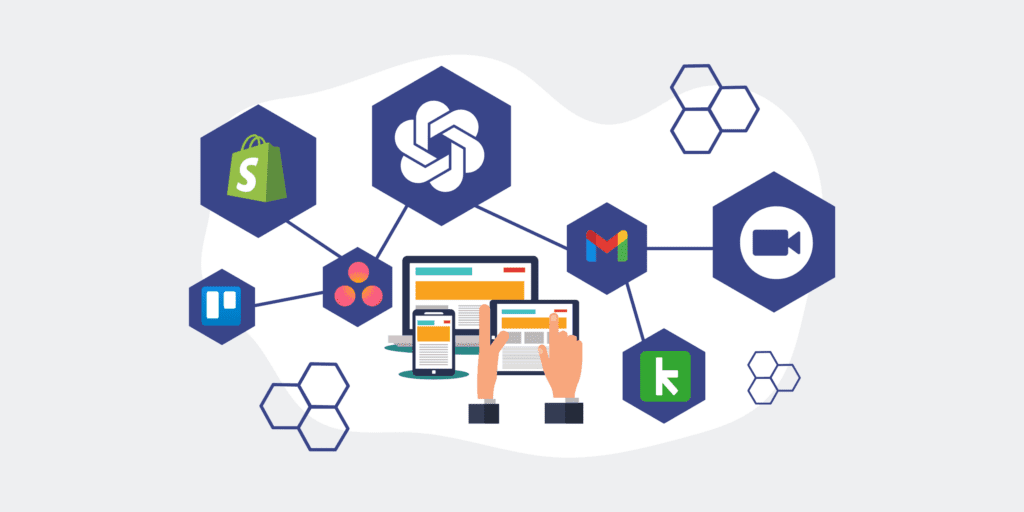
Make.com, formerly Integromat, has emerged as a powerful contender in the automation space, empowering businesses to connect applications and automate workflows without writing a single line of code. Its visual builder, replete with drag-and-drop functionality, allows for the intuitive construction of complex integration scenarios. This platform thrives on its ability to rapidly prototype, deploy, and iterate, making it an invaluable tool for organizations seeking quick wins and scalable, repeatable processes.
The Distinct Advantages of Make.com
The primary appeal of Make.com lies in its speed of implementation and accessibility. Business users and operations teams, often without deep technical expertise, can orchestrate sophisticated data flows and task automation. This democratization of integration means faster time-to-market for new automations, reduced reliance on scarce developer resources, and a lower total cost of ownership for many standard integration needs. Its vast library of pre-built connectors for hundreds of popular SaaS applications drastically simplifies the connection process, allowing for complex multi-app workflows to be spun up in hours or days, not weeks or months. Furthermore, Make.com’s robust error handling and monitoring capabilities provide a degree of operational oversight that can be challenging and costly to build into custom solutions.
When Make.com Shines Brightest
Consider Make.com when your integration needs involve common SaaS applications (CRMs like Keap, HRIS platforms, marketing tools, accounting software), require rapid deployment, or when your internal team possesses strong logical thinking but lacks extensive coding skills. It excels in scenarios like automating lead routing, syncing data between a recruitment system and a CRM, generating dynamic documents (PandaDoc) from form submissions, or creating complex conditional workflows that respond to various business events. For high-growth B2B companies seeking to eliminate human error, reduce operational costs, and increase scalability without the burden of heavy development cycles, Make.com is often the strategic choice. It’s perfect for streamlining processes where the data structures are relatively well-defined and the integrations are point-to-point or hub-and-spoke with established APIs.
Custom Code: Unfettered Freedom, Unbounded Complexity
On the other end of the spectrum lies custom code. This approach involves building integrations from the ground up using programming languages like Python, Node.js, or Java. Custom code offers unparalleled flexibility and control, allowing developers to craft precisely tailored solutions that meet the most unique and intricate business requirements. It’s the choice for organizations facing highly specialized integration challenges that fall outside the capabilities of off-the-shelf platforms.
The Strategic Imperatives for Custom Development
The core strength of custom code is its ability to handle edge cases, proprietary systems, and highly complex data transformations that no pre-built connector could ever anticipate. When security requirements are extraordinarily stringent, performance demands are at the absolute peak, or the integration needs to deeply embed into existing legacy infrastructure that lacks modern APIs, custom code provides the necessary granular control. It offers limitless extensibility, allowing for future modifications and expansions without being constrained by a platform’s inherent limitations. For businesses building a highly differentiated product or service where the integration itself is a core competitive advantage, custom code is often the only viable path.
When Custom Code Becomes Essential
Opt for custom code when you’re integrating with legacy systems lacking robust APIs, dealing with extremely high-volume, low-latency data streams, or when your integration logic involves proprietary algorithms and complex business rules that would be cumbersome or impossible to implement in a low-code environment. It’s also the preferred route for developing unique, internal microservices or when the integration itself is part of a core product offering rather than an operational automation. Companies that have dedicated in-house development teams and substantial budgets for long-term maintenance and evolution typically find custom code a worthwhile investment for these specialized scenarios.
The Strategic Crossroads: Making Your Choice Wisely
Deciding between Make.com and custom code isn’t a binary choice between good and bad; it’s a strategic decision based on your unique context. We often find that a hybrid approach—leveraging Make.com for standard, high-value operational automations and reserving custom code for deeply specialized or mission-critical integrations—offers the best of both worlds. The key is to thoroughly assess your integration needs:
- **Complexity:** How unique are your data structures and transformation requirements?
- **Scalability:** What are your anticipated transaction volumes and growth projections?
- **Cost & Time:** What are your budget and timeline constraints for development and ongoing maintenance?
- **Internal Resources:** What is the technical proficiency of your team to build and maintain the solution?
- **Security & Compliance:** Are there specific industry regulations or security protocols that dictate the solution architecture?
4Spot Consulting’s Perspective: Architecting for Outcome
At 4Spot Consulting, our OpsMesh framework begins with understanding these critical questions. We don’t just build; we strategize. Our OpsMap™ diagnostic identifies the inefficiencies and opportunities within your organization, guiding you to the most appropriate and ROI-driven integration solution. Whether it’s leveraging Make.com to connect dozens of SaaS systems for an automated recruiting pipeline, or advising on custom API development for unique data challenges, our focus is always on eliminating bottlenecks and driving profitable outcomes. We bridge the gap between business need and technical execution, ensuring that your API integrations are not just functional, but truly transformative, saving you 25% of your day and propelling your business forward.
If you would like to read more, we recommend this article: The Automated Recruiter: Architecting Strategic Talent with Make.com & API Integration


RELATED POST