Post: Make.com API Integration: Low-Code Automation for Business Users
Low-Code Revolution: How Make.com Empowers Business Users with API Access
In today’s fast-paced business environment, the ability to connect disparate systems and automate workflows is no longer a luxury but a necessity. Yet, for many years, this power was largely confined to IT departments and specialized developers. Business users, armed with an understanding of their operational needs but lacking coding expertise, often found themselves reliant on technical teams for even the simplest integrations. This dependency created bottlenecks, slowed innovation, and ultimately hindered agile business growth. Enter the low-code revolution, spearheaded by platforms like Make.com, which is fundamentally changing how businesses interact with their own data and external services.
At 4Spot Consulting, we’ve seen firsthand how this shift empowers organizations to reclaim their time and drive efficiency. Our clients, often leaders in HR, recruiting, and operations, face constant pressure to streamline processes, eliminate human error, and achieve scalability without ballooning their tech budgets or development queues. Make.com emerges as a critical tool in this strategy, democratizing API access and putting powerful integration capabilities directly into the hands of those who understand the business impact best: the business users themselves.
The API Paradox: Power Confined
APIs (Application Programming Interfaces) are the digital bridges that allow different software applications to communicate with each other. They are the backbone of modern digital operations, enabling everything from real-time data synchronization between a CRM and an ERP, to automating candidate outreach from an ATS to a communication platform. Traditionally, leveraging APIs required deep technical knowledge—understanding endpoints, authentication protocols, data structures, and error handling. This created a significant barrier for business users, who often conceptualized the “what” of an integration but couldn’t execute the “how.”
The result was a paradox: immense potential for automation and efficiency locked behind a technical gate. Projects would stall, brilliant ideas for cross-system workflows remained just ideas, and businesses continued to operate with manual data transfers, copy-pasting, and information silos. This is precisely the kind of low-value, high-effort work that high-value employees should not be doing, wasting precious time that could be spent on strategic initiatives.
Make.com: Bridging the Gap for the Business User
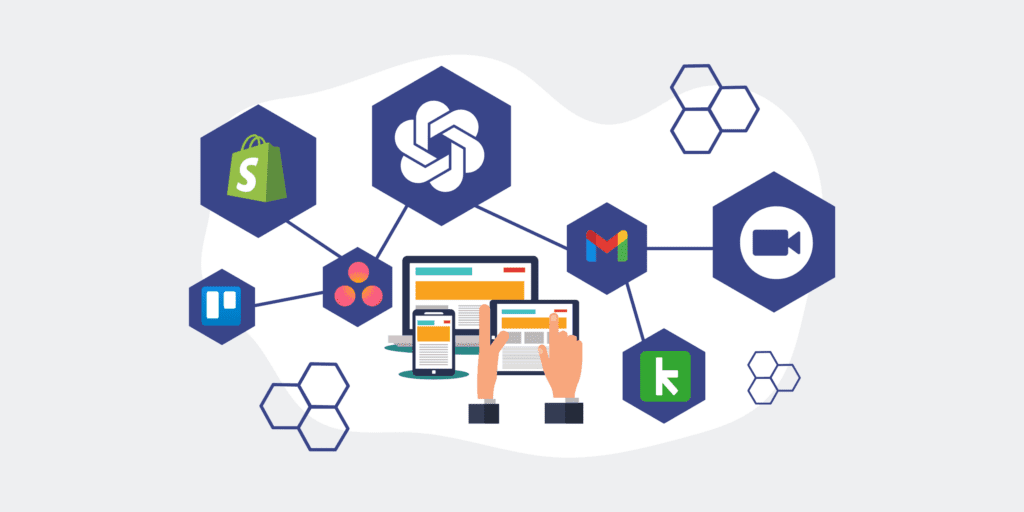
Make.com (formerly Integromat) stands at the forefront of the low-code movement, designed specifically to dismantle this API paradox. It offers a visual, drag-and-drop interface that abstracts away the complexities of traditional coding, allowing users to build sophisticated workflows without writing a single line of code. Instead of grappling with HTTP requests and JSON payloads, business users can intuitively connect “modules” that represent various applications and their specific API functions.
Imagine being able to set up an automated flow that pulls new lead data from your website’s contact form, enriches it with public data, creates a new contact in Keap (your CRM), and then notifies your sales team via Slack, all without ever touching a command line. This isn’t theoretical; it’s what Make.com enables daily. It transforms API integration from a development task into a configuration exercise, empowering operations managers, HR leaders, and marketing professionals to architect their own solutions. This rapid iteration capability means that businesses can respond to changing needs far more quickly, testing and deploying new automated processes in hours or days, not weeks or months.
Real-World Impact: Unleashing Operational Efficiency
The implications of this democratized API access are profound. For an HR leader, it means integrating an ATS with an onboarding system, automating background checks, and syncing employee data with payroll, drastically reducing manual data entry errors and saving countless hours. For a sales operations team, it’s about connecting CRM data with proposal generation tools like PandaDoc, automating follow-up sequences, and ensuring data consistency across the sales funnel. This isn’t just about speed; it’s about accuracy, scalability, and freeing up high-value talent to focus on strategic tasks rather than administrative ones.
At 4Spot Consulting, we leverage Make.com extensively within our OpsBuild framework to craft these bespoke automation solutions. For instance, we helped an HR tech client save over 150 hours per month by automating their resume intake and parsing process using Make.com and AI enrichment, then syncing to Keap CRM. This kind of outcome—drastically reduced manual work and improved data flow—is directly attributable to the power Make.com gives to connect systems at a granular level, accessible to those who understand the operational imperative.
Beyond Connectivity: Strategic Automation with Low-Code
The true power of Make.com extends beyond simple point-to-point connections. Its modularity and flexibility allow for the creation of incredibly complex, multi-step scenarios that mirror intricate business processes. This means businesses can move beyond basic task automation to architect comprehensive, end-to-end operational systems. When combined with intelligent decision-making (perhaps incorporating AI for data analysis or conditional logic), Make.com facilitates a new era of proactive and responsive business operations.
However, simply having the tool isn’t enough. The low-code revolution requires a strategic approach. It demands an understanding of which processes to automate, how to design resilient workflows, and how to integrate these solutions into an overarching operational strategy—which is where our OpsMap™ strategic audit comes into play. We help businesses identify their bottlenecks and chart a clear path to leveraging tools like Make.com to achieve tangible ROI, ultimately helping them save 25% of their day.
The low-code revolution, powered by platforms like Make.com, is not just a technological shift; it’s a paradigm shift in how businesses operate. It empowers the business user, accelerates innovation, and transforms what was once a technical challenge into a strategic advantage, truly unleashing the potential of API access for every department.
If you would like to read more, we recommend this article: The Automated Recruiter: Architecting Strategic Talent with Make.com & API Integration


RELATED POST