Post: Secure Your Keap Integrations: Data Security Best Practices
Keap Integrations and Data Security: A Comprehensive Guide
In today’s hyper-connected business landscape, the power of a CRM like Keap is amplified exponentially through strategic integrations. Connecting Keap with other essential business applications—from HR and recruiting platforms to accounting software and marketing tools—transforms it from a mere contact management system into a central nervous system for your operations. Yet, with every new integration, a critical question arises: how do we ensure these vital data flows are not just efficient, but also rigorously secure? For business leaders focused on growth and operational integrity, understanding the intricate balance between seamless connectivity and robust data security in Keap is paramount.
The Strategic Imperative of Seamless Keap Integration
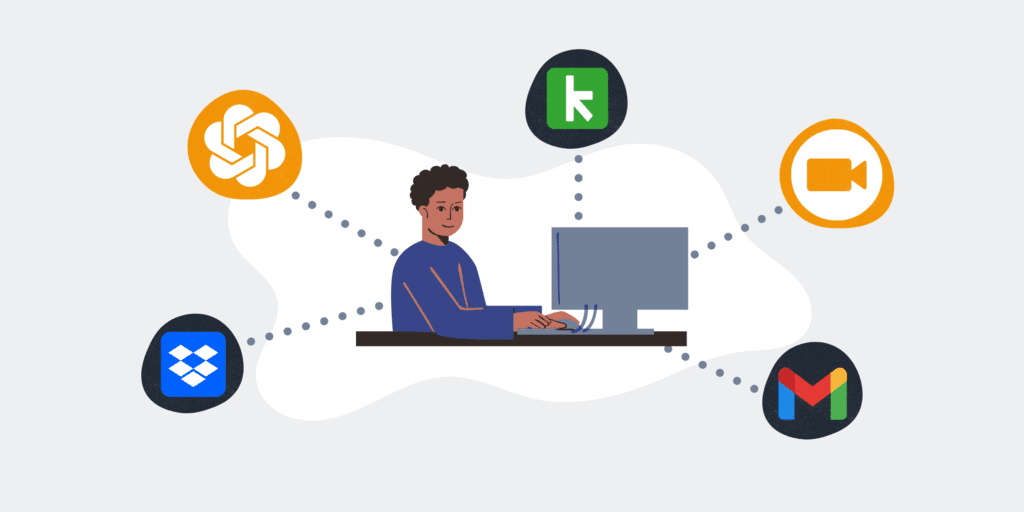
For organizations striving for peak efficiency and a truly 360-degree view of their customers and candidates, Keap integrations are not a luxury, but a strategic necessity. Imagine an HR team where candidate data from an applicant tracking system automatically populates Keap, triggering automated communication sequences and task assignments. Or a sales team where contract generation in PandaDoc is initiated directly from a Keap opportunity, and financial data seamlessly flows to an accounting platform. These integrations eliminate manual data entry, reduce human error, and accelerate workflows, saving high-value employees countless hours and allowing them to focus on strategic initiatives rather than administrative burdens.
Whether it’s syncing customer interactions, automating onboarding processes, or streamlining client fulfillment, the right integrations can revolutionize how a business operates. They create a “single source of truth” for critical data, enabling more informed decision-making and a more personalized customer or candidate journey. This efficiency, however, comes with an inherent responsibility: protecting the integrity and confidentiality of the data flowing across these interconnected systems.
Navigating the Data Security Landscape in a Connected Ecosystem
While the benefits of Keap integrations are clear, so too are the potential pitfalls if data security is not prioritized. Each integration point introduces a new vector for potential vulnerabilities. Data breaches, compliance violations (such as GDPR or CCPA), and operational disruptions can all stem from inadequately secured integrations. The complexity multiplies with the number of systems involved, as each platform has its own security protocols, access management, and potential weaknesses. Human error, often a leading cause of data incidents, can also be exacerbated by complex, poorly governed integration setups.
Furthermore, reliance on third-party vendors for integration solutions means entrusting a portion of your data security to external partners. This necessitates rigorous due diligence and a clear understanding of each vendor’s security posture and data handling practices. The question isn’t just about preventing external threats; it’s also about safeguarding against internal misconfigurations and ensuring data remains protected throughout its entire lifecycle, from collection to storage, transfer, and deletion.
Best Practices for Securing Your Keap Integrations
Proactive security is not just about reacting to threats; it’s about building a resilient ecosystem from the ground up. Here are essential best practices:
- Data Minimization: Only transfer and store the data absolutely necessary for the integration’s function. Less data means less risk.
- Strict Access Controls: Implement the principle of least privilege. Users and integrated applications should only have access to the data they need, for the time they need it. Regularly audit access permissions.
- Secure API Management: Ensure that all API keys and tokens used for integrations are managed securely, rotated regularly, and never hardcoded into publicly accessible files.
- Encryption: Data should be encrypted both in transit (using protocols like HTTPS/TLS) and at rest (in databases and storage).
- Vendor Due Diligence: Thoroughly vet every third-party application or service you integrate with Keap. Understand their security certifications, data privacy policies, and incident response plans.
- Regular Backups and Recovery Plans: No system is infallible. Regular, automated backups of your Keap data, coupled with a robust disaster recovery plan, are non-negotiable for business continuity.
- Compliance Adherence: Understand and comply with all relevant industry regulations and data privacy laws. Design your integrations to facilitate compliance, not hinder it.
The Role of Automation and AI in Enhancing Keap Security
At 4Spot Consulting, we leverage automation and AI not just for efficiency, but as powerful allies in data security. Tools like Make.com, which we specialize in, can be configured to automatically enforce security policies, monitor for unusual data activity, and manage user access across integrated systems. For example, an automated workflow can detect excessive login attempts from an unknown location and immediately alert administrators or temporarily suspend access.
AI can further enhance security by identifying complex patterns that indicate potential threats, predicting vulnerabilities, and automating the classification of sensitive data. By reducing the human touchpoints in data handling and security enforcement, automation significantly minimizes the risk of human error, making your Keap ecosystem more robust and less susceptible to compromise. This proactive, intelligent approach ensures that your data is not just flowing, but flowing securely and responsibly.
Building a Resilient Keap Ecosystem with 4Spot Consulting
Navigating the complexities of Keap integrations and data security requires a strategic partner with deep expertise. At 4Spot Consulting, our OpsMesh™ framework is designed precisely for this—to create an interconnected, secure, and highly efficient operational ecosystem. We don’t just build integrations; we engineer secure data pathways that align with your business objectives and regulatory requirements.
Through our OpsMap™ strategic audit, we uncover not only inefficiencies but also potential security vulnerabilities in your existing setup. Our OpsBuild™ phase then implements intelligent automation and AI solutions that embed security protocols directly into your workflows, from secure API handling to automated backup and recovery mechanisms. With OpsCare™, we provide ongoing support and optimization, ensuring your Keap integrations remain secure, compliant, and continuously performing at their best as your business evolves. Our approach ensures that you harness the full power of Keap integrations without compromising the security of your most valuable asset: your data.
The synergy between robust integrations and stringent data security is the cornerstone of scalable, compliant, and successful business operations. Embrace the power of Keap connectivity with the confidence that your data is protected every step of the way.
If you would like to read more, we recommend this article: One-Click Keap Restore: HR & Recruiting Data’s Lifeline


RELATED POST