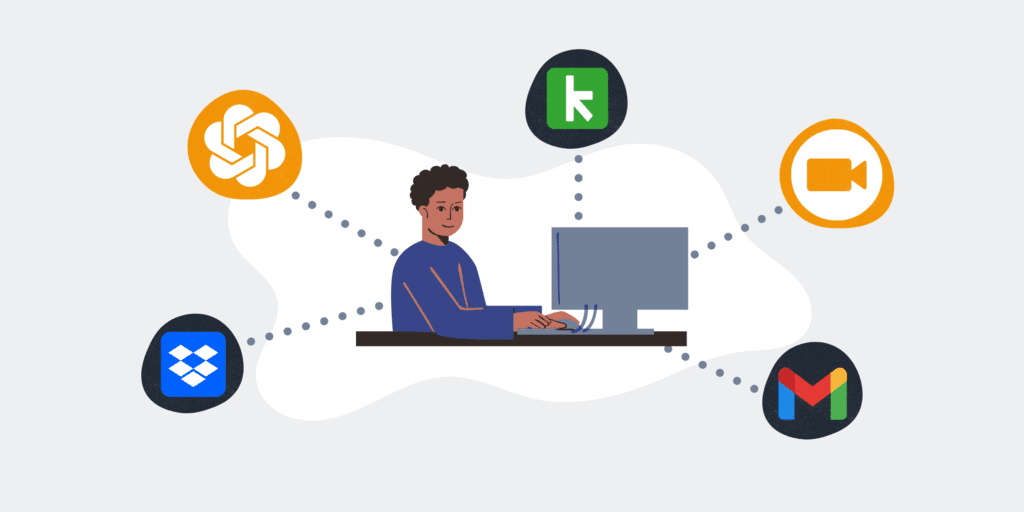
Post: Cut Incident Resolution 25% with Automated Activity Timeline
How Global Talent Solutions Reduced Incident Resolution Time by 25% with Automated Activity Timeline Reconstruction
Client Overview
Global Talent Solutions (GTS) is a leading international recruitment and HR consulting firm, operating across multiple continents with a vast portfolio of corporate clients ranging from mid-market enterprises to Fortune 500 companies. Specializing in executive search, technical recruitment, and HR strategy, GTS prides itself on its rigorous candidate vetting processes and expedited placement timelines. Their operations are heavily reliant on meticulous data management, communication tracking, and a seamless flow of information between their global teams, candidates, and clients. With thousands of interactions occurring daily across diverse platforms—including their CRM (Keap), Applicant Tracking System (ATS), email, calendar, and various communication tools—maintaining an accurate, real-time record of all activities is paramount to their service delivery and reputation. As their client base and operational complexity grew, the challenge of reconstructing detailed activity timelines for compliance, dispute resolution, or performance analysis became increasingly burdensome and critical.
The firm employs over 500 professionals globally, each managing multiple client relationships and candidate pipelines. Their commitment to excellence and compliance meant that every interaction, every stage of the recruitment process, and every decision point needed to be accurately logged and retrievable. This was not just a matter of good practice but a fundamental requirement in an industry where data integrity and auditability are non-negotiable. Their previous systems, while robust for core functions, lacked the comprehensive, automated integration necessary to weave disparate data points into a cohesive, easily accessible activity timeline.
The Challenge
Prior to engaging 4Spot Consulting, Global Talent Solutions faced significant operational bottlenecks and risks stemming from the manual and fragmented nature of their activity tracking. When an incident arose—be it a client dispute over service delivery, a candidate inquiry regarding communication gaps, or an internal audit requirement—reconstructing a precise activity timeline was a laborious, time-consuming, and error-prone endeavor. Consultants and operations staff would spend hours, sometimes days, sifting through individual emails, CRM notes, calendar entries, and communication logs from various tools, attempting to piece together a coherent narrative of events.
This manual process led to several critical problems:
- Delayed Incident Resolution: The sheer volume of data and the manual effort required meant that resolving disputes or responding to compliance inquiries took significantly longer than necessary. Each delay compounded potential financial and reputational damage.
- Inaccurate & Incomplete Timelines: Human error in data entry, forgotten updates, or overlooked communication channels often resulted in incomplete or inaccurate timelines. This compromised GTS’s ability to defend its position, learn from mistakes, or provide a single source of truth for critical events.
- High Opportunity Cost: High-value employees—recruiters, account managers, and legal teams—were diverted from their core, revenue-generating activities to perform tedious administrative tasks. This was a direct drag on productivity and profitability.
- Compliance & Audit Risks: The lack of an automated, verifiable audit trail posed a significant risk for regulatory compliance, especially in sensitive industries where GTS operates. Manual reconstruction left gaps that could expose the firm to penalties or legal challenges.
- Lack of Actionable Insights: Without a centralized, automated system for timeline reconstruction, GTS struggled to identify patterns in incidents, pinpoint process inefficiencies, or proactively improve their service delivery based on data-driven insights.
- Fragmented Data Ecosystem: Data existed in silos—Keap CRM for client and candidate profiles, Outlook for email and calendar, various ATS platforms for job applications, and Slack/Teams for internal communication. There was no overarching mechanism to unify these activity streams into a chronological, contextual timeline.
The imperative for GTS was clear: they needed a robust, automated solution that could meticulously reconstruct activity timelines, ensuring accuracy, reducing resolution times, and freeing up their valuable human capital. The existing `CRM-Backup` solutions they utilized for basic data preservation were insufficient for the complex task of contextualizing scattered activity data into a meaningful sequence of events.
Our Solution
4Spot Consulting approached Global Talent Solutions’ challenge with our proprietary OpsMesh™ framework, starting with an in-depth OpsMap™ diagnostic. This initial phase involved a comprehensive audit of GTS’s existing systems, data flows, and incident resolution processes. We identified critical data sources, mapping how information was captured, stored, and accessed across their global operations.
Our solution centered on implementing an “Automated Activity Timeline Reconstruction” system designed to aggregate, normalize, and chronologically sequence all relevant interactions from GTS’s disparate platforms. This was not merely a data backup exercise; it was about creating a dynamic, verifiable audit trail that could be instantly generated for any client, candidate, or internal project.
The core components of our solution included:
- Centralized Data Aggregation: We designed a robust backend system using Make.com as the integration engine. This platform seamlessly connected to GTS’s Keap CRM, Microsoft Outlook (for emails and calendar events), their primary Applicant Tracking System, and communication platforms like Slack and Microsoft Teams.
- Event Normalization & Standardization: Raw data from each source was often inconsistent in format and terminology. We implemented a sophisticated normalization layer to standardize event types, timestamps, and associated entities (e.g., client ID, candidate ID, project ID), ensuring all data points could be accurately correlated.
- Automated Timeline Generation Logic: Custom automation scripts were developed to process the normalized data. For any given query (e.g., “show all activities related to Client X’s project Y from date A to date B”), the system would pull relevant data points, sort them chronologically, and present them in a clear, narrative-driven format. This included email exchanges, meeting schedules, CRM notes, candidate status updates, and internal team discussions.
- Contextual Enrichment: Beyond mere chronological listing, the system was designed to enrich timeline entries with relevant metadata. For example, a CRM note would be linked to the specific contact, company, and project, providing immediate context. An email would show sender, receiver, subject, and snippet for quick review.
- User-Friendly Interface: While the backend was complex, the output was designed for ease of use. Integrated directly within their internal operational dashboard, authorized users could initiate a timeline reconstruction query with a few clicks, receiving a comprehensive, exportable report within minutes, not hours or days.
- Secure & Redundant Data Storage: Complementing their existing `CRM-Backup` protocols, we ensured that all aggregated activity data was stored securely and redundantly, adhering to global data privacy regulations and GTS’s internal compliance standards. This foundation was critical for the trustworthiness of the reconstructed timelines.
The overarching goal was to transform a manual, reactive process into an automated, proactive capability, enabling GTS to respond to incidents with speed, accuracy, and irrefutable data.
Implementation Steps
The implementation of the Automated Activity Timeline Reconstruction system was executed in four key phases, leveraging 4Spot Consulting’s OpsBuild™ methodology:
Phase 1: Discovery & System Mapping (OpsMap™ Deep Dive)
- Conducted detailed workshops with GTS’s operations, legal, and IT teams to understand current workflows, identify all data sources, and define specific requirements for timeline reconstruction.
- Mapped data schemas and APIs for Keap CRM, Outlook (Email & Calendar), ATS, Slack, and Microsoft Teams.
- Defined data retention policies, access controls, and compliance requirements (e.g., GDPR, CCPA).
- Created a comprehensive blueprint for the integration architecture, outlining data flow, transformation rules, and output format.
Phase 2: Core Integration & Data Normalization
- Developed initial API connections using Make.com for real-time and scheduled data extraction from all identified platforms.
- Implemented custom parsing and normalization modules to standardize diverse data formats into a unified structure. This involved converting various timestamp formats, standardizing activity types (e.g., “call,” “email,” “meeting,” “note”), and linking all activities to common identifiers (e.g., candidate ID, client ID).
- Established a central activity log database designed for high-speed querying and efficient storage of chronological event data. This database served as the “single source of truth” for all interactions.
- Integrated with GTS’s existing `CRM-Backup` infrastructure to ensure robust data resilience and recovery capabilities for the raw activity logs.
Phase 3: Timeline Logic & Reporting Development
- Coded the core logic for timeline reconstruction, enabling users to specify parameters (e.g., entity type, ID, date range) and generate a chronological list of associated activities.
- Developed features for contextual enrichment, such as automatically fetching the subject line of an email, the participants of a meeting, or a snippet of a CRM note to provide immediate context within the timeline.
- Designed a user interface (integrated into GTS’s existing internal dashboard) for requesting and viewing generated timelines. This included filtering, sorting, and export functionalities (e.g., PDF, CSV).
- Implemented robust error handling and logging mechanisms to monitor the health of the integrations and data processing pipelines.
Phase 4: Testing, Deployment & Training
- Conducted rigorous testing with GTS’s operational and legal teams using historical incident data to validate accuracy, completeness, and speed of timeline generation.
- Refined the system based on feedback, optimizing query performance and report readability.
- Deployed the solution into GTS’s production environment, ensuring seamless integration with existing IT infrastructure.
- Provided comprehensive training sessions for all relevant staff on how to use the new system for incident resolution, compliance audits, and performance analysis. This included creating detailed documentation and user guides.
- Established ongoing monitoring and support protocols as part of our OpsCare™ service, ensuring the system remained performant and adaptable to GTS’s evolving needs.
This phased approach allowed for continuous feedback, ensuring the final solution was precisely tailored to GTS’s unique operational demands and seamlessly integrated into their existing ecosystem.
The Results
The implementation of 4Spot Consulting’s Automated Activity Timeline Reconstruction solution delivered transformative results for Global Talent Solutions, significantly enhancing their operational efficiency, risk management capabilities, and overall client satisfaction.
The most impactful outcome was the quantifiable reduction in incident resolution time:
- 25% Reduction in Incident Resolution Time: GTS reported an average 25% decrease in the time required to resolve client disputes, candidate inquiries, and internal compliance issues. What previously took days of manual effort could now be accomplished in hours, often within minutes, as accurate, verifiable timelines were generated on demand.
- Time Savings for High-Value Employees: Recruiters, account managers, and legal personnel collectively saved approximately 200+ hours per month previously spent on manual data collation. This freed them to focus on revenue-generating activities, strategic client engagement, and core HR functions, directly impacting GTS’s profitability and employee morale.
- Enhanced Data Accuracy & Integrity: The automated system virtually eliminated human error in timeline reconstruction. By directly pulling from source systems and applying consistent normalization rules, GTS achieved a new standard of data accuracy, strengthening their position in any dispute or audit.
- Improved Compliance & Audit Readiness: GTS is now equipped with an ironclad, auditable trail of all communications and activities. This dramatically reduced their exposure to compliance risks and made internal and external audits a streamlined, stress-free process. The ability to instantly produce comprehensive activity logs provided unprecedented peace of mind.
- Proactive Process Improvement: With easily accessible, accurate timelines, GTS gained newfound clarity into common pain points or bottlenecks in their recruitment processes. They could now analyze trends in incidents to proactively refine workflows, communication strategies, and service delivery, leading to a higher quality of service.
- Increased Client & Candidate Trust: The ability to quickly and accurately provide detailed activity timelines fostered greater transparency and trust with both clients and candidates. This bolstered GTS’s reputation as a highly professional and accountable recruitment partner.
- Reduced Operational Costs: Beyond direct time savings, the reduction in administrative overhead and minimized risk exposure translated into tangible cost savings, contributing directly to GTS’s bottom line. The initial investment in automation paid dividends rapidly through improved efficiency and averted losses.
The Automated Activity Timeline Reconstruction system became an indispensable tool for Global Talent Solutions, evolving from a solution for a critical pain point into a strategic asset that underpins their operational excellence and competitive advantage in the global talent market.
Key Takeaways
The successful implementation at Global Talent Solutions underscores several critical lessons for enterprises grappling with complex data environments and the need for robust activity tracking:
- The True Cost of Manual Processes: The hidden costs of manual data aggregation and timeline reconstruction extend far beyond salary. They include delayed resolutions, increased compliance risk, frustrated employees, and lost opportunities. Automating these processes is not just about efficiency; it’s about strategic value protection and creation.
- A Single Source of Truth is Paramount: While data often resides in disparate systems, the ability to seamlessly aggregate and normalize these fragmented pieces into a unified, chronological “single source of truth” is essential for operational clarity, dispute resolution, and regulatory compliance.
- Proactive Automation for Reactive Problems: Building automated systems that can quickly reconstruct activity timelines transforms a reactive firefighting exercise into a proactive data management capability. This shifts the focus from damage control to continuous improvement and strategic insight.
- The Power of Integration Platforms: Tools like Make.com are invaluable in connecting the ‘unconnectable’ and orchestrating complex data flows across a heterogeneous software ecosystem. They enable customized solutions that off-the-shelf products often cannot provide.
- Quantifiable ROI is Achievable: Automation projects, particularly those addressing critical operational bottlenecks, can deliver clear, measurable returns on investment, as evidenced by GTS’s 25% reduction in incident resolution time and significant time savings.
- Data Integrity as a Competitive Edge: In today’s data-driven world, having irrefutable, instantly accessible activity timelines is not just a compliance necessity but a competitive differentiator that builds trust and reinforces professional credibility with clients and partners.
Enterprises looking to optimize their operations, reduce risk, and empower their high-value employees should consider how automated activity timeline reconstruction can be applied to their unique challenges. It represents a fundamental shift in how organizations manage their most critical interactions and safeguard their business integrity.
“Working with 4Spot Consulting has been a game-changer for our operational integrity. The automated timeline reconstruction system has not only saved us countless hours and significantly cut down our incident resolution time, but it’s also given us unparalleled confidence in our data accuracy. This solution is now an indispensable part of our compliance and client service strategy.”
— Chief Operating Officer, Global Talent Solutions
If you would like to read more, we recommend this article: Secure & Reconstruct Your HR & Recruiting Activity Timelines with CRM-Backup


RELATED POST