
Post: ML Anomaly Detection: Pinpoint Risks in Activity Timelines
The Silent Alarms: How Machine Learning Pinpoints Anomalies in Activity Timelines
In the intricate machinery of modern business, every action, every transaction, and every interaction generates a data point. These points coalesce into activity timelines – digital chronicles that detail everything from customer journeys and employee workflows to system performance and security events. For high-growth B2B companies, understanding these timelines isn’t just about reviewing history; it’s about anticipating the future. Yet, buried within these vast datasets are often subtle deviations, the “silent alarms” that signify potential fraud, critical system failures, process inefficiencies, or even nascent opportunities. Manually sifting through such volumes to find these anomalies is not only impractical but a drain on valuable resources. This is precisely where machine learning emerges as an indispensable ally.
The Imperative of Anomaly Detection in Business Operations
Consider the breadth of activity timelines in a typical business: a recruiting team’s candidate engagement stages, an HR department’s onboarding tasks, a sales team’s CRM interactions, or an IT department’s network login attempts. Each timeline represents a standard operating procedure or expected pattern. An anomaly, therefore, is any data point or sequence that significantly deviates from these expected patterns. These deviations are not just statistical curiosities; they are often indicators of high-impact events:
- HR & Recruiting: Unusual spikes in candidate drop-off rates at a specific stage, unexplained delays in offer acceptance, or irregular access patterns to sensitive personnel files.
- Operations & Security: Uncharacteristic system logins, unusual financial transaction volumes, or deviations in supply chain delivery times.
- Customer Service: Sudden surges in specific complaint types, extended resolution times for particular issues, or irregular customer behavior patterns.
Without an automated, intelligent system, these anomalies can go unnoticed for extended periods, leading to financial losses, reputational damage, operational bottlenecks, or missed strategic opportunities. The problem isn’t a lack of data; it’s the overwhelming volume of data that makes human-centric detection efforts futile.
Machine Learning: Your Proactive Watchdog
Machine learning (ML) brings a powerful, scalable, and tireless capability to anomaly detection. Instead of predefined rules that are rigid and easily circumvented, ML algorithms learn the “normal” behavior from historical data. They build models of expected patterns, and then continuously monitor incoming data streams, flagging anything that falls outside these learned norms.
How ML Algorithms Uncover the Unexpected
The magic of ML in anomaly detection lies in its ability to adapt and learn without explicit programming for every single edge case. Here are some core approaches:
- Statistical Methods: These are foundational, identifying data points that fall outside a statistically defined range (e.g., beyond three standard deviations).
- Clustering-Based Methods: Algorithms like K-Means or DBSCAN group similar data points together. Anomalies are data points that don’t belong to any cluster or form very small, isolated clusters. For instance, a cluster of typical recruiting process flows might emerge, with an unusual, short-circuited flow flagged as an anomaly.
- Classification-Based Methods: For scenarios where some anomalies have been previously identified, supervised learning models can be trained to classify new data points as ‘normal’ or ‘anomalous’. This is particularly effective in fraud detection.
- Time-Series Analysis: Crucial for activity timelines, these methods analyze data points collected over time. They look for deviations from expected trends, seasonality, or cyclical patterns. An abrupt change in the volume of daily CRM updates, for example, could be detected using these techniques.
- Neural Networks (Deep Learning): For highly complex, multi-dimensional data, deep learning models can learn intricate representations of normal behavior, proving exceptionally effective in identifying subtle, non-obvious anomalies that simpler models might miss.
The true power isn’t in a single algorithm, but in combining them within a robust system. For instance, an ML model trained on recruitment activity timelines can detect when a candidate’s application status lingers unusually long at a specific stage, or if an interviewer consistently submits feedback much later than their peers, indicating potential process bottlenecks or inconsistencies.
From Detection to Action: The Business Impact
Implementing machine learning for anomaly detection isn’t just a technical exercise; it’s a strategic move for businesses aiming for efficiency, security, and scalability. 4Spot Consulting understands that automating and integrating these capabilities transforms raw data into actionable intelligence. By deploying ML-driven anomaly detection:
- Enhance Security Posture: Proactively identify suspicious activities like insider threats or external cyberattacks by flagging unusual login patterns, data access, or system modifications.
- Optimize Operational Efficiency: Pinpoint bottlenecks in complex workflows, identify equipment malfunctions before they cause critical failures, or detect deviations from optimal process paths in HR onboarding or sales pipelines.
- Mitigate Financial Risk: Uncover fraudulent transactions, unusual spending patterns, or accounting discrepancies by continuously monitoring financial activity timelines.
- Improve Decision Making: Gain deeper insights into customer behavior, employee performance, and market trends by understanding not just what is happening, but what is *unusual*.
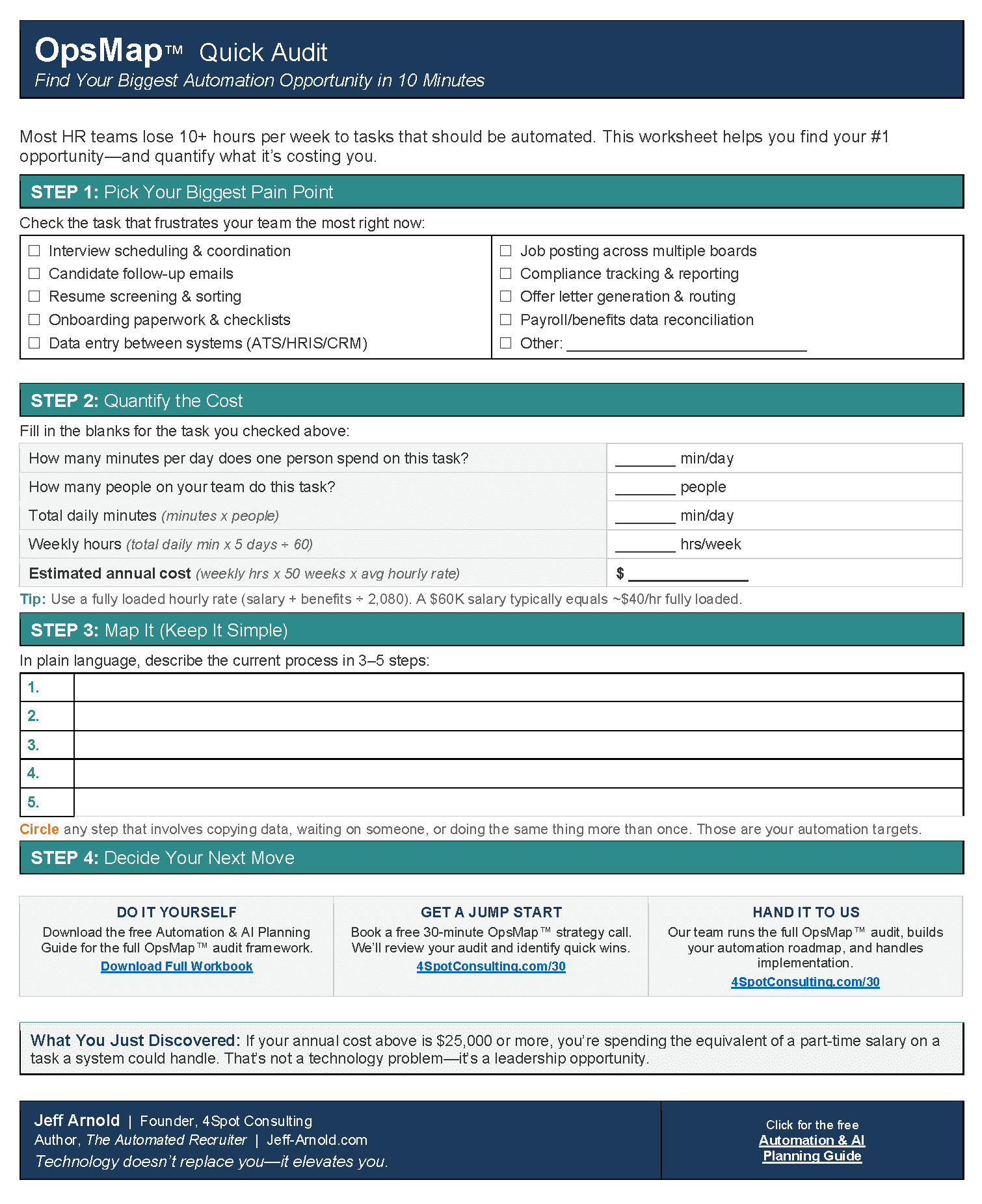
At 4Spot Consulting, our OpsMesh framework integrates AI capabilities like anomaly detection into your core business systems. We don’t just point out anomalies; we help you build automated responses and robust data pipelines that ensure your operational integrity and drive growth. Our strategic approach, starting with an OpsMap, identifies precisely where ML can deliver the most significant ROI by turning silent alarms into proactive solutions that save you 25% of your day.
If you would like to read more, we recommend this article: Secure & Reconstruct Your HR & Recruiting Activity Timelines with CRM-Backup

RELATED POST