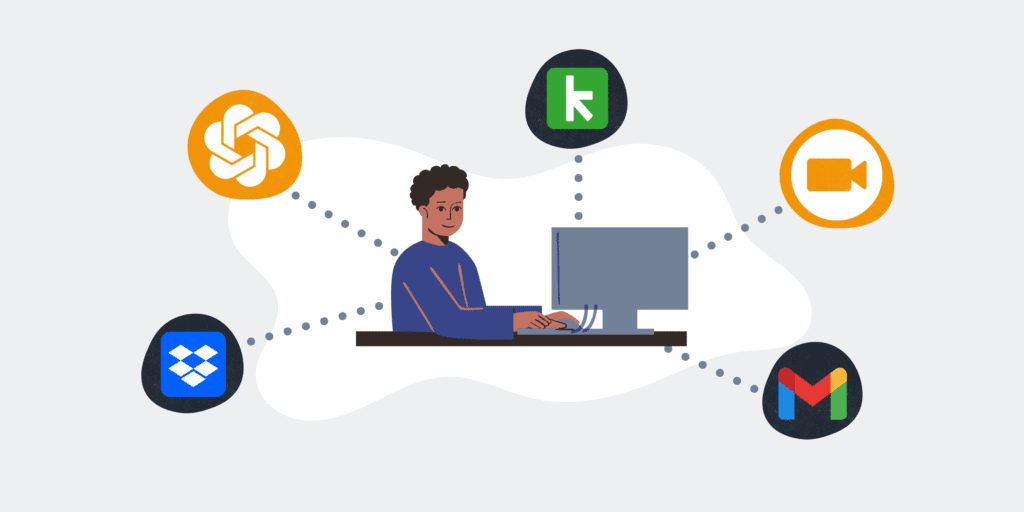
Post: Microservices HR: Build Agile Systems with API Integration
Microservices and HR: How Modular Systems Rely on API Access for Agility
In today’s fast-paced business landscape, the efficiency and adaptability of human resources operations are more critical than ever. HR leaders, COOs, and founders are constantly seeking ways to streamline processes, enhance data accuracy, and empower their teams. Traditional, monolithic HR systems often fall short, creating silos and hindering the very agility businesses strive for. This is where the power of microservices architecture, underpinned by robust API access, fundamentally transforms how HR departments operate and scale.
The Evolving Landscape of HR Tech: Beyond All-in-One Solutions
For years, the promise of a single, all-encompassing HR solution seemed appealing. One vendor, one system, one point of contact. However, the reality often proved more cumbersome. These “suites” could be rigid, difficult to customize, and slow to integrate with other critical business tools like CRMs, project management software, or specialized recruiting platforms. As businesses grow and their needs evolve, this rigidity becomes a significant bottleneck, impacting everything from candidate experience to employee onboarding and payroll.
The Core Challenge: Interoperability in a Fragmented Ecosystem
The modern enterprise relies on a diverse ecosystem of specialized software. HR isn’t immune; departments might use one tool for applicant tracking, another for performance management, a third for benefits administration, and yet another for internal communications. The challenge isn’t the existence of these tools, but their ability to communicate seamlessly. When data has to be manually transferred, or custom integrations are prohibitively expensive and fragile, human error creeps in, high-value employees waste time on low-value tasks, and strategic insights are lost in disparate data.
Microservices: The Architecture of Agility
Microservices represent a paradigm shift from monolithic applications. Instead of a single, large application, a microservices architecture breaks down the system into a collection of small, independent services. Each service performs a specific function – managing candidate profiles, processing payroll, tracking time off, or handling benefits enrollment – and operates independently. This modularity offers unparalleled flexibility and resilience.
Why Microservices Matter for HR
For HR, this translates into significant advantages:
- **Flexibility and Customization:** HR departments can pick and choose the best-of-breed tools for each specific function, rather than being locked into a suboptimal solution within a larger suite.
- **Scalability:** Individual services can be scaled up or down independently based on demand. For instance, a recruiting service might need more resources during peak hiring seasons without affecting the performance of the entire HR system.
- **Resilience:** If one service fails, the entire system doesn’t crash. Other services continue to operate, minimizing disruption to critical HR functions.
- **Faster Innovation:** New features or updates can be deployed to individual services quickly and without impacting the rest of the system, allowing HR tech to evolve at the pace of business needs.
- **Cost Efficiency:** Resources are allocated more precisely to specific functions, potentially reducing overall infrastructure costs.
The Indispensable Role of API Access
The glue that holds a microservices architecture together, and indeed, makes it functional for HR, is the Application Programming Interface (API). APIs are the standardized communication channels that allow different software applications to talk to each other. In a microservices context, APIs enable each small service to interact with others, sharing data and triggering actions seamlessly.
For HR, robust API access means that your applicant tracking system (ATS) can “speak” directly to your HRIS, your performance management tool can share data with your learning management system, and payroll can pull relevant information from attendance trackers—all automatically. This eliminates manual data entry, reduces errors, and ensures a single source of truth for employee data across the entire organization. Without powerful APIs, the promise of microservices remains unfulfilled, leaving HR departments to manage disjointed systems and redundant tasks.
Beyond Integration: Empowering HR Operations with Data Flow
At 4Spot Consulting, we’ve seen firsthand how strategic use of API access transforms HR operations. It’s not just about connecting systems; it’s about orchestrating intelligent workflows that empower HR teams to focus on people, not paperwork. Imagine an automated onboarding process where a new hire’s data flows instantly from the ATS to the HRIS, triggers background checks, generates offer letters in PandaDoc, creates an employee profile in Keap, and sets up initial training modules—all without human intervention. This is the power of leveraging APIs with automation platforms like Make.com, enabling HR departments to reclaim significant time and ensure a flawless, consistent experience for every employee.
Navigating the Complexity with Strategic Expertise
While the benefits of microservices and API-driven HR systems are clear, implementing and managing them requires a strategic approach. It’s not just about integrating a few tools; it’s about designing an overarching automation strategy – what we call an OpsMesh™ – that considers data flow, security, scalability, and long-term maintenance. Businesses need to understand which systems need to talk, what data needs to be shared, and how to build resilient integrations that stand the test of time.
4Spot Consulting’s Approach: From OpsMap™ to OpsCare™
This is where 4Spot Consulting steps in. We specialize in helping high-growth B2B companies ($5M+ ARR) eliminate human error, reduce operational costs, and increase scalability through automation and AI. Our strategic-first approach begins with an OpsMap™—a diagnostic audit to uncover inefficiencies and pinpoint where modular automation and API access can deliver the greatest ROI. We then move to OpsBuild™, implementing bespoke automation and AI systems using tools like Make.com, ensuring your HR tech stack communicates flawlessly. Finally, our OpsCare™ program provides ongoing support, optimization, and iteration, ensuring your systems remain agile and effective as your business evolves.
We’ve helped HR firms save hundreds of hours monthly by automating resume intake and parsing, leveraging Make.com and AI enrichment to sync directly into Keap CRM. This kind of transformation isn’t just about saving time; it’s about empowering HR to become a strategic asset, driving business growth rather than being bogged down by operational minutiae.
Conclusion: Future-Proofing HR with Modular Automation
The future of HR technology is modular, agile, and API-driven. By embracing microservices architecture and strategic API access, HR departments can move beyond the limitations of monolithic systems, build adaptable tech stacks, and create seamless, automated workflows. This shift allows HR leaders to focus on talent strategy, employee development, and creating an exceptional employee experience, rather than battling with disparate systems. Don’t let outdated systems hold your HR team back. Strategic automation, powered by intelligent API integration, is the key to unlocking peak operational efficiency and sustained growth.
If you would like to read more, we recommend this article: Keap & HighLevel Data Backup for HR & Recruiting: Mitigating API Risks & Ensuring Business Continuity



RELATED POST