Post: 8 Keap Integrations That Automate Marketing and Drive Sales
8 Ways Keap Integrations Can Supercharge Your Marketing Campaigns
In today’s competitive landscape, marketing isn’t just about getting your message out; it’s about delivering the right message, to the right person, at the right time. For many businesses, Keap serves as a powerful foundation, a central nervous system for their customer relationships. Yet, the real magic happens when Keap stops being an isolated tool and starts orchestrating a symphony of your entire marketing tech stack. The reality for countless businesses is a fragmented approach: data trapped in silos, manual transfers eating up valuable time, and missed opportunities due to a lack of interconnectedness.
Imagine the frustration of running a fantastic campaign only to realize the follow-up emails weren’t personalized with recent purchase history because your e-commerce platform doesn’t “talk” to Keap. Or leads from a webinar sitting dormant because the registration data requires manual upload. These aren’t just minor inconveniences; they are significant bottlenecks that stifle growth, inflate operational costs, and ultimately undermine your marketing ROI. At 4Spot Consulting, we’ve seen these challenges firsthand and understand that the true power of Keap is unlocked through strategic, intelligent integrations. It’s about transforming Keap from a robust CRM into a marketing powerhouse that works tirelessly to automate workflows, personalize customer journeys, and drive conversions without constant human intervention. Let’s explore eight transformative ways Keap integrations can truly supercharge your marketing campaigns.
1. Seamless Data Sync with E-commerce Platforms
For any business selling products or services online, the integration between Keap and your e-commerce platform (like Shopify, WooCommerce, or BigCommerce) is not just beneficial, it’s foundational. Without it, you’re operating with one hand tied behind your back. When customer purchase data, order history, abandoned cart details, and browsing behavior are instantly synced from your e-commerce store into Keap, a wealth of marketing opportunities unlocks. Imagine automatically tagging customers based on what they’ve bought, how frequently they purchase, or even what items they viewed but didn’t buy. This real-time data flow enables hyper-personalized follow-up sequences, targeted promotions for repeat purchases, and highly effective abandoned cart recovery campaigns that convert window shoppers into buyers. For instance, if a customer browses a specific product category on your Shopify store and leaves without purchasing, an integration can automatically trigger a Keap email series featuring related products, customer testimonials for that category, or even a limited-time discount code. This level of responsiveness and personalization is virtually impossible with manual data transfers, leading to missed revenue, frustrated customers, and wasted marketing spend on generic campaigns. The ROI on preventing missed sales opportunities and increasing customer lifetime value through intelligent e-commerce integration is often staggering, directly impacting your bottom line.
2. Elevated Customer Support & Communication
Customer support isn’t just about solving problems; it’s a goldmine for marketing insights. Integrating Keap with your helpdesk or customer service platform (such as Zendesk, Intercom, or Freshdesk) creates a 360-degree view of every customer interaction. When support tickets, conversation histories, feedback, and resolution statuses are automatically synced into Keap, your marketing team gains invaluable context. They can segment customers based on their support history, allowing for targeted campaigns that address specific pain points or common inquiries. For example, if a customer frequently submits support tickets about a particular product feature, marketing can send them an email highlighting a new update for that feature or inviting them to a webinar demonstrating advanced usage. Furthermore, positive support experiences can be automatically identified, triggering a request for a testimonial or a referral incentive, leveraging satisfied customers as powerful advocates. Conversely, if a customer has an unresolved issue, marketing campaigns can be paused or adjusted to avoid sending promotional messages that might exacerbate their frustration. This strategic integration fosters a cohesive customer experience, reduces churn by anticipating needs, and turns service interactions into opportunities for loyalty and upselling, all while ensuring your messaging remains empathetic and relevant.
3. Automated Social Media Engagement & Lead Capture
Social media is a bustling marketplace where leads are abundant, but capturing and nurturing them effectively can be a monumental manual task. Integrating Keap with your social media management tools (like Buffer, Hootsuite, or even direct platform APIs for Facebook Lead Ads) can transform your social presence into an automated lead generation machine. When a prospect engages with your content, fills out a lead form on a social platform, or even expresses interest in a direct message, that data can be automatically pulled into Keap. This eliminates the delay often associated with manual data entry, ensuring immediate follow-up. Imagine a potential customer commenting on a Facebook post asking for more information; an integration could automatically add them to Keap, tag them with their interest, and trigger an automated email with the requested details, followed by a nurturing sequence. Beyond lead capture, these integrations can track social engagement metrics against specific Keap contacts, providing insights into which content resonates most with which segments. This allows marketing teams to tailor future social content strategies, personalize ad targeting, and ensure every social interaction contributes meaningfully to your sales pipeline. The efficiency gained by automating social lead capture and initial engagement frees up your team to focus on higher-value activities, moving prospects faster through the funnel.
4. Optimized Event Management & Follow-Up
Webinars, workshops, and in-person events are powerful tools for lead generation and relationship building. However, the manual processes involved in managing registrations, attendance, and post-event follow-up can quickly become overwhelming, leading to missed opportunities. Integrating Keap with your event management platforms (such as Eventbrite, Zoom Webinars, GoToWebinar, or Acuity Scheduling) automates these critical touchpoints. When someone registers for your event, their details are immediately synced to Keap, allowing you to trigger pre-event reminder emails, share preparatory materials, and segment attendees based on the event they registered for. Post-event, the integration can automatically update attendee status (attended vs. no-show), and trigger differentiated follow-up sequences. Attendees might receive a link to the recording, a survey for feedback, or an invitation to a related offer. No-shows, on the other hand, could receive a compassionate re-engagement email with the recording, aiming to convert them into engaged prospects. This ensures that every lead generated through your events receives tailored, timely communication, maximizing the value of your event investment. It eliminates the risk of leads falling through the cracks due to manual spreadsheet exports and imports, turning one-off interactions into sustained engagement opportunities.
5. Enhanced Financial & Billing Workflows
While often seen as an operational or accounting function, integrating Keap with your financial and billing software (like QuickBooks Online, Xero, or Stripe) offers significant advantages for marketing and customer retention. When payment statuses, invoicing details, subscription renewals, or outstanding balances are synced with customer records in Keap, marketing gains a powerful new dimension for segmentation and communication. For instance, you can automatically trigger campaigns designed to prevent churn for customers whose subscriptions are nearing expiration, offering tailored renewal incentives. For customers with outstanding invoices, marketing can pause promotional messages and instead send polite payment reminders, or segment them for specific communications related to account management rather than sales. Furthermore, this integration enables the identification of high-value customers based on their total spend or purchasing frequency, allowing for exclusive loyalty programs or targeted upselling campaigns. By having a clear, real-time view of a customer’s financial journey within Keap, your marketing efforts become more intelligent, proactive, and sensitive to their current relationship status with your business. This not only streamlines operations by automating financial communications but also enhances customer satisfaction and contributes directly to improved cash flow and stronger customer relationships.
6. Dynamic Content Personalization with AI Tools
The future of marketing is hyper-personalization, and Keap integrations with AI-powered content tools are making this a reality. While Keap offers robust personalization capabilities, connecting it with advanced AI tools (often orchestrated via platforms like Make.com) can elevate your content strategy significantly. Imagine using AI to analyze a contact’s behavior, demographics, and past interactions stored in Keap, then dynamically generating personalized email subject lines, body paragraphs, or even ad copy that resonates specifically with their perceived needs and interests. For instance, an AI tool could craft a unique product recommendation email for each customer based on their recent browsing history and purchase patterns, ensuring the language and focus are perfectly aligned. This moves beyond basic merge fields to truly dynamic content creation. Furthermore, AI can help in segmenting audiences more intelligently by identifying subtle patterns that human analysis might miss, feeding these refined segments back into Keap for highly targeted campaign deployment. The efficiency of AI in generating multiple variations of content for A/B testing or for different audience segments is unmatched, leading to dramatically higher engagement rates, improved click-throughs, and ultimately, greater conversion rates. This integration empowers your marketing team to scale personalized experiences without scaling manual effort, delivering marketing that feels truly bespoke.
7. Streamlined Proposal & Contract Management
The journey from lead to customer often involves proposals, quotes, and contracts. Manual creation and management of these documents are time-consuming, prone to error, and create unnecessary bottlenecks in the sales process. Integrating Keap with document automation tools like PandaDoc, DocuSign, or Conga can dramatically streamline this critical phase, directly impacting marketing’s ability to transition prospects smoothly. Once an opportunity in Keap reaches a certain stage (e.g., “Proposal Sent” or “Contract Needed”), the integration can automatically trigger the generation of a personalized proposal or contract. This document can pre-populate with all relevant client and deal information from Keap, reducing manual data entry and ensuring accuracy. Furthermore, these documents can be sent for e-signature directly from Keap, and crucially, once signed, the integration can automatically update the deal stage in Keap and trigger the appropriate post-sale marketing sequences, such as onboarding emails, welcome kits, or requests for initial feedback. This automation accelerates the sales cycle, provides a seamless experience for the client, and ensures that marketing can initiate the customer success journey without delay. It’s about removing friction from the path to conversion and improving the overall customer experience from initial interest to signed agreement.
8. Advanced Lead Scoring & Data Enrichment
Not all leads are created equal, and discerning which prospects are most valuable can be a significant challenge. Integrating Keap with data enrichment services (such as Clearbit, ZoomInfo, or Apollo.io) and advanced lead scoring platforms empowers your marketing team to prioritize high-potential leads with unparalleled accuracy. When a new contact enters Keap, the integration can automatically pull in a wealth of additional firmographic and demographic data – company size, industry, revenue, job title, technology stack, and more – that the lead didn’t explicitly provide. This enriched data then feeds into a more sophisticated lead scoring model within Keap (or an integrated scoring tool). For instance, a lead from a company over a certain size in a target industry might automatically receive a higher score, moving them to a “hot lead” category. This allows your sales team to focus their efforts on the prospects most likely to convert, maximizing their efficiency and closing rates. Marketing can also leverage this enriched data for hyper-segmentation, tailoring content and offers precisely to the needs of different company sizes or industries. This eliminates the guesswork from lead qualification, ensuring that your valuable marketing resources are directed towards the most promising opportunities, leading to significantly improved conversion rates and a healthier sales pipeline.
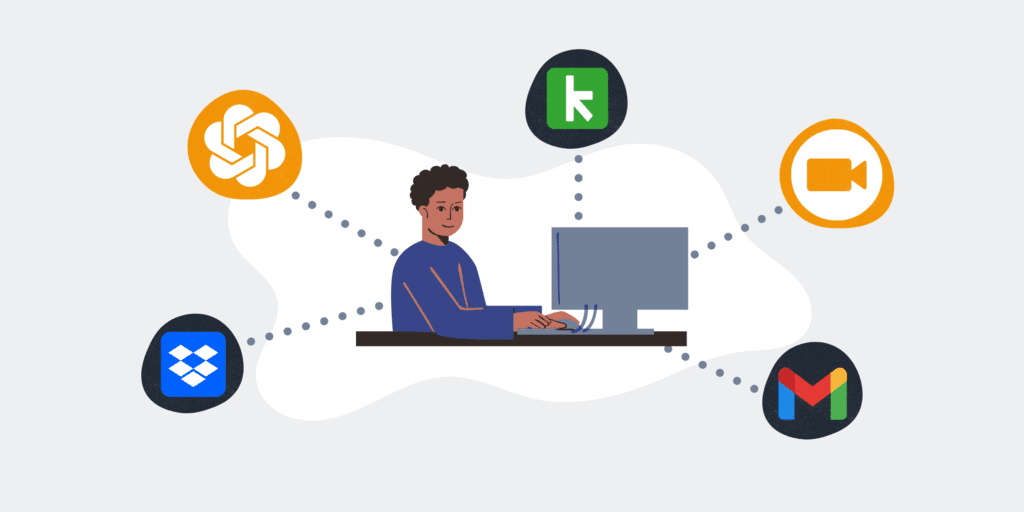
The modern marketing landscape demands agility, precision, and efficiency. Simply having Keap is a start, but its true potential as a revenue-generating engine is unleashed through strategic integrations. By connecting Keap with your e-commerce platforms, customer support systems, social media, event management tools, financial software, AI content generators, proposal systems, and data enrichment services, you transform fragmented efforts into a cohesive, automated, and hyper-personalized marketing machine. This isn’t just about saving time; it’s about eliminating human error, reducing operational costs, increasing scalability, and ultimately, driving predictable revenue growth. At 4Spot Consulting, we specialize in architecting these powerful integrations, using our OpsMesh framework to ensure every connection serves a strategic business outcome. We turn your Keap environment into the central command center it was always meant to be, helping you save 25% of your day and focus on what truly matters: growing your business. Don’t let your marketing efforts be stifled by disconnected systems. Embrace the power of integration and watch your campaigns supercharge your success.
If you would like to read more, we recommend this article: Keap Data Protection: Your Essential Backup & Recovery Playbook


RELATED POST