
Post: Selective Field Restore: Data Correction Beyond Disaster Recovery
Beyond Disaster Recovery: New Applications for Selective Field Restore
In the evolving landscape of business operations, data integrity is no longer just about avoiding catastrophic loss; it’s about pinpoint precision. For years, the mantra was “disaster recovery,” a broad stroke approach designed to restore entire systems to a previous state following a major failure. While essential, this all-or-nothing strategy often falls short when the challenge isn’t a systemic collapse, but a single, critical error. This is where Selective Field Restore emerges as a game-changer, moving beyond mere disaster mitigation to unlock powerful new applications for data management, compliance, and operational agility, particularly within sophisticated CRM environments like Keap.
The Limitations of Traditional Disaster Recovery in a Granular World
Imagine a scenario: a vital piece of customer data in your CRM is inadvertently altered or deleted by a team member. Perhaps a recruiter accidentally overwrites a candidate’s salary expectation, or an HR specialist mistakenly deletes a crucial document link from an employee’s record. Traditional disaster recovery would require rolling back the entire database to a previous snapshot, undoing countless legitimate updates that have occurred since the error. This isn’t just inefficient; it’s counterproductive, leading to lost work, disrupted workflows, and a fresh set of data reconciliation headaches. The business cost of such a rollback far outweighs the benefit of correcting a single, isolated anomaly.
This challenge is amplified in industries like HR and recruiting, where data is both high-volume and highly sensitive. Accuracy in candidate profiles, offer details, and employee records isn’t just good practice—it’s a compliance mandate and a cornerstone of successful talent acquisition and management. The inability to surgically correct data leads to either living with the error or undertaking a disproportionately disruptive recovery.
Selective Field Restore: A Surgical Approach to Data Integrity
Selective Field Restore (SFR) offers the precision tool businesses desperately need. Instead of an entire database rollback, SFR allows for the restoration of specific fields, records, or even parts of records, to a chosen point in time. This capability transforms data management from a blunt instrument into a finely tuned scalpel. It means an erroneous salary field can be reverted without touching the notes added by a hiring manager, or a deleted document link can be reinstated without affecting the dozens of new candidate submissions processed that day.
New Applications Beyond Catastrophic Failure
While SFR inherently aids in recovery from human error, its true power lies in its broader operational applications:
- Granular Error Correction: This is the most direct benefit. For a CRM like Keap, where integrated sales, marketing, and service data intertwine, a single incorrect data point can ripple through automation sequences, reporting, and customer communications. SFR allows for quick, targeted fixes, minimizing business disruption and maintaining automation integrity.
- Compliance and Audit Trails: In regulated industries, demonstrating data integrity and historical accuracy is crucial. SFR provides an undeniable audit trail, showing precisely when a data point was changed, by whom, and its state at any given moment. This is invaluable for internal audits, regulatory compliance, and dispute resolution.
- “Undo” for Complex Operations: Consider A/B testing or rapid iteration on CRM workflows. If a new automation inadvertently corrupts a specific data field for a segment of users, SFR can quickly revert only those affected fields, allowing for rapid experimentation without fear of irreversible damage.
- Enhanced Data Governance: SFR empowers data stewards to maintain higher standards of data quality. By providing a low-impact recovery option, it encourages proactive data cleansing and correction without the fear of broader system instability. This is especially critical for maintaining a “single source of truth” across integrated systems, a core tenet of 4Spot Consulting’s OpsMesh framework.
- HR & Recruiting Specific Use Cases: For recruitment teams, SFR can restore an accidentally archived candidate profile’s status without affecting new applications. For HR, it can revert an incorrect benefits election date without undoing payroll updates. It ensures the integrity of sensitive personal data, crucial for compliance with privacy regulations and maintaining candidate experience. We’ve seen firsthand how an HR tech client, leveraging Make.com and AI enrichment, saved over 150 hours per month by automating resume intake and parsing, syncing to Keap CRM. This level of automation demands equally precise data protection strategies to handle the inevitable edge cases.
Integrating Selective Field Restore into Your Operations
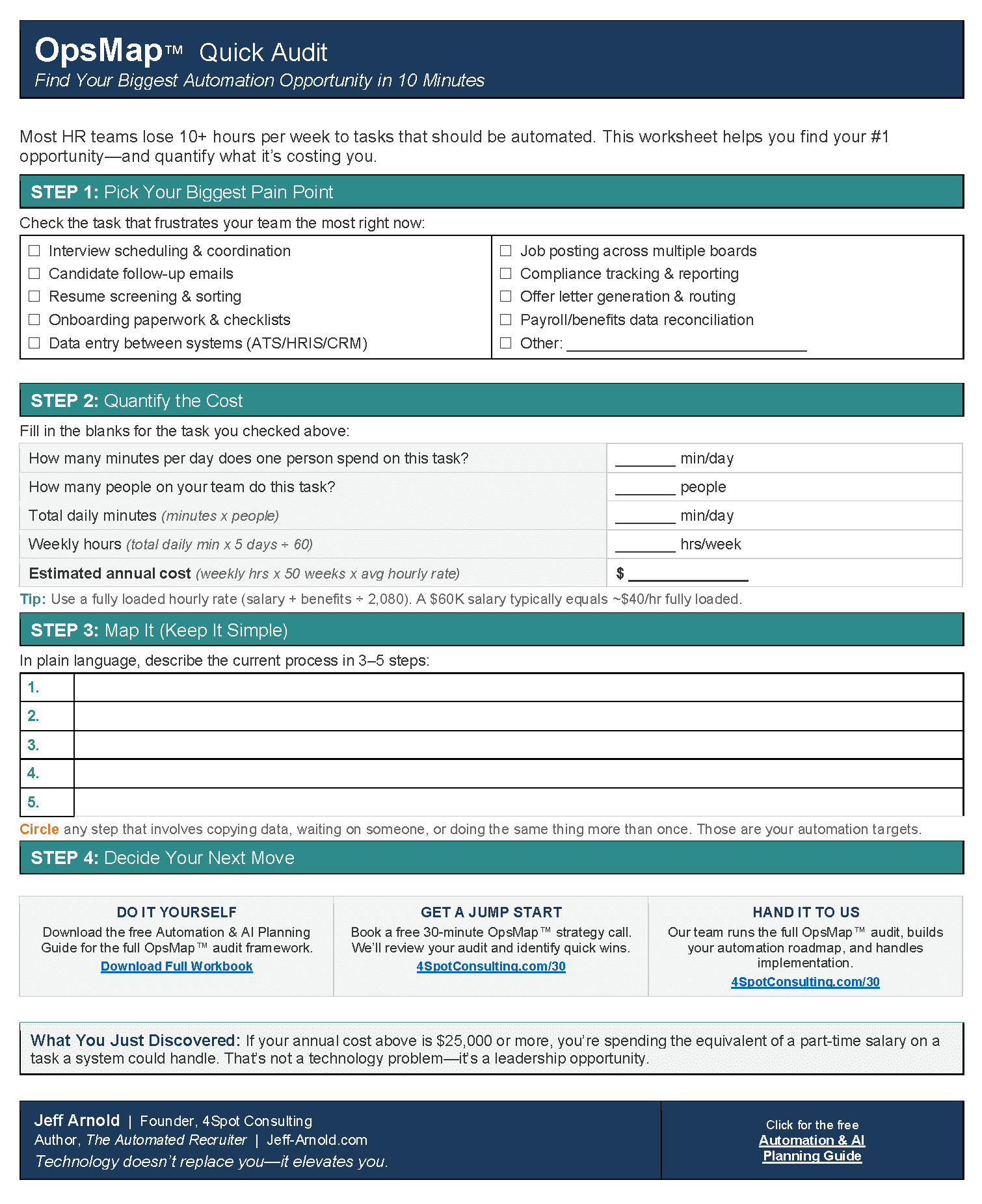
At 4Spot Consulting, our strategic-first approach through frameworks like OpsMap™ and OpsBuild™ ensures that powerful tools like Selective Field Restore are not just implemented, but integrated into a cohesive, ROI-driven automation strategy. We recognize that robust CRM backup solutions, such as those offered by CRM-Backup.com, are not merely about preventing disaster but about enabling proactive, precise data management.
By leveraging platforms like Make.com, we connect disparate SaaS systems to create resilient data workflows. When coupled with advanced backup capabilities like SFR for Keap or HighLevel, businesses gain unprecedented control over their most valuable asset: their data. This strategic foresight eliminates human error, reduces operational costs, and significantly boosts scalability, ultimately saving high-value employees 25% of their day by eradicating low-value, manual work.
If you would like to read more, we recommend this article: Selective Field Restore in Keap: Essential Data Protection for HR & Recruiting with CRM-Backup



RELATED POST