Post: Stop Missing AI ROI: HR’s Strategy for Hybrid Talent
Applicable: YES
AI Consulting Is Scaling — What HR & Recruiting Must Do Now
Context: The AI Report newsletter highlights a fast-growing market for AI consultants and a training funnel that has already produced 1,200+ new consultants. For recruiting and operations teams, this is not a remote trend — it looks like an immediate talent and process challenge that affects hiring, L&D, vendor selection, and how firms deliver measurable ROI from AI projects.
What’s Actually Happening
Companies and independent consultancies are packaging AI expertise into short-term, high-value engagements. Market signals include high hourly rates quoted in press coverage and paid training cohorts that convert novice operators into billable consultants. At the same time, surveys and industry reporting indicate many firms still report little to no ROI from AI pilots. The result: demand for people who can translate AI capability into business outcomes — quickly — is rising sharply. That creates three immediate operational realities for HR and recruiting teams:
- Hiring demand for interdisciplinary AI roles (prompt engineering + process design + stakeholder management).
- Need for faster internal upskilling pathways and vendor partnerships that deliver quick client ROI.
- Pressure on TA and workforce planning to source hybrid profiles, not just traditional engineers or analysts.
Why Most Firms Miss the ROI (and How to Avoid It)
- Scope mismatch: Firms treat AI as a pure engineering project rather than a process redesign. Fix: define business outcomes first, then design a minimal automation that proves value in 30 days.
- Wrong skill mix: Teams hire for technical depth and expect business adoption to follow. Fix: recruit or train cross-functional consultants who pair technical outputs with immediate adoption playbooks.
- Poor delivery model: Organizations build pilots without standard operating models or handoffs, so solutions never scale. Fix: standardize delivery with playbooks and fixed “value-sprint” templates that include measurable KPIs.
Implications for HR & Recruiting
It likely looks like this for talent and operations leaders:
- Recruiting must prioritize hybrid profiles — product/process owners who understand prompts, data constraints, and stakeholder change management.
- L&D programs should shift from ad hoc tutorials to outcome-based micro-certifications that mirror commercial consulting playbooks.
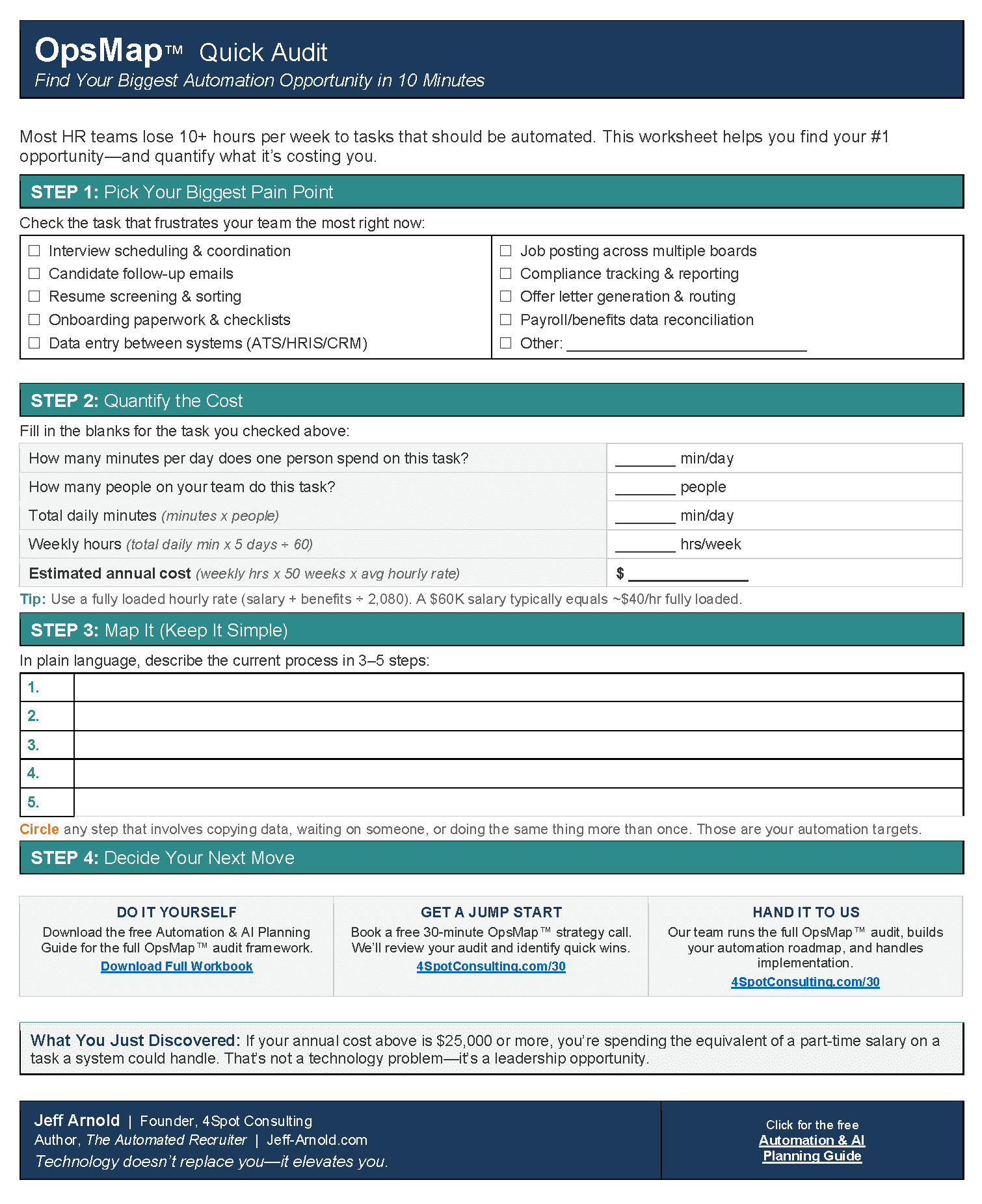
- Vendor and contractor strategies will matter: you’ll need short-term expert partners who can plug into an OpsMap™ for immediate ROI and coach internal teams afterward.
Implementation Playbook (OpsMesh™)
The OpsMesh™ approach below maps hiring strategy to process design and ongoing care. Use this as a repeatable template for turning AI interest into reliable, recruitable capability.
OpsMap™ — Assess and Prioritize
- Inventory current processes and identify 2–3 near-term use cases with clear revenue, cost, or time-savings targets.
- Define the required role profile for each use case (skills, decision authority, success metrics).
- Create a 30-day “value sprint” brief for each use case that recruiting and hiring managers can evaluate candidates against.
OpsBuild™ — Hire, Train, Deploy
- Recruit for hybrid capability: mix of operational domain knowledge + practical AI/tooling experience + client/ stakeholder skills.
- Use short vendor-led bootcamps (2–4 weeks) tied to a live sprint so new hires convert training into billable or measurable work immediately.
- Embed one senior mentor per two new consultants during the first 90 days to reduce time-to-value and limit rework.
OpsCare™ — Maintain & Scale
- Standardize templates, checklists, and guardrails for handoffs (security, data access, monitoring).
- Measure adoption and outcomes with a simple dashboard: Output delivered / time to adopt / revenue or cost improvement.
- Rotate top-performing consultants into internal train-the-trainer roles to seed organic growth.
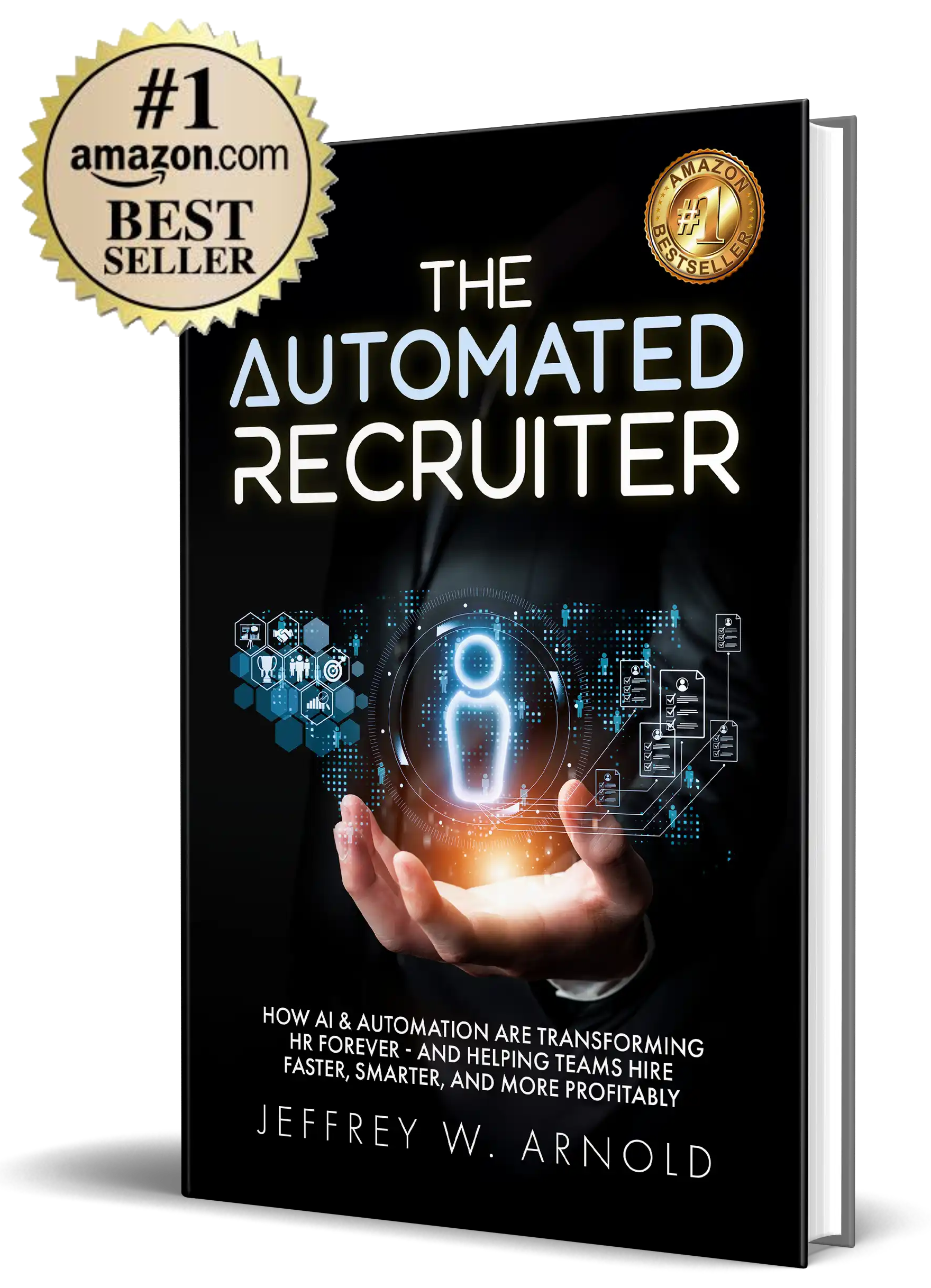
As discussed in my most recent book The Automated Recruiter, …
ROI Snapshot (practical math)
Use this conservative exercise to justify a single automation or role change.
- Baseline: 1 FTE at $50,000/year.
- Time recovered by automation or consultant enablement: 3 hours/week.
- Annual value: 3 hours × 52 weeks = 156 hours per year. At an hourly cost approximated from a $50,000 salary (≈ $24/hour), the annual value is roughly $3,744.
That calculation shows modest line-item savings from a single automation, but remember the 1-10-100 Rule: costs escalate from $1 upfront to $10 in review to $100 in production. Investing a little more in correct scoping, stakeholder alignment, and test-of-value reduces much larger downstream production costs. In short: small, well-scoped pilots that prove value fast protect you from 10x–100x remediation costs later.
Original Reporting
This brief is based on the reporting and offers linked in the email edition of The AI Report. See the original announcement and program pages here:
- The AI Consultancy Project — enrollment & early access
- Announcement: Rob Howard training and cohort notes
Schedule a 30-minute scoping call with 4Spot to map your first AI value sprint
Sources

RELATED POST