Post: Monitor Delta Exports: Prevent Silent Data Corruption
Building a Robust Delta Export Monitoring Dashboard for Unwavering Data Integrity
In the intricate world of business operations, data is the lifeblood that fuels decisions, drives growth, and maintains critical functions. Yet, the journey of this data—especially as it moves between systems in the form of “delta exports”—often goes unmonitored, leaving organizations vulnerable to silent data corruption, missed updates, and catastrophic system desynchronization. For businesses leveraging sophisticated CRMs like Keap or HighLevel, ensuring every change, every update, is accurately captured and processed is not just good practice; it’s a fundamental requirement for business continuity and competitive advantage.
A delta export, by its very nature, deals only with the changes and new records since the last full or delta export. While incredibly efficient for large datasets, this efficiency comes with a significant caveat: if a single delta export fails, is corrupted, or goes unnoticed, the ripple effect can be profound. Imagine a recruiting firm missing crucial candidate updates, or an HR department failing to record new hires or policy changes because a daily delta export silently stalled. The consequences can range from compliance issues and operational bottlenecks to lost revenue and reputational damage.
The Hidden Risks of Unmonitored Delta Exports
The primary risk associated with delta exports lies in their subtlety. Unlike a full data export that might visibly fail or take an inordinate amount of time, a delta export can seemingly complete successfully while subtly missing crucial data points. This “silent failure” is the most insidious, as it allows discrepancies to build over time, making reconciliation a monumental and often impossible task. Furthermore, without a centralized monitoring system, identifying the source of an issue across multiple integrated platforms becomes a forensic nightmare, consuming valuable time and resources.
Ensuring Data Integrity Across Complex Ecosystems
For organizations operating with an ecosystem of interconnected SaaS tools—CRM, HRIS, accounting software, marketing automation—the challenge intensifies. Each system might rely on delta exports from another to maintain a “single source of truth.” When these critical arteries of data flow are not actively supervised, the single source of truth becomes fractured, leading to conflicting information, erroneous reports, and ultimately, poor strategic decisions. Proactive monitoring transforms this vulnerability into a strength, offering real-time visibility into the health of your data pipelines and enabling swift intervention.
The necessity for a robust delta export monitoring dashboard isn’t merely about preventing errors; it’s about building resilience and trust in your data infrastructure. It’s about having the confidence that when your sales team logs into Keap, they’re seeing the absolute latest customer interactions, or when your recruiters access HighLevel, they have the most current candidate statuses. This level of data integrity empowers faster, more accurate operations and liberates high-value employees from the time-consuming drudgery of manual data validation.
Designing Your Delta Export Monitoring Solution
Building an effective monitoring dashboard requires a strategic approach. It starts with identifying all critical delta export points across your systems. What data is moving? From where to where? How frequently? What constitutes a “successful” export, and what are the indicators of failure? This isn’t just about technical alerts; it’s about translating technical events into business-relevant insights. For instance, an alert shouldn’t just say “API call failed”; it should highlight “Keap contact update for XYZ customer did not sync to ERP.”
Leveraging low-code automation platforms like Make.com is instrumental in constructing such a dashboard. These tools allow for the creation of sophisticated monitoring workflows that can track export statuses, compare record counts, validate data structures, and trigger alerts or corrective actions automatically. Imagine a scenario where a delta export for new recruits from an applicant tracking system to Keap fails. A well-designed Make.com scenario could not only alert the relevant team but also automatically re-attempt the export or flag the specific records that were missed, reducing manual intervention and preventing data loss.
The 4Spot Consulting Approach to Data Vigilance
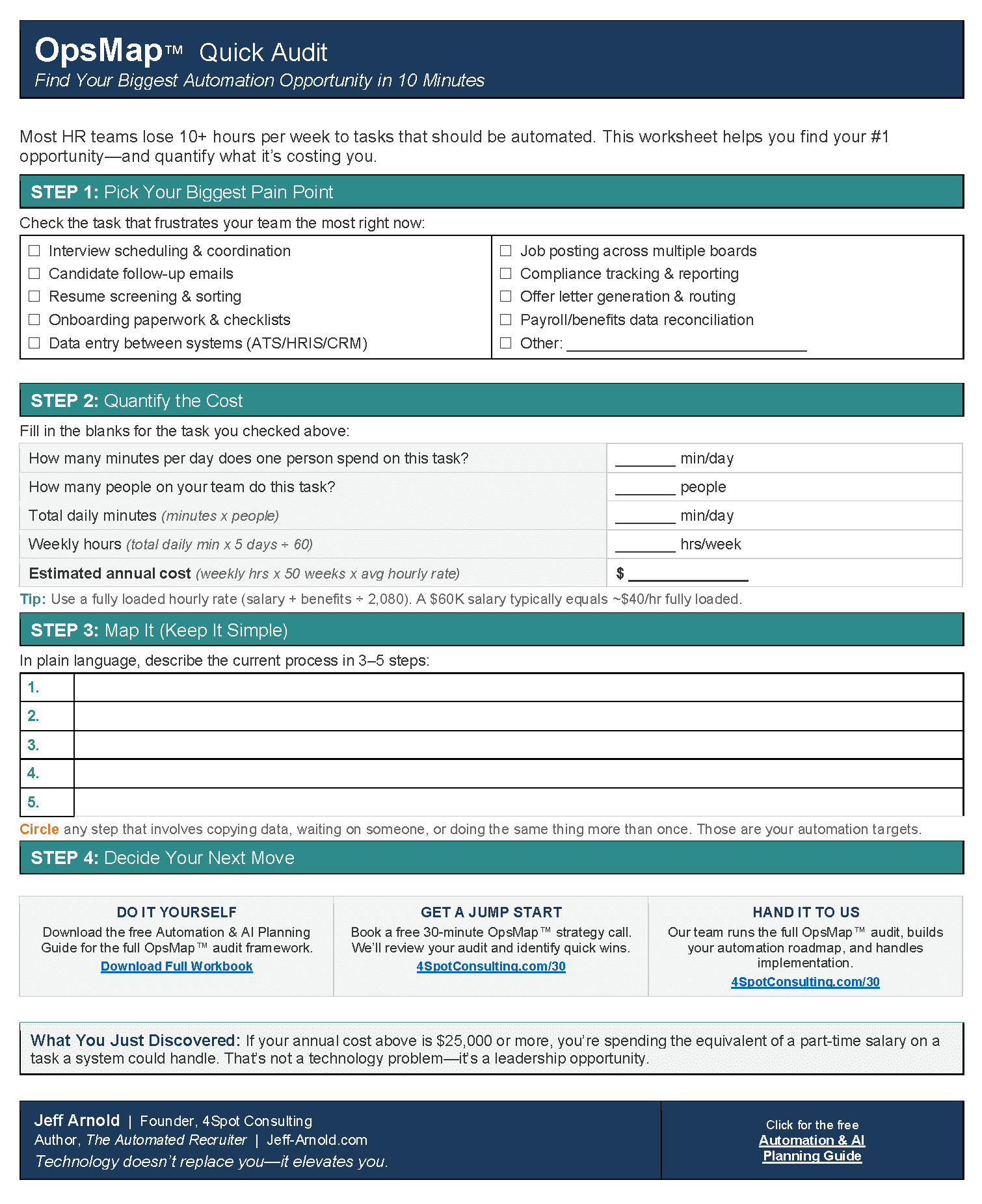
At 4Spot Consulting, we specialize in helping businesses establish these layers of operational resilience. Our OpsMesh™ framework is designed to weave together your disparate systems into a cohesive, intelligent whole, with data integrity at its core. We don’t just build automations; we engineer systems that monitor themselves, providing business leaders with a real-time pulse on their data health. From the initial OpsMap™ strategic audit, where we uncover these critical data transfer points, to OpsBuild™, where we implement bespoke monitoring solutions, and OpsCare™, for ongoing optimization, our approach ensures your delta exports are not just happening, but happening correctly.
A comprehensive delta export monitoring dashboard offers more than just alerts; it provides actionable intelligence. It gives you the ability to trend data consistency over time, identify potential bottlenecks before they impact operations, and prove compliance with data governance policies. This proactive stance transforms data management from a reactive firefighting exercise into a strategic asset, enabling scalable growth and eliminating the costly drag of human error. Protecting your data is protecting your business, and an unyielding commitment to monitoring your delta exports is a cornerstone of that protection.
If you would like to read more, we recommend this article: CRM Data Protection & Business Continuity for Keap/HighLevel HR & Recruiting Firms



RELATED POST