Post: Delta-Based EDI: Cut Costs and Speed Up Data Transfer
Streamlining EDI Processes with Delta-Based Information Exchange: The Future of Efficient Data Transfer
In today’s fast-paced business environment, data exchange isn’t just a necessity; it’s the lifeblood of interconnected operations. Electronic Data Interchange (EDI) has long been the backbone for automated business-to-business communication, facilitating transactions from purchase orders to invoices. Yet, for many organizations, traditional EDI processes have become less of an accelerator and more of a drag. The sheer volume of data, the latency in processing full file transfers, and the resulting operational overheads are significant pain points that directly impact scalability and profitability. Business leaders are constantly seeking ways to eliminate these bottlenecks, reduce human error, and free up high-value employees from low-value, repetitive tasks. This is where a strategic pivot to delta-based information exchange offers a compelling solution, transforming how businesses approach data synchronization and operational efficiency.
The Bottlenecks of Traditional EDI: Why Full File Exchanges Are Holding You Back
The conventional approach to EDI often involves the transfer of entire datasets, even when only a fraction of the information has changed. Imagine a supply chain where thousands of product records are exchanged daily. If only a dozen prices or stock levels are updated, the entire product catalog is still sent, consuming bandwidth, processing power, and valuable time. This “firehose” approach to data exchange leads to several critical disadvantages:
- Increased Transmission Costs: Larger data volumes mean higher network usage and potentially greater infrastructure costs.
- Slower Processing Times: Receiving and processing redundant data takes longer, creating latency in critical business workflows.
- Higher Error Rates: Reconciling entire datasets for minor changes increases the complexity and likelihood of errors, requiring more manual intervention.
- Scalability Challenges: As businesses grow and data volumes explode, traditional EDI systems struggle to keep pace without significant investment in hardware and staffing.
- Limited Real-Time Visibility: The delay in full-file transfers means decision-makers often work with slightly outdated information, hindering agility.
These challenges are not merely technical; they translate directly into operational inefficiencies, lost revenue opportunities, and an inability to respond quickly to market changes. For organizations aiming for a single source of truth and optimized operations, this inefficiency is simply untenable.
Introducing Delta-Based Information Exchange: Precision and Efficiency
What is Delta-Based Exchange?
Delta-based information exchange is a sophisticated approach where instead of transferring entire files or datasets, only the changes (or “deltas”) between two versions of the data are transmitted. Think of it like version control for your business data. When a partner needs an update to your product catalog, you don’t send the whole catalog; you send a small, precise file detailing exactly what has been added, removed, or modified since their last update.
How Delta-Based EDI Works in Practice
The process typically involves a robust comparison mechanism. The sender maintains a record of the last state of the data sent to a particular recipient. When new changes occur, the system identifies these specific modifications—whether it’s an updated price, a new item, or a deleted record. Only these “deltas” are then packaged and transmitted. Upon receipt, the partner’s system applies these changes to their existing dataset, effectively synchronizing their information with minimal overhead.
This method requires intelligent systems capable of tracking changes at a granular level and a well-defined protocol for identifying and communicating these deltas. It’s an approach that shifts from bulk data transfer to highly targeted, efficient data synchronization.
The Strategic Advantages for Your Business
Adopting delta-based information exchange isn’t just a technical upgrade; it’s a strategic move that delivers tangible business benefits:
Reducing Data Volume and Transmission Costs
By only sending what’s new or changed, the volume of data transmitted can be drastically reduced—often by orders of magnitude. This leads to lower bandwidth consumption, faster transfer times, and a direct impact on operational costs, especially for cloud-based or high-volume environments.
Enhancing Real-Time Visibility and Agility
Smaller data payloads mean quicker processing and integration. Businesses can achieve near real-time synchronization of critical information, empowering faster decision-making, more responsive inventory management, and improved customer service. Agility, a key differentiator in competitive markets, is significantly enhanced.
Minimizing Errors and Improving Data Quality
When less data is transferred, there are fewer opportunities for transmission errors. Furthermore, the precise nature of delta updates simplifies reconciliation processes, making it easier to identify and rectify discrepancies. This contributes to a higher overall data quality across your ecosystem of partners.
Boosting Operational Efficiency and Scalability
With less data to process, internal systems are less burdened, leading to improved performance and stability. This efficiency directly translates into higher productivity for your teams, as they spend less time managing data transfers and resolving issues. Moreover, the lightweight nature of delta-based exchange makes it inherently more scalable, allowing your business to onboard more partners and handle increasing data volumes without prohibitive infrastructure investments.
Implementing Delta-Based EDI with a Strategic Partner
The transition to a delta-based EDI strategy is a significant undertaking that requires more than just technical expertise; it demands a strategic understanding of your business processes and data flows. This is where 4Spot Consulting excels. Through our OpsMesh framework, we help organizations rethink their entire automation strategy, integrating advanced concepts like delta-based exchanges into a cohesive, efficient operational fabric.
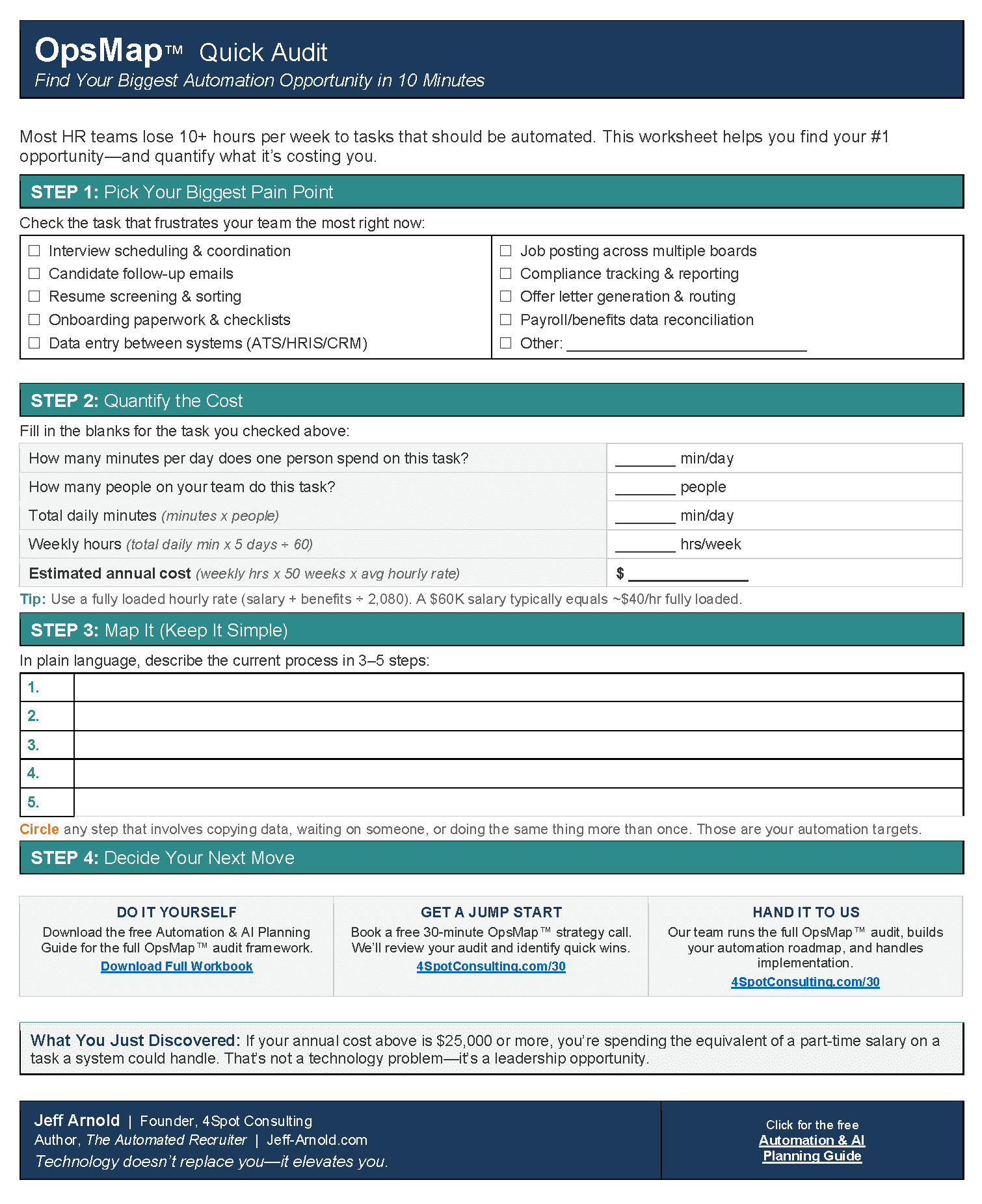
Our journey with clients often begins with an OpsMap™—a strategic audit that uncovers inefficiencies within existing systems and identifies prime opportunities for automation. For EDI, this means pinpointing where full-file exchanges are creating unnecessary costs and delays, and then architecting a solution that leverages delta-based principles. Our OpsBuild phase then brings these solutions to life, often utilizing powerful low-code platforms like Make.com to connect disparate SaaS systems and implement intelligent data exchange protocols. We focus on ensuring that every automation, including sophisticated EDI optimizations, directly contributes to eliminating human error, reducing operational costs, and increasing scalability.
The 4Spot Consulting Advantage: Beyond Just Technology
At 4Spot Consulting, we don’t just implement technology; we engineer outcomes. Our strategic-first approach ensures that any solution, from advanced EDI to comprehensive CRM data protection, is tied directly to measurable ROI and core business objectives. We understand that business leaders value time and clear outcomes, which is why our focus is on delivering systems that save you 25% of your day by automating repetitive tasks and streamlining complex data exchanges.
Embracing delta-based information exchange is a forward-thinking move that can significantly reduce your operational costs, enhance your data integrity, and accelerate your business processes, giving you a distinct competitive advantage. It’s about working smarter, not harder, with your most valuable asset: your data.
If you would like to read more, we recommend this article: CRM Data Protection & Business Continuity for Keap/HighLevel HR & Recruiting Firms

RELATED POST