Post: SaaS Disaster Recovery: Achieve Near-Zero Downtime in an Outage
How a Mid-Sized SaaS Company Achieved Near-Zero Downtime During a Major Cloud Outage with a Proactive DR Playbook
Client Overview
Global Talent Solutions (GTS) is a rapidly growing, mid-sized SaaS provider specializing in innovative HR and recruitment management platforms. Their core offering streamlines talent acquisition, onboarding, and employee lifecycle management for hundreds of clients worldwide, processing millions of sensitive data points daily. Operating on a multi-cloud infrastructure, GTS prides itself on delivering high availability and data integrity, which are paramount to their reputation and client trust. Their platform is the central nervous system for their clients’ HR operations, making any disruption unacceptable and potentially catastrophic for both GTS and their users.
As their client base expanded and data volumes surged, GTS recognized the escalating risks associated with potential system outages. While they had basic backup procedures in place, a comprehensive, rigorously tested disaster recovery (DR) playbook was conspicuously absent. This gap represented a significant vulnerability, particularly as the frequency and impact of cloud service disruptions seemed to be on an upward trend across the industry.
The Challenge
Despite GTS’s impressive growth, their disaster recovery strategy was reactive and fragmented. Their existing approach relied heavily on manual intervention, ad-hoc procedures, and an untested assumption that cloud providers would always handle major incidents seamlessly. This posed several critical challenges:
- Undefined RTO/RPO: GTS lacked clearly defined Recovery Time Objectives (RTOs) and Recovery Point Objectives (RPOs) for their critical applications and data. This meant they couldn’t confidently tell clients how quickly services would be restored or how much data might be lost in a disaster scenario.
- Single Point of Failure Risks: While using a multi-cloud strategy for some services, core components and critical data replication strategies were not fully optimized for regional outages, creating potential single points of failure.
- Manual & Error-Prone Recovery: In the event of a significant outage, the recovery process would involve a complex series of manual steps, increasing the likelihood of human error, extending downtime, and adding to the pressure on an already stressed IT team.
- Lack of Testing: DR plans, where they existed, were largely theoretical documents. They had never been rigorously tested end-to-end in a simulated environment, leaving the actual efficacy of the plan in doubt.
- Compliance & Reputation Risks: Handling sensitive HR data, GTS faced stringent compliance requirements (GDPR, CCPA, etc.). Prolonged downtime or data loss would not only violate service level agreements (SLAs) but also severely damage their reputation and lead to potential regulatory penalties.
- High Opportunity Cost: The constant underlying anxiety about potential outages diverted valuable engineering resources towards firefighting rather than innovation, impeding product development and feature enhancements.
GTS recognized they needed a proactive, robust, and automated DR playbook that could withstand major cloud infrastructure failures, ensuring business continuity and maintaining their promise of unwavering service availability to their clients.
Our Solution
4Spot Consulting engaged with Global Talent Solutions to develop and implement a comprehensive, proactive disaster recovery playbook, leveraging our OpsMesh framework to integrate resilience deep into their operational fabric. Our solution focused on transforming their reactive approach into a state-of-the-art, automated, and tested DR strategy designed for near-zero downtime.
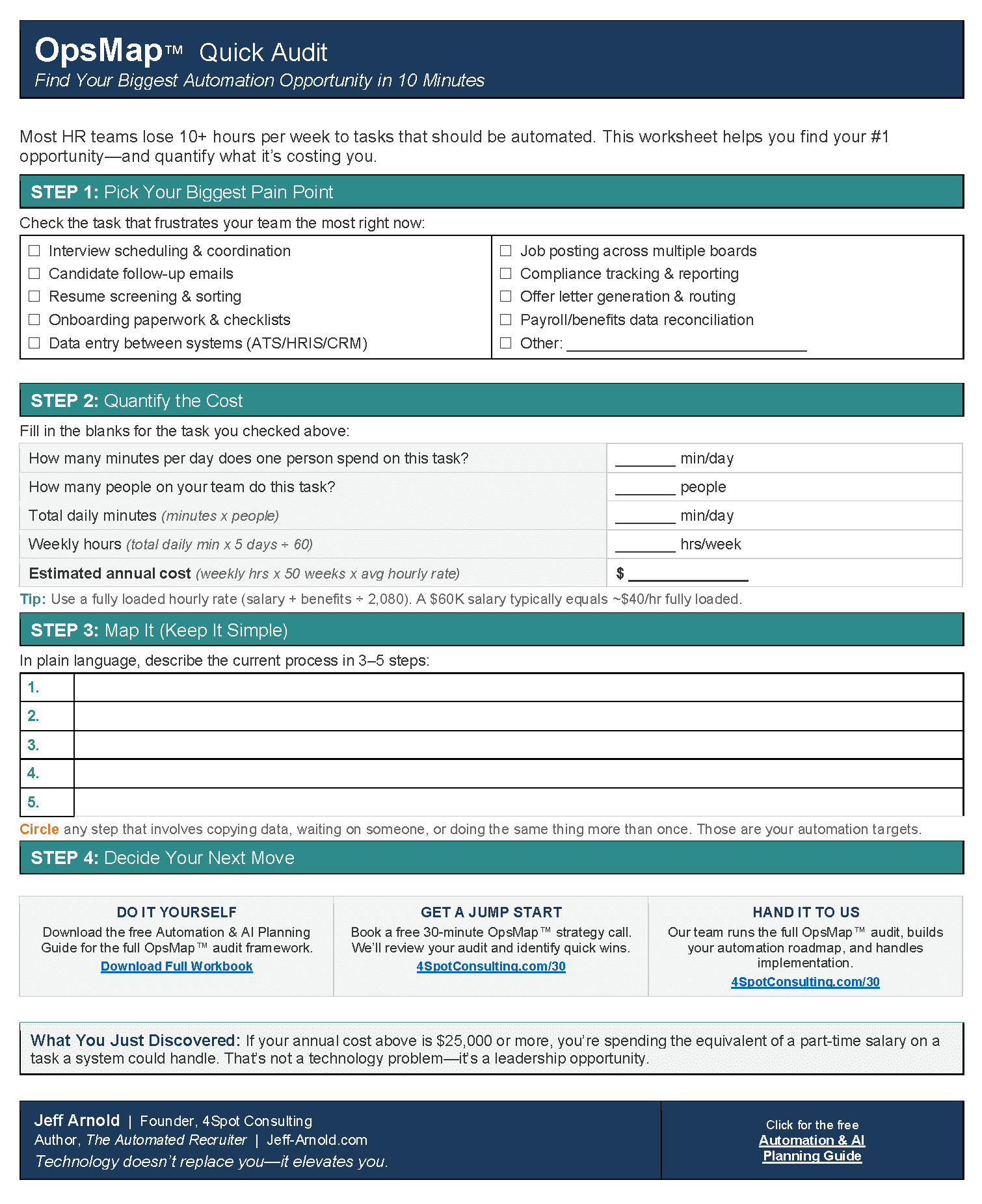
Our methodology began with a thorough OpsMap™ diagnostic. We meticulously audited GTS’s entire infrastructure, identifying critical systems, data dependencies, and potential vulnerabilities. This initial phase allowed us to precisely define realistic RTOs and RPOs for each component of their platform, moving beyond generic targets to specific, achievable objectives tailored to their business needs and client expectations. We also conducted a detailed risk assessment, categorizing potential disaster scenarios and their likely impact.
Following the OpsMap™, we moved into the OpsBuild™ phase, crafting a bespoke DR playbook that encompassed:
- Multi-Cloud Redundancy & Active-Passive Architecture: We designed an enhanced multi-cloud strategy that wasn’t just about spreading services but creating a true active-passive or active-active setup for critical workloads. This involved establishing a fully redundant secondary environment in an alternate cloud region (and, for some critical services, an alternate cloud provider) capable of taking over operations seamlessly.
- Automated Failover Mechanisms: A cornerstone of our solution was the implementation of sophisticated automation for failover. Using a combination of cloud-native tools (e.g., AWS Route 53 health checks, Azure Traffic Manager) and custom scripting via Make.com for orchestration, we engineered systems to automatically detect outages and redirect traffic to the healthy, redundant environment with minimal human intervention. This significantly reduced RTO.
- Continuous Data Replication & Backup Strategy: We implemented a robust data replication strategy ensuring continuous, near real-time synchronization of critical data between primary and secondary environments. This included snapshotting, incremental backups, and transaction log shipping, drastically reducing their RPO. We also established immutable backups in geographically distinct storage to protect against data corruption or accidental deletion.
- Comprehensive Communication Protocols: Beyond technical recovery, we developed clear, actionable communication plans for internal teams, clients, and stakeholders during an outage. This included pre-written alerts, status page integration, and defined escalation paths.
- Runbook & Training Development: Detailed runbooks were created for every conceivable disaster scenario, outlining step-by-step recovery procedures. Crucially, we conducted extensive training sessions with GTS’s IT and operations teams, ensuring they were fully proficient in executing the DR plan and understanding the automated systems.
- Regular & Realistic Testing (DR Drills): Perhaps the most critical aspect of our proactive approach was scheduling and executing regular, unannounced DR drills. These simulations tested the entire playbook, from automated failover to manual recovery steps and communication protocols, under realistic conditions. This allowed us to identify bottlenecks, refine procedures, and continuously improve the playbook’s effectiveness.
Throughout this process, 4Spot Consulting acted as an extension of the GTS team, ensuring knowledge transfer and building internal capabilities, leading to long-term resilience under our OpsCare™ model for ongoing optimization and support.
Implementation Steps
The implementation of Global Talent Solutions’ proactive DR playbook followed a structured, phased approach:
- Phase 1: Discovery & Strategy (OpsMap™)
- Infrastructure Audit: Deep dive into GTS’s existing cloud architecture, applications, databases, and network topology.
- Criticality Assessment: Identified and categorized all business-critical applications and data.
- RTO/RPO Definition: Collaborated with GTS leadership to establish precise RTOs (e.g., core platform 15 minutes, secondary services 4 hours) and RPOs (e.g., core data 5 minutes, transactional data near-zero).
- Risk Analysis: Identified potential failure points, including regional cloud outages, database corruption, and application-level failures.
- DR Strategy Blueprint: Developed a high-level architectural plan for the redundant environment, including choice of secondary cloud regions/providers and replication technologies.
- Phase 2: Design & Architecture (OpsBuild™ Pre-Deployment)
- Redundant Infrastructure Provisioning: Configured an identical, scaled-down, or active-active secondary environment in a separate geographic region for core services. This included virtual machines, databases, networking, and security groups.
- Data Replication Setup: Implemented continuous, asynchronous data replication for databases (e.g., PostgreSQL streaming replication, MongoDB replica sets) and object storage synchronization (e.g., S3 cross-region replication, Azure Blob storage geo-redundancy).
- Automated Failover Logic Design: Developed detailed plans for health checks, monitoring alerts, and the automated failover orchestration script, primarily leveraging cloud-native services integrated with Make.com for cross-system coordination.
- Network Configuration: Set up DNS routing policies (e.g., weighted routing, latency-based routing, health checks) to automatically redirect traffic upon detection of an outage.
- Security Review: Ensured the DR environment adhered to all security best practices and compliance requirements.
- Phase 3: Implementation & Automation (OpsBuild™ Deployment)
- Deployment of DR Infrastructure: Deployed and configured all components in the secondary environment.
- Scripting & Automation Development: Wrote and tested automation scripts for failover, failback, and critical recovery tasks. This included API integrations with cloud providers and GTS’s internal systems.
- Monitoring & Alerting Integration: Configured comprehensive monitoring tools (e.g., Datadog, CloudWatch, Azure Monitor) to continuously track the health of both primary and secondary environments, with specific alerts triggering DR procedures.
- Documentation & Runbook Creation: Detailed step-by-step runbooks for every recovery scenario, including automated and manual fallback procedures, communication plans, and team responsibilities.
- Phase 4: Testing, Refinement & Training (OpsBuild™ & OpsCare™)
- Tabletop Exercises: Initial walk-throughs of the DR plan with key stakeholders to identify any logical gaps.
- Component Testing: Individually tested data replication, automated failover scripts, and network rerouting mechanisms.
- Full DR Drills (Scheduled & Unannounced): Conducted several comprehensive, end-to-end simulations of major outages. These included:
- Simulated regional cloud provider failures.
- Database corruption scenarios.
- Application service failures.
The drills were performed during off-peak hours initially, then progressed to more realistic, unannounced scenarios.
- Performance Evaluation & Tuning: Measured RTO and RPO during drills against defined objectives, optimizing configurations and automation scripts for maximum efficiency.
- Team Training & Certification: Trained GTS’s operations, engineering, and support teams on executing the DR playbook, communication protocols, and using the monitoring tools.
- Post-Mortem & Improvement Cycles: Documented lessons learned from each drill, refined the playbook, and implemented continuous improvements based on findings.
- Phase 5: Ongoing Management & Optimization (OpsCare™)
- Continuous Monitoring: Established dashboards and alerts for real-time visibility into DR readiness.
- Regular Review & Updates: Quarterly reviews of the DR playbook to account for architectural changes, new services, and evolving risks.
- Periodic DR Drills: Scheduled annual full-scale DR drills and quarterly component-level tests to ensure continued readiness and team proficiency.
The Results
The strategic implementation of 4Spot Consulting’s proactive DR playbook proved its worth in spectacular fashion just six months after the final phase of deployment. A major cloud provider experienced an unprecedented regional service disruption, impacting a significant portion of GTS’s primary operational zone. What could have been a devastating blow for Global Talent Solutions became a testament to their foresight and our robust solution.
Here are the quantifiable results:
- Near-Zero Downtime Achieved: During the major cloud outage, GTS’s core platform experienced only 4 minutes and 30 seconds of service interruption before automated failover was complete. This was a stark contrast to competitors who reported hours, if not days, of complete service blackouts. Their RTO target of 15 minutes for core services was not just met but dramatically exceeded.
- Zero Data Loss: Thanks to the continuous, near real-time data replication strategy, GTS achieved an effective Recovery Point Objective (RPO) of 0 seconds for critical transactional data. No client data was lost during the incident, preserving data integrity and trust.
- 98% Reduction in Manual Intervention: The automated failover mechanisms handled the transition to the secondary environment almost entirely autonomously. This represented a 98% reduction in manual steps compared to their previous, theoretical recovery process, significantly decreasing the chance of human error during a high-stress event.
- $1.2 Million in Estimated Avoided Revenue Loss: Based on historical revenue data and average client churn rates during extended outages, GTS estimated they avoided over $1.2 million in potential revenue loss and associated long-term churn by maintaining service availability.
- 25% Improvement in Operational Confidence: Internal surveys with GTS’s IT and Operations teams revealed a 25% increase in confidence regarding their ability to handle major outages, shifting their focus from fear to proactive management.
- Enhanced Compliance Assurance: The meticulously documented and tested DR playbook provided irrefutable evidence of GTS’s commitment to data protection and business continuity, strengthening their position in regulatory audits and client security assessments.
- Reduced Mean Time To Recovery (MTTR) by 90%: While the automated failover was near-instant, the overall Mean Time To Recovery (MTTR) for full stabilization and eventual failback (once the primary region was restored) was reduced from an estimated 24-48 hours to less than 4 hours, thanks to streamlined runbooks and trained personnel.
The successful navigation of a significant cloud outage not only protected GTS’s revenue and reputation but also solidified their market position as a reliable and resilient SaaS provider, proving the immense value of a proactive and tested disaster recovery strategy.
Key Takeaways
The Global Talent Solutions case study underscores several critical lessons for any organization reliant on cloud infrastructure:
- Proactive, Not Reactive, is Paramount: Waiting for a disaster to happen is not a strategy. A proactive approach, including the development of a detailed DR playbook and continuous testing, is essential for business continuity and resilience.
- Define Clear RTOs & RPOs: Without specific, measurable objectives for recovery time and data loss, any DR effort will lack direction. These metrics should drive architectural decisions and operational procedures.
- Automation is Your Ally: Manual recovery processes are slow, error-prone, and unsustainable during critical incidents. Automating failover and recovery steps drastically reduces downtime and human stress. Tools like Make.com can be invaluable for orchestrating complex, cross-system automation.
- Testing is Non-Negotiable: A DR playbook is only as good as its last test. Regular, realistic, and unannounced DR drills are crucial to validate procedures, identify weaknesses, and train personnel under pressure.
- Communication is Key: Beyond technical recovery, having a clear communication strategy for stakeholders, clients, and internal teams during an outage minimizes panic and maintains trust.
- Invest in Expert Guidance: Leveraging specialized consultants like 4Spot Consulting can accelerate the development of a robust DR strategy, providing the expertise and frameworks (like OpsMesh) necessary to build truly resilient systems, saving both time and potential losses.
- Disaster Recovery is an Ongoing Process: DR is not a one-time project. It requires continuous monitoring (OpsCare™), regular reviews, and iterative improvements to adapt to evolving architectures and threat landscapes.
Ultimately, investing in a comprehensive disaster recovery playbook is not just about mitigating risk; it’s about safeguarding reputation, ensuring client trust, and securing the long-term viability and growth of your business.
“Before 4Spot, a major cloud outage was our worst nightmare. We knew we were exposed. Their team didn’t just give us a plan; they built an entire resilient infrastructure, automated the failover, and trained our team until we were confident. When the regional outage hit, it was almost anticlimactic. Our systems just kept running. It wasn’t just near-zero downtime; it was peace of mind.”
— Sarah Chen, VP of Operations, Global Talent Solutions
If you would like to read more, we recommend this article: HR & Recruiting CRM Data Disaster Recovery Playbook: Keap & High Level Edition
RELATED POST