
Post: AI Resume Parsing: The Truth About Its Capabilities & Limits
Debunking Myths: What AI Resume Parsing Can and Cannot Do
In the rapidly evolving landscape of HR and recruiting, artificial intelligence has emerged as a powerful tool, promising to revolutionize everything from candidate sourcing to offer management. Among its most lauded applications is AI resume parsing – the automated extraction and categorization of information from resumes. Yet, despite its widespread adoption and genuine benefits, a haze of misconceptions often surrounds what these sophisticated systems are truly capable of, and more importantly, where their limitations lie. At 4Spot Consulting, we speak from over 35 years of leadership experience, having implemented robust automation solutions that genuinely save businesses 25% of their day, and we’ve seen firsthand what AI resume parsing delivers and what it doesn’t.
The allure of AI resume parsing is clear: automate a tedious, time-consuming process, reduce human error, and accelerate time-to-hire. However, many business leaders and HR professionals harbor unrealistic expectations, often believing the technology possesses a level of human-like discernment it simply has not achieved. This satellite piece aims to cut through the noise, providing a clear, authoritative perspective on the capabilities and constraints of AI in resume analysis, all while maintaining a focus on actionable insights for our target audience.
The Truth About AI Resume Parsing’s Capabilities
Let’s first clarify what AI resume parsing excels at. When implemented correctly, often as part of a broader automation strategy like our OpsMesh framework, it delivers significant efficiencies:
Automated Data Extraction and Categorization
At its core, AI resume parsing is about data extraction. It efficiently pulls out structured data points such as contact information, work history (company names, titles, dates), education, skills, and certifications. This information is then categorized and can be seamlessly integrated into Applicant Tracking Systems (ATS), CRM platforms like Keap, or other HRIS databases. This automation frees up recruiters and HR teams from manual data entry, which is notorious for introducing errors and consuming valuable time. We’ve helped clients dramatically reduce the time spent on initial data processing, allowing their high-value employees to focus on strategic tasks rather that copy-pasting.
Standardization and Searchability
Resumes come in myriad formats, making comparative analysis difficult. AI parsing can standardize this information, translating varied layouts into a consistent data structure. This standardization dramatically improves the searchability of your candidate database. Recruiters can then quickly filter candidates based on specific criteria like years of experience, types of skills, or educational background, significantly narrowing down large applicant pools to the most relevant candidates. This is where AI truly augments human effort, providing a clean, organized ‘single source of truth’ for candidate data.
Initial Screening and Keyword Matching
AI parsers are highly effective at keyword matching. They can be configured to identify specific skills, technologies, or industry terms that are critical for a role. This capability allows for an initial, high-volume screening process, flagging resumes that meet predefined criteria and filtering out those that clearly do not. For an HR firm we consulted with, automating their resume intake and parsing saved them over 150 hours per month by using Make.com and AI enrichment, then syncing this data to their Keap CRM. The client noted, “We went from drowning in manual work to having a system that just works.” This is a prime example of AI intelligently reducing low-value work for high-value employees.
What AI Resume Parsing Cannot (Yet) Do
While impressive, AI resume parsing is not a panacea. It’s crucial to understand its limitations to avoid missteps and ensure that technology truly serves your strategic goals, rather than creating new bottlenecks.
Understand Context, Nuance, and Soft Skills
This is perhaps the biggest misconception. AI resume parsers are excellent at identifying explicit keywords and structured data. However, they struggle immensely with understanding the context, nuance, and unspoken implications within a resume. They cannot genuinely interpret the depth of experience behind a job title, discern leadership potential from project descriptions, or evaluate soft skills like communication, adaptability, or critical thinking, which are often conveyed through the narrative and specific examples. These crucial assessments still require human judgment and interaction.
Interpret Inconsistent or Creative Formats Accurately
While parsers aim for standardization, highly unconventional or graphically heavy resume formats can still confuse them. If information is embedded within images, presented in unusual tables, or uses non-standard terminology, the parser may struggle to extract it accurately or categorize it correctly. This can lead to missed qualifications or incorrect data entry, undermining the very efficiency AI seeks to provide.
Evaluate Cultural Fit or True Potential
A resume, even perfectly parsed, is a static document. It provides a snapshot of past achievements and qualifications. What it cannot convey is a candidate’s personality, their alignment with your company culture, their passion, or their potential for growth within your organization. These are qualitative factors that demand human interaction, interviews, and comprehensive assessment methods. Relying solely on parsed data for final hiring decisions risks creating a homogenous workforce lacking diversity of thought and essential interpersonal dynamics.
Replica Human Judgment or Bias-Free Decisions
While AI can help reduce some explicit biases by standardizing information, it is not inherently bias-free. AI models are trained on existing data, which itself can contain historical biases. If an AI is trained on resumes from a predominantly male industry, for example, it might implicitly favor male-coded language or experience, even unintentionally. Furthermore, AI cannot replicate the complex, ethical, and empathetic judgment calls that human recruiters make when evaluating candidates and considering their unique circumstances.
Strategic Integration for Real ROI
The key to successful AI resume parsing, as with any advanced technology, lies in strategic integration. It should be viewed as an incredibly powerful assistant, augmenting the capabilities of your HR and recruiting teams, not replacing them. At 4Spot Consulting, our OpsBuild framework focuses on implementing these systems as part of a comprehensive automation strategy, ensuring they connect seamlessly with your CRM and other critical business tools.
By understanding what AI resume parsing truly can and cannot do, business leaders can leverage its strengths for efficiency and data organization while reserving human expertise for the critical, nuanced, and strategic aspects of talent acquisition. This balanced approach not only saves time and reduces operational costs but also leads to more accurate, equitable, and ultimately successful hiring outcomes.
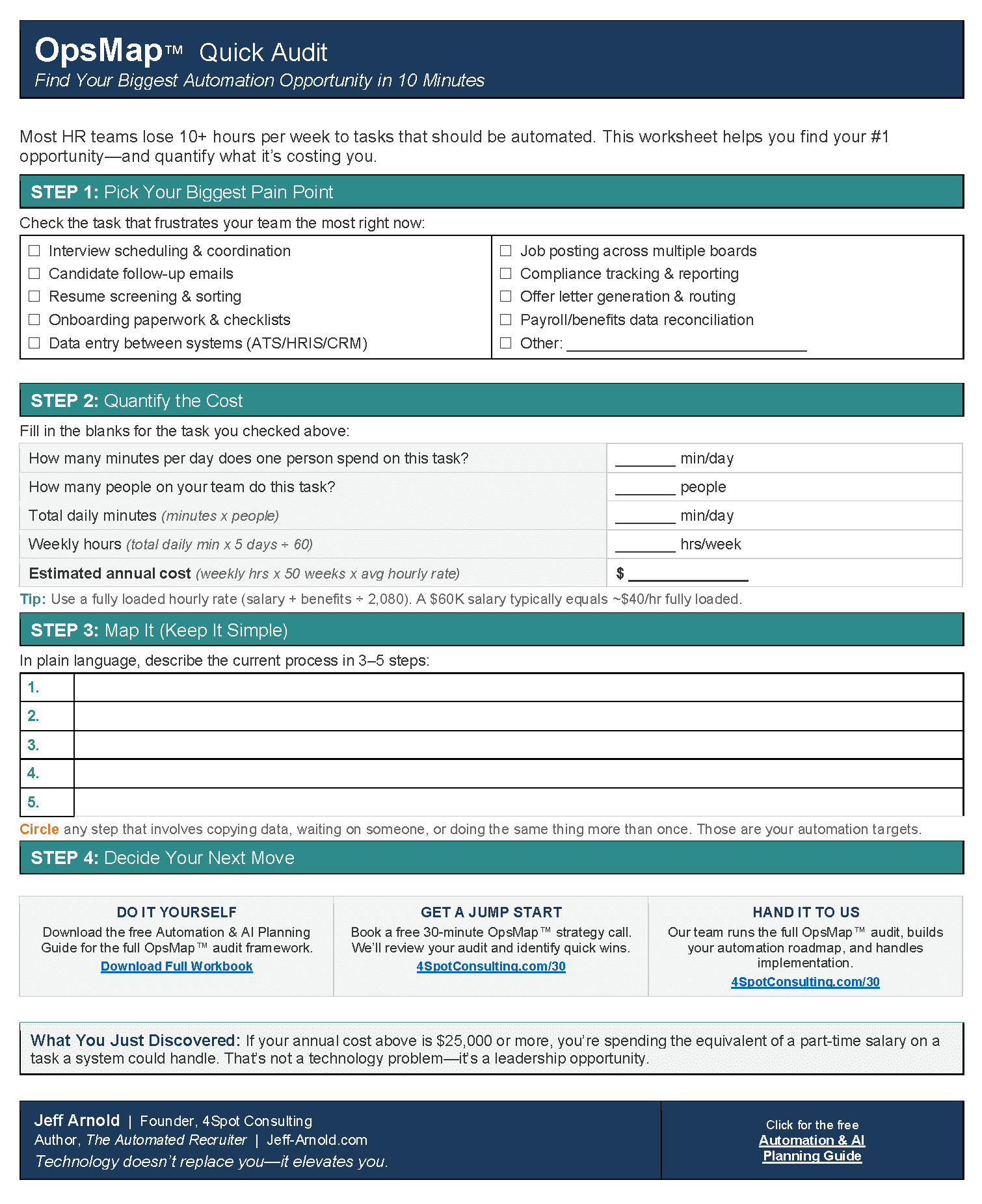
Ready to uncover automation opportunities that could save you 25% of your day? Book your OpsMap™ call today.
If you would like to read more, we recommend this article: Mastering CRM Data Protection & Recovery for HR & Recruiting (Keap & High Level)



RELATED POST