Post: AI Resume Parsing: Cut Admin Burden, Boost Recruiter Speed
How AI Resume Parsing Reduces Administrative Burden for Recruiters
In the high-stakes world of modern recruitment, efficiency isn’t just a buzzword – it’s the bedrock of success. Recruiters are constantly battling against the clock, sifting through mountains of applications, and striving to identify top talent amidst a sea of candidates. This administrative burden, often overlooked, significantly drains resources, delays hiring, and ultimately impacts a company’s bottom line. At 4Spot Consulting, we’ve seen firsthand how traditional, manual resume parsing can become an insurmountable bottleneck. This is precisely why integrating AI-powered resume parsing isn’t just an upgrade; it’s a strategic imperative for any forward-thinking HR or recruiting operation.
The Hidden Cost of Manual Resume Processing
Consider the typical recruitment workflow: a job post goes live, and within hours, hundreds of resumes flood in. Each one represents a potential candidate, but also a manual task. Recruiters historically have had to visually scan each document, extracting key information like contact details, work history, skills, education, and keywords relevant to the role. This process is not only time-consuming but also prone to human error, subjectivity, and inconsistency. A recruiter might miss a crucial skill listed deep within a resume, or spend valuable time manually inputting data that could be automated.
This administrative overhead isn’t trivial. It diverts highly skilled recruiters from their core mission: engaging with candidates, building relationships, and making informed hiring decisions. Instead, they’re performing data entry and document review, tasks that offer minimal strategic value and maximum drudgery. The result? Slower time-to-hire, increased operational costs, and a potential for top candidates to be overlooked or snatched up by more agile competitors.
Transforming Recruitment with AI-Powered Efficiency
AI resume parsing fundamentally redefines this archaic process. Rather than human eyes, intelligent algorithms scan, interpret, and extract relevant data from resumes with unprecedented speed and accuracy. This technology doesn’t just digitize; it contextualizes. It understands the nuances of different resume formats, identifies key information regardless of placement, and can even infer skills and experiences that aren’t explicitly stated.
Automating Data Extraction and Standardization
The most immediate and impactful benefit is the complete automation of data extraction. AI parsing tools pull out names, contact information, job titles, companies, dates of employment, educational institutions, degrees, and specific skills. This data is then instantly standardized and structured, ready to be seamlessly integrated into your Applicant Tracking System (ATS), CRM (like Keap or HighLevel), or any other recruitment database. This eliminates manual data entry errors and ensures a consistent, clean dataset across all candidates.
Enhanced Candidate Matching and Filtering
Beyond simple extraction, AI parsing empowers sophisticated candidate matching. By converting unstructured resume text into structured, searchable data, recruiters can filter candidates based on precise criteria with incredible accuracy. Need someone with “Python,” “AWS,” and “Machine Learning” experience who worked at a “Fortune 500 company” for “at least five years”? AI can identify these candidates in seconds, drastically reducing the time spent manually sifting through irrelevant applications. This leads to a more qualified candidate pool presented to the recruiter, making their outreach and interview processes far more targeted and effective.
Reducing Bias and Increasing Objectivity
While human recruiters can inadvertently introduce biases based on factors like resume design, name, or perceived demographic information, AI parsing focuses purely on the objective data points presented. While AI isn’t entirely immune to biases embedded in its training data, properly implemented systems can significantly reduce the impact of unconscious bias in the initial screening phase, promoting a more equitable and merit-based selection process. This helps organizations broaden their talent pool and align with diversity and inclusion goals.
Boosting Recruiter Productivity and Focus
By offloading the laborious task of resume review and data entry, AI parsing frees up recruiters to focus on high-value activities. This includes building relationships with top talent, conducting insightful interviews, strategically sourcing passive candidates, and providing a superior candidate experience. When recruiters spend less time on administrative tasks, they can dedicate more energy to the human element of recruitment, which is where their true expertise lies. This shift not only improves efficiency but also elevates the role of the recruiter within the organization.
4Spot Consulting’s Approach to AI-Driven Recruitment Efficiency
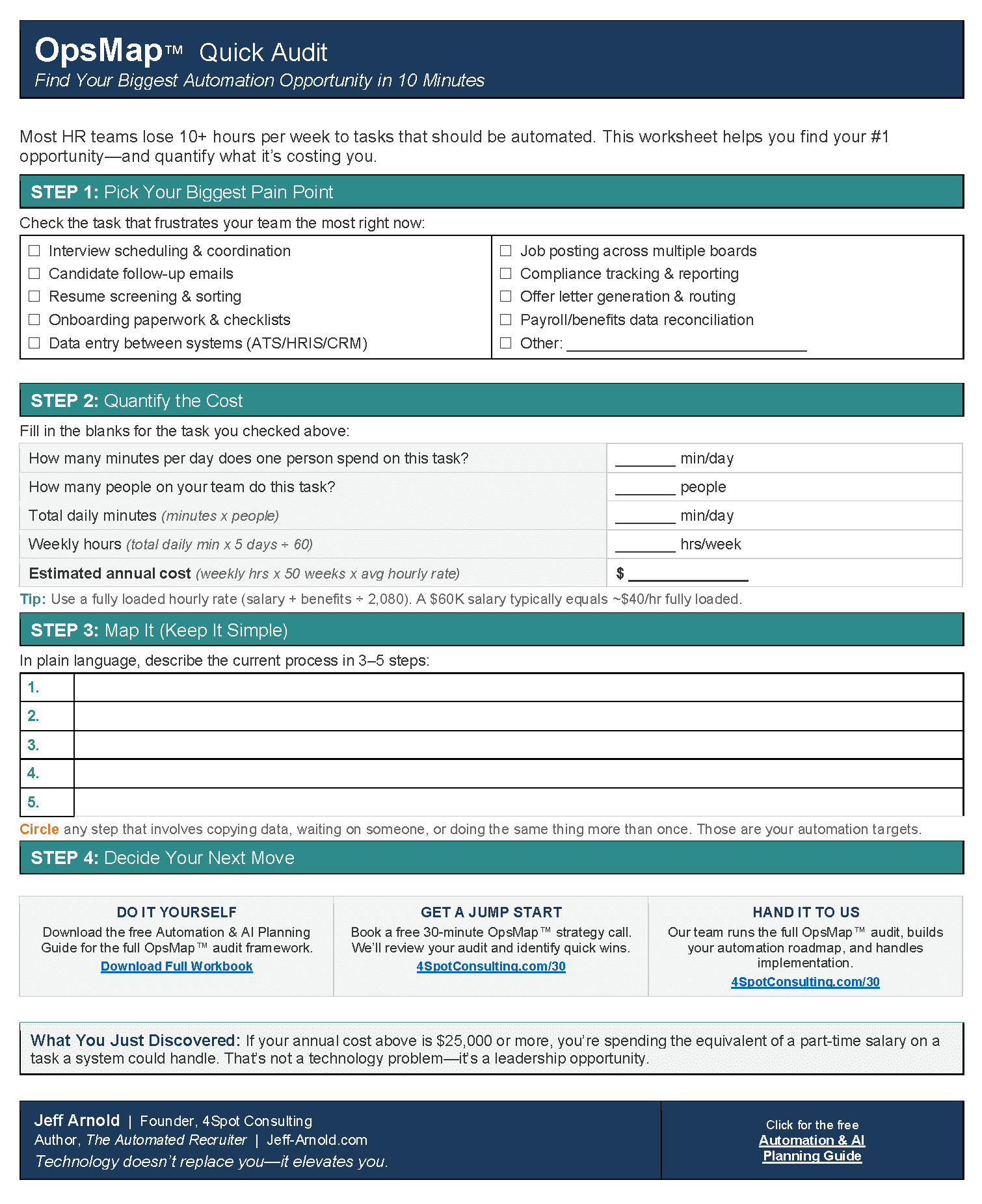
At 4Spot Consulting, we specialize in implementing AI and automation solutions that directly translate into tangible business outcomes. Our OpsBuild framework, following an OpsMap™ strategic audit, helps HR and recruiting leaders integrate AI resume parsing seamlessly into their existing tech stacks using powerful tools like Make.com. We don’t just recommend technology; we architect bespoke systems that eliminate bottlenecks, enhance data integrity, and liberate your team from low-value work, saving you 25% of your day.
The transition to AI-powered resume parsing isn’t merely about adopting new software; it’s about fundamentally rethinking and optimizing your recruitment operations for speed, accuracy, and strategic advantage. By reducing administrative burden, organizations empower their recruiting teams to be more effective, ultimately leading to faster hiring cycles, better quality hires, and substantial operational cost savings.
If you would like to read more, we recommend this article: Mastering CRM Data Protection & Recovery for HR & Recruiting (Keap & High Level)