Post: Address Recruiter Skepticism: Implement AI Strategically
Addressing Recruiter Concerns: Overcoming Skepticism Towards AI Tools
The recruiting landscape is rapidly evolving, with AI emerging as a dominant force. Yet, amidst the promises of efficiency and innovation, a persistent undercurrent of skepticism remains among many recruiters. At 4Spot Consulting, we understand these reservations are often born from a mix of valid concerns and past experiences with technology that failed to deliver. Our goal isn’t to replace the human element of recruiting, but to empower it, transforming skepticism into strategic advantage by leveraging AI as a powerful augmentation tool.
The Roots of Recruiter Skepticism: More Than Just Fear of the Unknown
For many seasoned recruiters, the introduction of new technologies, especially AI, often triggers a natural resistance. This isn’t just about fear of the unknown; it’s often rooted in legitimate concerns. One primary apprehension is the perceived threat of job displacement, where AI is seen as a replacement for human judgment and interaction. Recruiters, proud of their ability to connect with candidates and discern subtle cues, worry about being relegated to mere data analysts.
Another significant concern revolves around the “black box” nature of AI algorithms. Questions about bias, fairness, and the transparency of decision-making processes are paramount. Recruiters are acutely aware of the importance of diversity and inclusion, and any tool that might inadvertently perpetuate or amplify existing biases is met with understandable caution. Past experiences with clunky or unhelpful applicant tracking systems that added more administrative burden than value also contribute to a general distrust of new “silver bullet” technologies.
There’s also the fundamental belief that recruiting is, at its core, a human-centric profession. The idea that a machine could truly understand cultural fit, assess soft skills during an interview, or build rapport with a passive candidate feels antithetical to many. This perception that AI removes the “human touch” can be a significant barrier to adoption, overlooking AI’s potential to actually enhance human connection by freeing up time.
Separating Hype from Hyper-Efficiency: The Real Promise of AI in Recruiting
It’s crucial to distinguish between the exaggerated hype surrounding AI and its tangible, practical applications in recruiting. The reality is that AI isn’t designed to replace the recruiter; it’s engineered to be a formidable assistant, an augmentation tool that dramatically improves efficiency and effectiveness. Think of it as empowering recruiters to do what they do best, but faster and with more strategic impact.
AI excels at automating the repetitive, low-value tasks that consume a significant portion of a recruiter’s day. This includes initial resume parsing, screening candidates against objective criteria, scheduling interviews, and even generating initial candidate outreach based on predefined parameters. By offloading these time-consuming administrative burdens, AI frees up recruiters to focus on strategic sourcing, in-depth candidate engagement, relationship building, and the critical assessment of culture fit and soft skills – areas where human intuition and expertise are irreplaceable.
Moreover, the judicious application of AI can significantly enhance the candidate experience. Faster initial responses, streamlined application processes, and personalized communication – all facilitated by AI – contribute to a more positive journey for prospective employees. This improved efficiency doesn’t just benefit the recruiter; it elevates the employer brand and ensures top talent remains engaged throughout the hiring pipeline.
Bias & Transparency: Building Trust in AI-Powered Decisions
Addressing concerns about bias is paramount for successful AI adoption. While it’s true that AI can reflect biases present in its training data, modern AI tools and responsible implementation strategies are specifically designed to mitigate these risks. The key lies in carefully curated, diverse datasets and continuous monitoring and calibration. At 4Spot Consulting, we emphasize a data-first approach, ensuring that AI systems are trained on fair and representative data, and we work to establish clear parameters that reduce subjective influence.
Transparency is another cornerstone of building trust. Rather than operating as a “black box,” AI in recruiting should be implemented with clear auditable processes. This means understanding why a particular candidate was flagged, or how a specific recommendation was made. Human oversight is non-negotiable; AI provides insights and streamlines processes, but the ultimate decision-making power remains with the human recruiter, who can review, adjust, and override automated suggestions as needed. This collaborative model ensures fairness and accountability.
The Human Element: Reclaiming Time for What Matters Most
Far from eroding the human element, AI allows recruiters to reclaim it. When AI handles the initial screening of hundreds of resumes, the tedious task of scheduling, or the initial stages of candidate outreach, recruiters gain back precious hours. These hours can then be reinvested into what truly differentiates a great recruiter: deep, meaningful conversations with candidates, understanding their aspirations, providing strategic career guidance, and acting as a true ambassador for the company.
Imagine a scenario where AI presents a curated shortlist of highly qualified candidates, perfectly matched to the objective requirements of a role. The recruiter can then dedicate their full attention to conducting insightful interviews, assessing cultural alignment, and engaging in nuanced discussions that AI simply cannot replicate. This shift from transactional, administrative tasks to strategic, relational engagement is where AI truly unlocks the potential of the human recruiter, fostering stronger relationships and ultimately leading to better hires.
Implementing AI with Confidence: A Strategic Approach
Overcoming organizational skepticism towards AI requires more than just deploying new software; it demands a strategic, phased approach. Starting with quick wins can be incredibly effective. Automating resume parsing, for instance, can immediately demonstrate tangible time savings and reduce human error, building confidence within the team. This initial success can then pave the way for more complex AI integrations, such as intelligent candidate matching or automated interview scheduling.
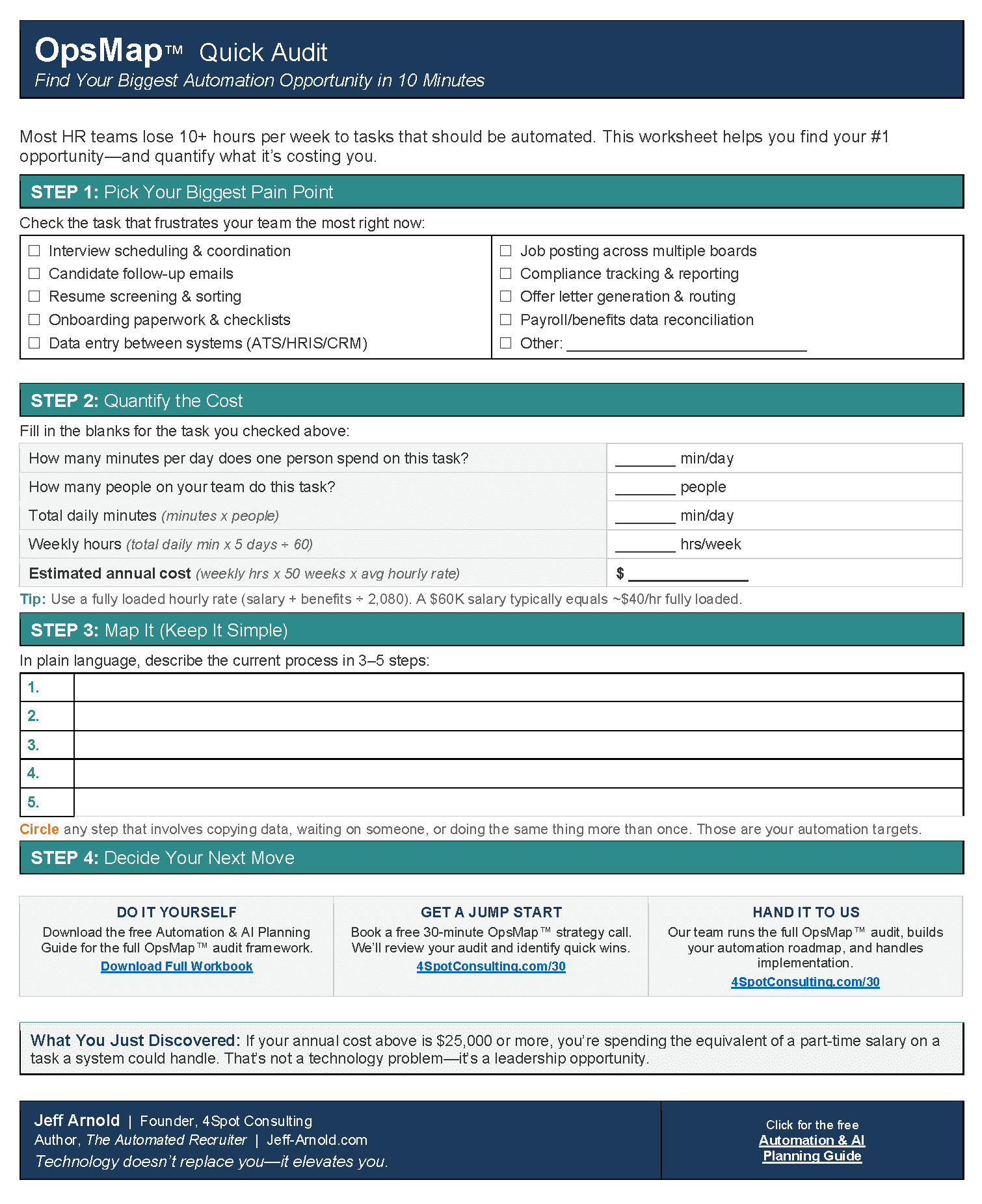
Education and continuous support are also vital. Teams need to understand not just how to use the AI tools, but why they are being implemented and what specific problems they solve. This understanding fosters buy-in and encourages proactive engagement rather than passive resistance. Partnering with experts who possess a deep understanding of both recruiting intricacies and sophisticated automation technologies – like 4Spot Consulting – is crucial. We help identify the most impactful opportunities for AI integration through our OpsMap™ strategic audit, ensuring solutions are tied directly to ROI and business outcomes.
4Spot Consulting’s Perspective: From Skepticism to Strategic Advantage
At 4Spot Consulting, we’ve witnessed firsthand the transformative power of strategically implemented AI in HR and recruiting. Our approach focuses on eliminating bottlenecks and reducing low-value work, allowing high-value employees to focus on strategic initiatives. We specialize in connecting disparate SaaS systems via platforms like Make.com, creating seamless, AI-powered workflows that automate tasks like data entry, candidate communication, and preliminary screening.
Our expertise lies in moving beyond theoretical discussions to delivering tangible results: saving clients 25% of their day, increasing production, and realizing significant cost savings. We believe that by integrating AI thoughtfully, with a clear focus on augmenting human capabilities and addressing specific pain points, recruiters can move past skepticism and harness these tools to achieve unprecedented levels of efficiency and hiring success. We don’t just build; we plan strategically, ensuring every AI solution drives measurable business outcomes.
If you would like to read more, we recommend this article: Mastering CRM Data Protection & Recovery for HR & Recruiting (Keap & High Level)
RELATED POST