Post: How to Leverage Stop Algorithmic Bias: AI Compliance for for Smarter Recruiting
How to Leverage Stop Algorithmic Bias: AI Compliance for for Smarter Recruiting
Implementing AI-driven hiring improvements doesn’t require a complete system overhaul. This step-by-step guide walks you through a practical framework that HR teams of any size can execute, starting this quarter.
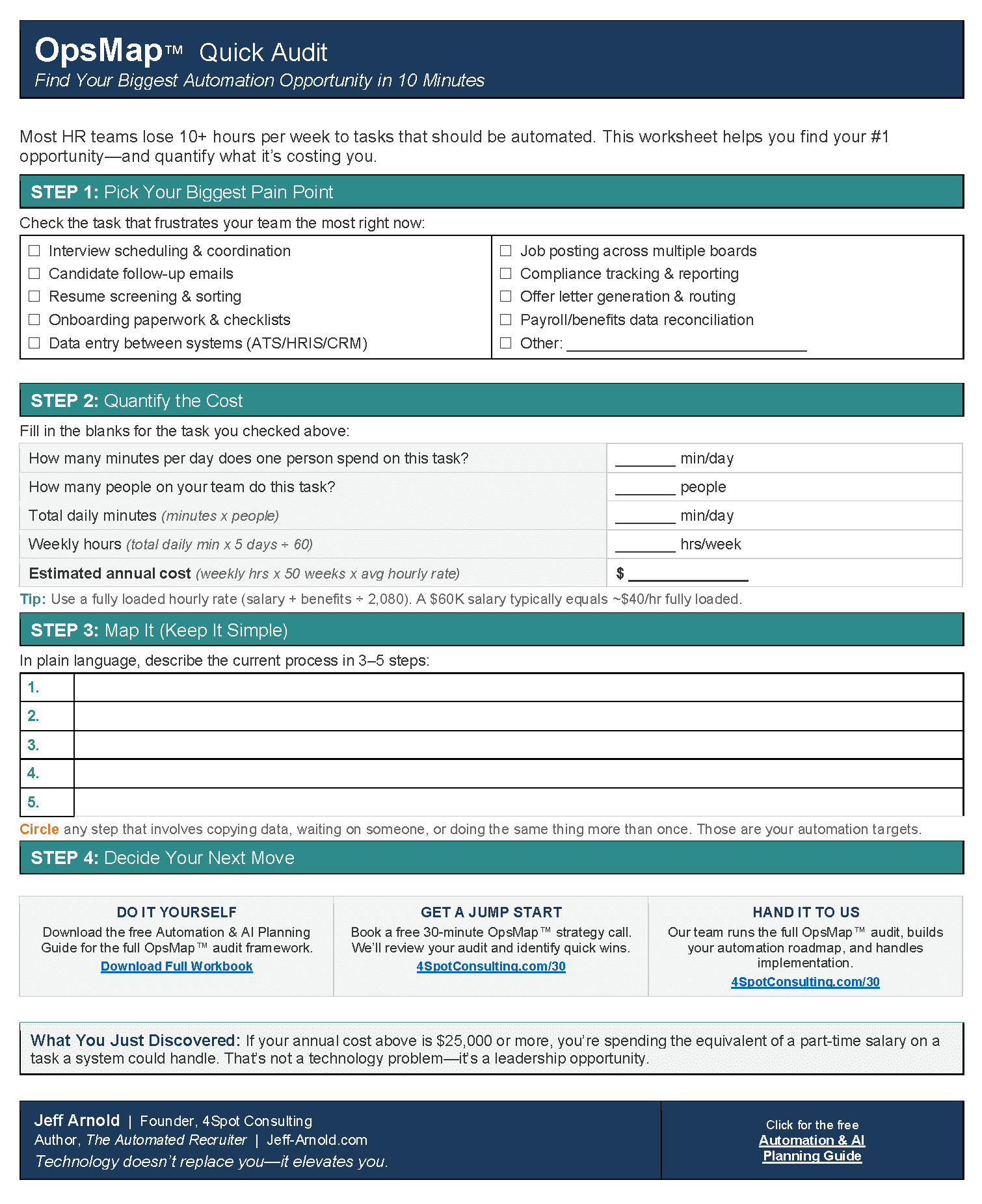
Step 1: Audit Your Current State
Before implementing anything new, document your existing workflows. Map every touchpoint from application receipt to offer letter. Identify manual steps that consume the most recruiter time — these are your highest-ROI automation targets.
Step 2: Define Success Metrics
Establish baseline measurements for time-to-fill, cost-per-hire, and quality-of-hire before you begin. Without baselines, you can’t demonstrate ROI or identify which changes are actually driving improvement.
Step 3: Select the Right Tools
Evaluate AI solutions against your specific bottlenecks rather than feature lists. The best tool for a 500-employee company looks very different from what works for a 50,000-employee enterprise. Prioritize integration capability with your existing ATS and HRIS.
Step 4: Start with a Pilot
Run your first AI-assisted process with a single role type or department. This controlled scope lets you learn quickly, identify edge cases, and build internal confidence before broad rollout.
Step 5: Train Your Team
Recruiter adoption is the single biggest factor in AI implementation success. Invest in hands-on training that focuses on how AI augments human judgment — not replaces it. Address concerns about job displacement directly and honestly.
Step 6: Monitor, Measure, and Iterate
Review your success metrics weekly during the first 90 days. Watch for unexpected outcomes — positive and negative. Use these insights to refine your configuration and expand to additional use cases.
For deeper context on the strategic framework behind these steps, read our HR Compliance & Legal Tech Guide.
Expected Timeline
Most organizations see measurable improvements within 60 days of a focused implementation. Full ROI typically materializes in quarters two and three as the system learns from your specific candidate pool and hiring patterns.
RELATED POST