Post: Train AI: Scale Personalization in Talent Acquisition
Training Your AI: Optimizing Personalization Algorithms for Talent Acquisition
In the rapidly evolving landscape of talent acquisition, the human element remains paramount. Yet, the sheer volume of candidates, the nuance of roles, and the complexity of market dynamics demand a strategic evolution in how we connect talent with opportunity. This is where the intelligent application of AI, specifically through optimized personalization algorithms, becomes not just an advantage, but a necessity. At 4Spot Consulting, we understand that “training your AI” isn’t a one-time setup; it’s a continuous, strategic imperative to refine its ability to understand, predict, and ultimately, personalize the candidate experience for superior outcomes.
The Imperative of Personalization in Modern TA
Gone are the days when a generic job posting or a templated outreach message would suffice. Today’s top talent expects a personalized experience, one that acknowledges their unique skills, career aspirations, and even their preferred mode of communication. In the absence of true personalization, candidates feel like just another number, leading to higher drop-off rates, diminished employer brand perception, and ultimately, a missed opportunity for securing critical hires. The challenge lies in scaling this personalization across hundreds, if not thousands, of interactions without overwhelming human recruiters.
This is precisely where AI-driven personalization algorithms step in. They are designed to sift through vast datasets – resumes, application histories, interaction logs, public profiles, and even internal feedback – to build a dynamic, nuanced profile of each candidate. The goal isn’t to replace human judgment, but to augment it, providing recruiters with highly relevant insights and automating the delivery of bespoke experiences at scale.
Beyond Keywords: What “Training” AI Truly Means
When we talk about “training your AI” for personalization, we’re not merely referring to feeding it data. It’s a far more sophisticated process that involves defining parameters, establishing feedback loops, and continuously refining its predictive models. For talent acquisition, this encompasses several critical dimensions:
Defining Data Inputs and Relevance
The quality of your AI’s output is directly proportional to the quality and relevance of its input. This means meticulously curating the data sources your algorithms learn from. Beyond standard resume parsing, consider incorporating data from CRM systems (like Keap or HighLevel), applicant tracking systems, candidate surveys, interview feedback, performance reviews of successful hires, and even market intelligence. The AI needs to understand not just what skills a candidate possesses, but also what attributes correlate with long-term success within your organization. This holistic view prevents the AI from making superficial matches based solely on keywords, leading to genuinely better fit.
Establishing Feedback Loops for Continuous Learning
An AI’s personalization capabilities are only as good as its ability to learn from actual outcomes. Implementing robust feedback loops is crucial. When a recruiter flags a recommended candidate as a poor fit, or conversely, when a candidate moves rapidly through the pipeline and performs exceptionally well post-hire, this data must be fed back into the algorithm. This iterative process allows the AI to self-correct and improve its future recommendations and personalization strategies. For instance, if an AI suggests a particular type of personalized email subject line, and that subject line consistently yields higher open rates or application completions, the AI should recognize and prioritize that successful approach.
Refining Algorithms for Nuance and Bias Mitigation
AI algorithms are powerful, but they are not infallible. They can inadvertently learn and perpetuate biases present in historical data. Therefore, an essential aspect of “training” involves actively working to mitigate bias. This requires auditing algorithms for fairness, diversifying training datasets, and introducing constraints that promote equitable outcomes. Furthermore, personalization isn’t just about matching skills; it’s about understanding communication preferences, career stage, and even cultural fit. Algorithms must be refined to interpret these nuanced signals, delivering an experience that feels genuinely tailored, not just statistically correlated.
The 4Spot Consulting Approach: Architecting Intelligent TA Systems
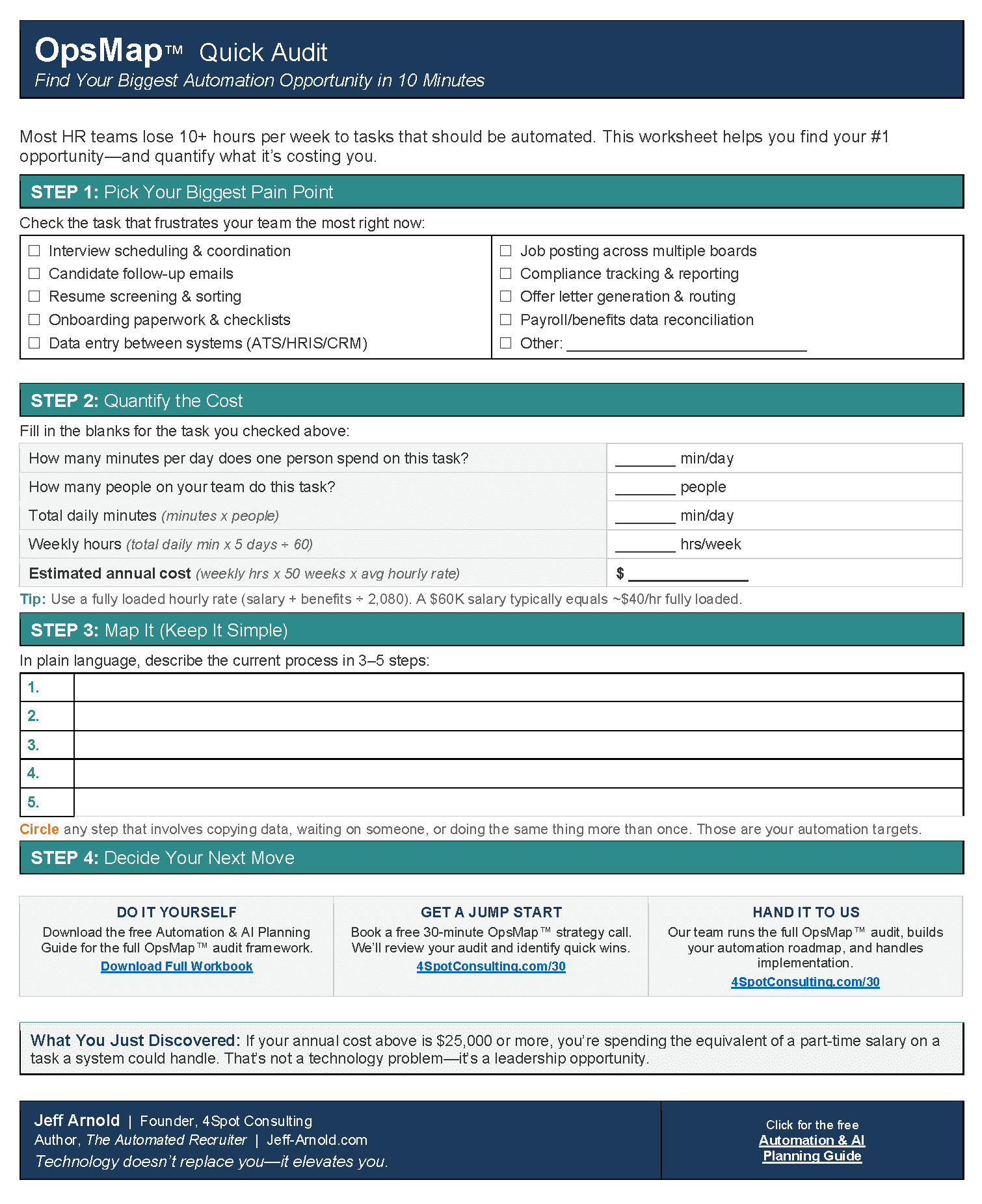
At 4Spot Consulting, our OpsMesh™ framework for automation and AI integration is purpose-built to address these complexities. We start with an OpsMap™ – a strategic audit that uncovers the precise inefficiencies in your talent acquisition process and identifies where optimized personalization algorithms can yield the most significant ROI. This isn’t about throwing AI at a problem; it’s about surgically integrating it where it can truly elevate the human experience and drive measurable results.
Through OpsBuild™, we implement custom AI solutions that leverage tools like Make.com to connect your disparate systems – from your CRM to your ATS to your communication platforms. This creates a unified “single source of truth” that empowers your AI with the comprehensive data it needs to truly personalize. Imagine an AI that not only suggests the best candidates but also crafts personalized outreach messages, recommends relevant content based on candidate engagement, and even schedules follow-ups based on their interaction patterns. This frees your high-value recruiting team to focus on meaningful human connection and strategic decision-making.
The ultimate goal is to move beyond mere automation to intelligent augmentation, where AI acts as a sophisticated co-pilot, enhancing every step of the candidate journey. By meticulously training and continually optimizing your personalization algorithms, you transform your talent acquisition from a reactive process into a proactive, highly engaging, and ultimately, more successful strategy.
If you would like to read more, we recommend this article: CRM Data Protection: Non-Negotiable for HR & Recruiting in 2025
RELATED POST