Post: AI and DEI in Hiring: Stop Bias with Ethical Strategy
AI and DEI: Ensuring Inclusive Personalization in Hiring
In the rapidly evolving landscape of talent acquisition, the promise of Artificial Intelligence (AI) to revolutionize hiring processes is undeniable. AI offers unprecedented efficiency, scale, and the potential to unlock deeper insights into candidate profiles. However, as business leaders, we must also confront a critical question: how do we harness AI’s power for personalized hiring without inadvertently creating or exacerbating biases, thereby undermining our commitments to Diversity, Equity, and Inclusion (DEI)? At 4Spot Consulting, we believe the path forward lies in strategically designed, intelligent systems that prioritize both efficiency and ethical inclusivity, a mission critical for any forward-thinking organization.
The Double-Edged Sword of AI in Hiring
AI’s capacity to process vast amounts of data at speed is a game-changer. From screening resumes to predicting candidate success, it can significantly reduce time-to-hire and operational costs. Yet, the very algorithms that promise objective decision-making can become vectors for deeply embedded human biases. If AI models are trained on historical data sets that reflect past inequalities—such as skewed hiring patterns or biased language in job descriptions—they will inevitably perpetuate and even amplify those biases. This isn’t a flaw in AI itself, but rather a reflection of the human-generated data it consumes, demanding a conscious and proactive approach to its implementation.
The challenge isn’t merely about avoiding overt discrimination; it’s about navigating the subtle, often unconscious biases that can filter out qualified candidates from underrepresented groups. Relying solely on historical success profiles can inadvertently narrow the talent pool, hindering innovation and diversity. Business leaders must recognize that an unchecked AI system in hiring is not just an ethical oversight; it’s a strategic misstep that can severely impact an organization’s ability to attract top-tier, diverse talent and foster a truly inclusive culture.
Beyond “Fairness”: Defining Inclusive Personalization
True inclusive personalization in hiring goes beyond simply eliminating bias. It’s about designing a candidate experience that acknowledges and respects individual differences, provides equitable opportunities, and ensures that every candidate feels seen, valued, and understood. This means leveraging AI not just to filter candidates, but to tailor interactions, provide relevant information, and guide individuals through a process that feels transparent and supportive, irrespective of their background.
For us, inclusive personalization means actively seeking out and engaging a wider array of talent, and then ensuring that each interaction from application to offer is optimized for clarity, accessibility, and fairness. It’s about building systems that proactively identify potential barriers and work to dismantle them, using AI as a tool to expand horizons rather than limit them. This approach strengthens the employer brand, improves candidate satisfaction, and ultimately leads to a more robust, diverse workforce.
Proactive Strategies for Ethical AI Integration
Achieving inclusive personalization with AI requires a deliberate, strategic framework. Firstly, **data governance** is paramount. This involves diversifying data sources, actively auditing historical data for bias, and enriching datasets with a broader representation of successful talent profiles. It means moving beyond simply mirroring past successes to actively shaping future, more inclusive success.
Secondly, **algorithm transparency and regular auditing** are non-negotiable. Organizations must demand that their AI tools can be explained, understood, and their decision-making processes scrutinized. Regular, independent audits are essential to identify and mitigate emergent biases, ensuring that algorithms are continuously refined to align with DEI objectives. Finally, maintaining **human oversight**—a “human-in-the-loop” model—is crucial. AI should augment human decision-making, not replace it entirely. Human recruiters and hiring managers provide critical context, empathy, and ethical judgment that algorithms cannot replicate.
Leveraging AI for DEI Enhancement, Not Just Compliance
When implemented thoughtfully, AI can be a powerful engine for DEI. It can analyze job descriptions for gendered or exclusionary language, suggesting more neutral and inclusive phrasing. AI-driven skill assessments can focus on demonstrated abilities rather than relying on credentials or experiences that might inadvertently favor certain demographics. Furthermore, AI can help identify “skill adjacencies” in candidate profiles, uncovering hidden talents in individuals who might not fit traditional molds but possess transferrable capabilities.
Imagine using AI to personalize outreach to underrepresented groups, offering tailored information about company culture, employee resource groups, or career development paths that resonate with their specific aspirations. This moves beyond compliance to genuinely using AI to create a more welcoming, inclusive, and equitable hiring experience. It shifts the focus from passively avoiding bias to actively constructing pathways to diversity.
The 4Spot Consulting Approach: Building Intelligent, Inclusive Systems
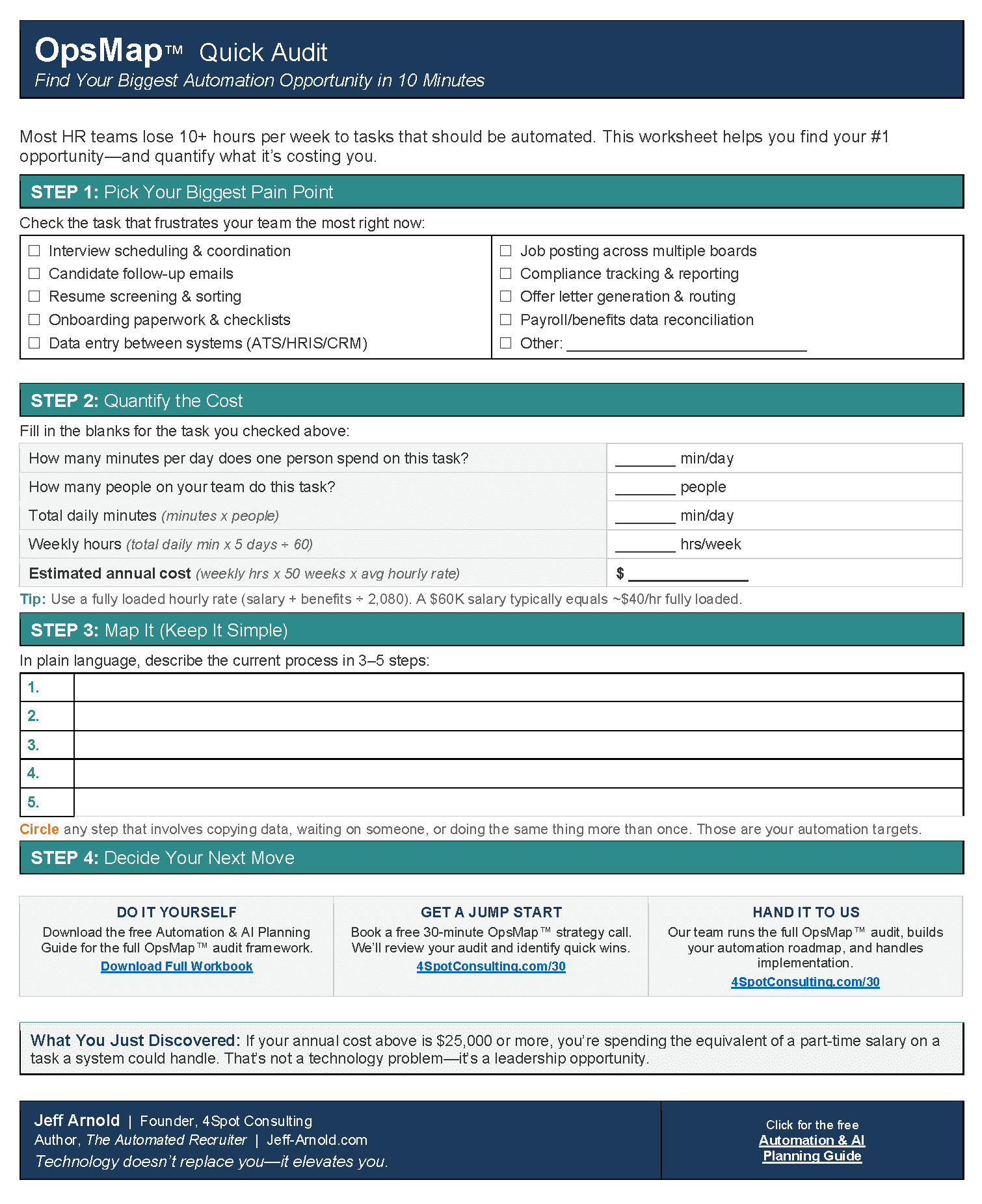
At 4Spot Consulting, our OpsMesh framework and OpsBuild implementation methodology are designed precisely to address these complex intersections of AI, automation, and DEI. We don’t just implement technology; we strategize. Through an OpsMap™ audit, we identify how existing hiring processes might inadvertently perpetuate biases and then design AI and automation solutions that intentionally foster inclusive personalization. We leverage tools like Make.com to integrate disparate HR systems, ensuring data flows ethically and intelligently, creating a single source of truth that supports fair and transparent decision-making.
Our approach ensures that AI is not an isolated tool but an integrated component of a broader, ethical automation strategy. We focus on building systems that reduce manual, low-value work for high-value HR professionals, freeing them to focus on the human aspects of hiring, such as relationship building, candidate experience, and strategic DEI initiatives, all while the automated systems diligently work to maintain fairness and efficiency.
The Imperative for Business Leaders
For business leaders, embracing ethical AI in hiring is not merely a social responsibility; it’s a strategic imperative. Organizations that lead in inclusive personalization will attract a broader, more skilled talent pool, foster greater innovation, and build resilient, adaptive teams. It’s about leveraging technology to build a workforce that truly reflects the diverse world we live in, enhancing both competitive advantage and organizational integrity.
The journey to truly inclusive AI-powered hiring is complex, demanding continuous evaluation and commitment. However, with the right strategic partnership and a clear vision for ethical implementation, the promise of AI to create more equitable and effective hiring processes is well within reach, enabling organizations to secure the best talent for the future.
If you would like to read more, we recommend this article: CRM Data Protection: Non-Negotiable for HR & Recruiting in 2025
RELATED POST