
Post: Measure AI Resume Parsing ROI: Essential KPIs for Success
Beyond the Hype: Measuring the Real ROI of Your AI Resume Parsing Implementation
The advent of AI in recruitment has revolutionized how organizations approach talent acquisition, with AI resume parsing standing out as a transformative technology. No longer a futuristic concept, it’s become a critical tool for sifting through vast applicant pools, identifying key skills, and accelerating the initial stages of the hiring process. Yet, as with any significant technological investment, the true value isn’t found in the implementation itself, but in the measurable impact it delivers. At 4Spot Consulting, we frequently encounter clients who have adopted AI parsing but struggle to quantify its success, often leading to a diluted understanding of their return on investment. This article delves into how to effectively measure the success of your AI resume parsing implementation, moving beyond anecdotal evidence to concrete, data-driven insights.
Why Measurement Matters More Than Ever in AI Adoption
Implementing AI resume parsing isn’t merely about deploying new software; it’s a strategic overhaul of critical recruitment workflows. Without a clear framework for measurement, even the most advanced AI solutions can appear to fall short, or worse, their true potential remains untapped. The core objective is to validate your investment, demonstrate tangible business benefits, and identify areas for continuous improvement. Simply having AI in place doesn’t guarantee efficiency or better hires; it’s how effectively you leverage and measure its performance that truly differentiates your recruiting strategy.
Defining Your Key Performance Indicators (KPIs) for AI Parsing Success
Effective measurement begins with clearly defined KPIs that align with your overarching recruitment and business objectives. These aren’t just generic metrics but specific indicators that reflect the unique efficiencies and improvements AI parsing is designed to deliver.
Efficiency Metrics: Unlocking Time and Throughput
One of the most immediate benefits of AI parsing is its ability to process resumes at scale and speed. Key efficiency metrics include:
- **Time-to-Screen:** How quickly candidates are moved from application submission to initial screening completion. A significant reduction here indicates direct parsing efficiency.
- **Manual Review Hours Saved:** Quantify the reduction in time recruiters or HR personnel spend manually reviewing resumes. This can free up high-value employees to focus on strategic tasks. For example, we’ve helped an HR tech client save over 150 hours per month by automating their resume intake and parsing process, demonstrating a clear impact on operational costs.
- **Resume Throughput:** The number of resumes processed per hour or day compared to pre-AI methods. This indicates scalability and capacity.
Quality and Accuracy Metrics: Enhancing Candidate Matching
Beyond speed, the quality of information extracted and the accuracy of candidate matching are paramount:
- **Parsing Accuracy Rate:** The percentage of correctly extracted data points (e.g., skills, experience, contact info) from resumes. This can be measured through audits of a sample set.
- **Relevant Candidate Identification Rate:** The proportion of candidates surfaced by AI parsing that genuinely align with job requirements, reducing false positives. This requires feedback loops from hiring managers on the quality of candidates presented.
- **Reduction in False Negatives/Positives:** Fewer qualified candidates being overlooked (false negatives) and fewer unqualified candidates being erroneously flagged (false positives).
- **Candidate Quality Score (Post-Interview):** Tracking the performance and fit of candidates sourced through AI parsing post-interview can provide long-term validation of its efficacy.
Candidate Experience & Engagement: The Human Element of Automation
While often overlooked, AI parsing can significantly impact the candidate journey:
- **Application Completion Rates:** A streamlined, less cumbersome application process (enabled by efficient parsing) can lead to higher completion rates.
- **Time-to-Initial Response:** Faster processing often means quicker acknowledgment or next steps for candidates, improving their perception of your organization.
Cost Reduction and ROI: The Bottom Line
Ultimately, AI parsing should translate into financial benefits:
- **Reduction in Time-to-Hire Costs:** Faster processes generally lead to lower per-hire costs.
- **Reduced Reliance on External Agencies:** If AI parsing improves direct sourcing efficiency, it can decrease agency fees.
- **Improved Retention Rates (Long-Term):** Better candidate matching can lead to employees who are a stronger fit, reducing turnover costs.
Implementing a Robust Measurement Framework
To truly understand the success of your AI resume parsing, a systematic approach is essential.
Baseline Establishment: Know Your Starting Point
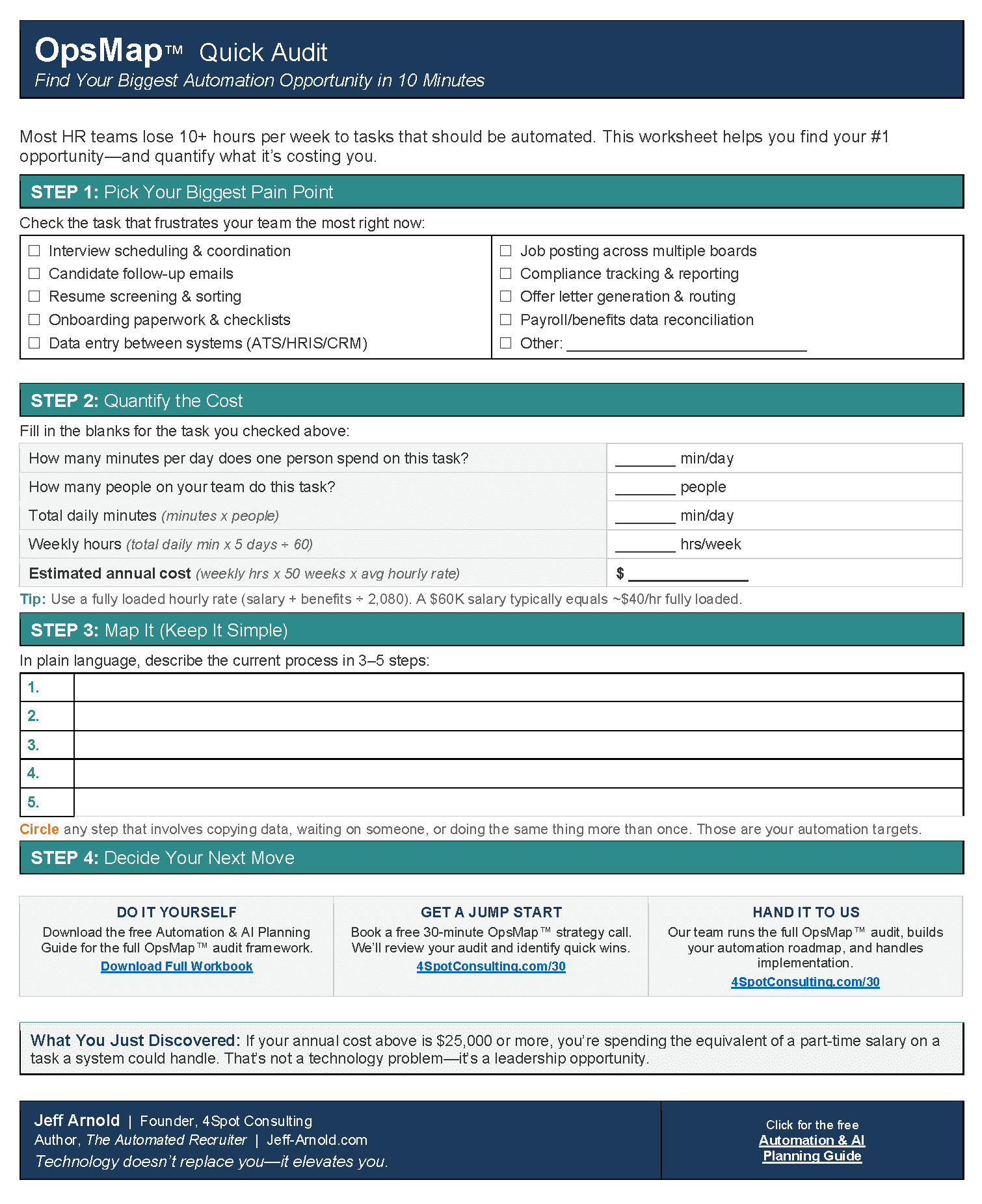
Before deploying any AI solution, it’s critical to capture baseline metrics for all the KPIs you intend to track. Without this pre-implementation data, it’s impossible to quantify the actual improvements attributable to the AI system. This initial audit, which we call an OpsMap™ at 4Spot Consulting, is foundational for identifying inefficiencies and setting realistic, measurable goals.
Continuous Monitoring and Iteration: AI is a Journey, Not a Destination
AI models are not static; they learn and evolve. Regular monitoring of your KPIs is crucial to identify trends, pinpoint areas for optimization, and ensure the system continues to deliver value. This involves regularly reviewing the parsing accuracy, seeking feedback from users (recruiters, hiring managers), and making iterative adjustments to the AI configurations or data inputs.
Integrating Data Sources for a Single Source of Truth
The true power of AI parsing is unleashed when its data is seamlessly integrated with your broader HR tech stack—your ATS, CRM (like Keap or HighLevel), and other HRIS. Tools like Make.com, a cornerstone of our OpsBuild framework, enable the creation of robust, interconnected systems. This integration ensures that parsing insights flow freely, providing a holistic view of your talent pipeline and enabling more sophisticated analytics for measuring success.
The 4Spot Consulting Approach to Validating AI Investments
At 4Spot Consulting, we believe that AI implementation must always be tied to clear, measurable business outcomes. Our strategic-first approach, starting with the OpsMap™, helps organizations identify precise inefficiencies and define the KPIs critical for success, particularly for initiatives like AI resume parsing. We then leverage our OpsBuild framework to implement and integrate AI solutions, ensuring that every piece of technology contributes directly to your bottom line. We don’t just build; we measure, optimize, and iterate, transforming manual chaos into automated clarity, and proving the ROI of every automation.
If you would like to read more, we recommend this article: The Essential Guide to CRM Data Protection for HR & Recruiting with CRM-Backup



RELATED POST