Post: Reduce False Positives in AI Resume Parsing for Precision
Mitigating False Positives: Refining AI Resume Parsing Algorithms for Precision Hiring
In the high-stakes world of modern talent acquisition, efficiency is paramount. Artificial Intelligence (AI) has emerged as a game-changer, particularly in automating the initial screening phase through resume parsing. Yet, for many organizations, the promise of AI-driven efficiency is often tempered by the frustration of false positives – highly qualified candidates mistakenly overlooked, or irrelevant applications surfacing when they shouldn’t. This isn’t merely an inconvenience; it’s a significant bottleneck that can cost businesses top talent and countless wasted hours. At 4Spot Consulting, we understand that true automation and AI integration aren’t about mere implementation, but about strategic refinement that drives tangible ROI.
The Double-Edged Sword of AI Resume Parsing
AI resume parsers are designed to scan, extract, and categorize information from resumes at lightning speed, far outperforming manual reviews. They identify keywords, skills, experience, and education, matching them against job descriptions. The efficiency gains are undeniable. However, the complexity of human language, varied resume formats, and the inherent biases within AI models can lead to critical misinterpretations. A false positive occurs when the AI incorrectly identifies a candidate as suitable, leading recruiters down a fruitless path, or worse, a false negative occurs when a perfectly qualified candidate is rejected due to a parsing error. Both scenarios undermine the very goal of AI-enhanced recruiting: finding the right talent, faster.
Unpacking the Root Causes of False Positives
To mitigate false positives, we must first understand their origins. Often, the problem lies in the quality and diversity of the training data used to build the AI model. If the AI is trained predominantly on resumes from a specific industry or demographic, it may struggle with resumes that deviate from that norm, leading to bias. Outdated algorithms that don’t adapt to evolving job titles and skill terminologies are another culprit. Furthermore, a lack of contextual understanding in the AI can lead it to prioritize keywords over the true intent or depth of a candidate’s experience. For instance, an AI might flag a candidate for “project management” skills, but fail to discern if their experience was in a junior support role versus leading complex enterprise initiatives.
Another common issue stems from the integration (or lack thereof) between the parsing tool and the broader HR tech ecosystem. If the AI parser operates in a silo, without robust feedback loops from the applicant tracking system (ATS) or CRM, it cannot learn from past mistakes or successes. This disjointed approach often perpetuates inaccuracies, rather than refining them over time. Our OpsMesh™ framework emphasizes connecting these disparate systems to create a cohesive, intelligent workflow that learns and improves.
Strategic Interventions: Refining Algorithms for Precision
Mitigating false positives requires a multi-faceted, strategic approach that goes beyond simply “plugging in” an AI tool. It involves continuous refinement, intelligent system design, and the integration of human expertise where it matters most.
Improving Training Data and Model Diversity
The foundation of any effective AI model is its training data. We work with clients to diversify and clean their historical resume data, ensuring it represents a broader range of backgrounds, industries, and experiences. This helps de-bias algorithms and improves their ability to accurately interpret varied inputs. Furthermore, implementing active learning techniques, where human feedback on parsing results is continuously fed back into the model, allows the AI to adapt and improve its accuracy over time. This iterative process is crucial for long-term algorithmic health.
Contextual AI and Semantic Understanding
Moving beyond simple keyword matching, we advocate for AI parsing solutions that incorporate semantic understanding. This means the AI doesn’t just look for specific words, but understands the meaning and context in which those words are used. By leveraging advanced natural language processing (NLP) techniques, we can configure AI to identify transferable skills, recognize nuances in job descriptions, and even infer potential based on career trajectories rather than just explicit keywords. This reduces the chances of irrelevant matches while elevating candidates with unexpected but valuable experiences.
Implementing Multi-Stage Parsing and Human-in-the-Loop Processes
Absolute perfection in AI parsing is an elusive goal. Therefore, a pragmatic strategy involves a multi-stage approach. Initial AI screening can handle the vast majority of applications, filtering out clear non-matches. However, for applications that fall into a “gray area” or are identified as potentially high-value but with some parsing ambiguity, a human-in-the-loop review becomes essential. This is not about replacing AI, but about strategically augmenting it to catch edge cases and prevent the loss of critical talent. This approach ensures that the recruiter’s time is focused on evaluating the most promising candidates, not sifting through AI errors.
4Spot Consulting’s Approach to Intelligent AI Integration
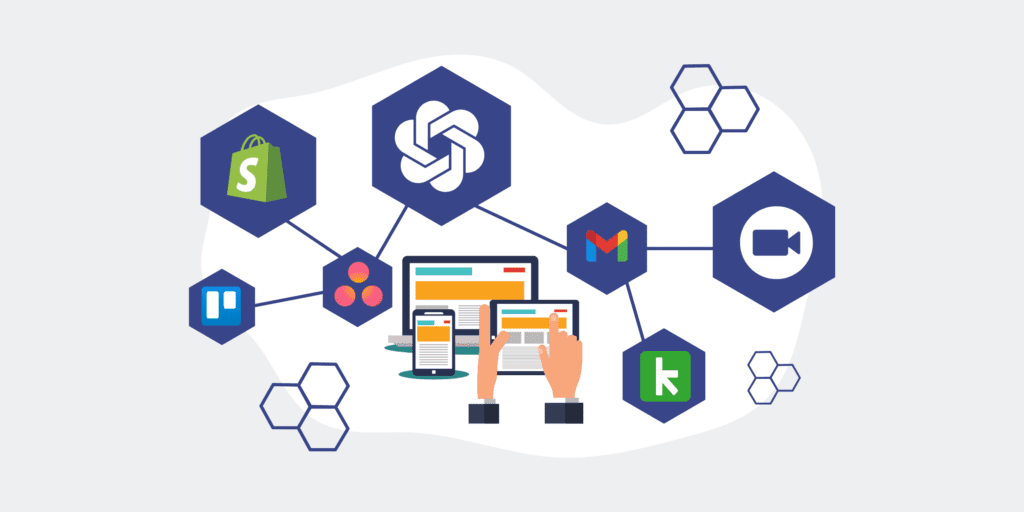
At 4Spot Consulting, our OpsBuild™ methodology focuses on creating bespoke automation and AI solutions that are tailored to your specific hiring needs. We don’t just recommend off-the-shelf tools; we design and implement integrated systems using platforms like Make.com to connect your AI parsers with your CRM (Keap, HighLevel) and ATS, creating a seamless data flow. This integrated approach allows for robust feedback loops, consistent data hygiene, and continuous optimization of your AI algorithms.
Our experience shows that by strategically refining AI resume parsing algorithms, businesses can significantly reduce false positives, identify higher-quality candidates more efficiently, and reduce the operational costs associated with manual screening. It’s about turning a potential bottleneck into a powerful competitive advantage, ensuring you attract and secure the best talent for your organization, while saving valuable time.
If you would like to read more, we recommend this article: Protecting Your Talent Pipeline: The HR & Recruiting CRM Data Backup Guide
RELATED POST