Post: Predictive HR Reporting: Stop Looking in the Rearview
The Evolution of HR Reporting: From Reactive to Predictive
For decades, HR reporting largely functioned as a rearview mirror. It meticulously chronicled the past: turnover rates, headcount, compliance metrics, and recruitment costs. While essential for auditing and basic oversight, this reactive approach left business leaders constantly playing catch-up, struggling to anticipate workforce challenges or seize strategic opportunities. At 4Spot Consulting, we’ve seen firsthand how this traditional model creates bottlenecks and obscures the path to true operational efficiency and competitive advantage.
The Era of Reactive Reporting: Looking in the Rearview Mirror
Reactive HR reporting, by its nature, is backward-looking. It answers questions like, “What happened last quarter?” or “How many people left last year?” While such data is foundational for compliance and understanding past performance, it provides little foresight. Imagine trying to navigate a complex, rapidly changing market by only looking at where you’ve been. You’d likely miss upcoming turns, potential roadblocks, or emerging expressways. This is the inherent limitation of purely reactive HR data – it’s static, isolated, and rarely integrated in a way that informs dynamic business strategy. It tells you *what* occurred, but rarely *why* or *what will* happen next.
This slow, manual process often leads to delayed insights, preventing proactive decision-making. By the time a trend is identified through historical data, the opportunity to intervene effectively may have already passed. This translates into missed talent acquisition chances, unexpected increases in attrition, and a lagging response to shifts in employee engagement or skill requirements. The result? Higher operational costs, reduced productivity, and a diminished capacity for innovation.
Shifting Gears: Towards Proactive and Predictive Insights
The modern business landscape demands more than historical analysis; it requires foresight. This is where HR reporting evolves from reactive to proactive, and ultimately, predictive. Proactive reporting focuses on current trends, enabling real-time adjustments. Predictive reporting, however, takes it a step further: it uses current and historical data, coupled with advanced analytics and AI, to forecast future outcomes.
The value of this shift is profound. Instead of merely knowing last quarter’s regrettable turnover, you can predict *who* is likely to leave in the next six months and *why*. Instead of merely tracking time-to-hire, you can identify potential bottlenecks in your recruitment funnel *before* they impact your hiring goals. Predictive HR reporting empowers leaders to move from crisis management to strategic workforce planning, making data-driven decisions that impact the bottom line, improve employee experience, and cultivate a resilient talent pipeline. It’s about leveraging the wealth of HR data to become an active architect of your organization’s future, rather than a passive observer of its past.
The Pillars of Predictive HR Reporting
Achieving truly predictive HR reporting rests on three interconnected pillars, each enhanced by intelligent automation:
* **Data Integration:** The siloed nature of HR data (HRIS, ATS, performance management systems, engagement platforms, compensation tools) is the biggest impediment to foresight. Predictive analytics requires a unified view, bringing all relevant data points into a single, accessible source. This isn’t just about combining spreadsheets; it’s about establishing seamless, automated data flows between systems.
* **Advanced Analytics & AI:** Once data is integrated, advanced analytical techniques and machine learning algorithms can begin to identify complex patterns, correlations, and causal relationships that human analysis might miss. AI can process vast datasets to forecast attrition risk, project future skill gaps, optimize talent allocation, and even personalize employee development paths.
* **Automation:** This is the engine that fuels the entire predictive framework. Automation ensures data is collected, cleaned, integrated, and presented in real-time or near real-time. Automated dashboards provide instant access to key predictive metrics, while automated alerts flag potential issues as they emerge. It frees HR professionals from manual data wrangling, allowing them to focus on analysis, strategy, and human-centric initiatives.
How 4Spot Consulting Drives Predictive HR Reporting
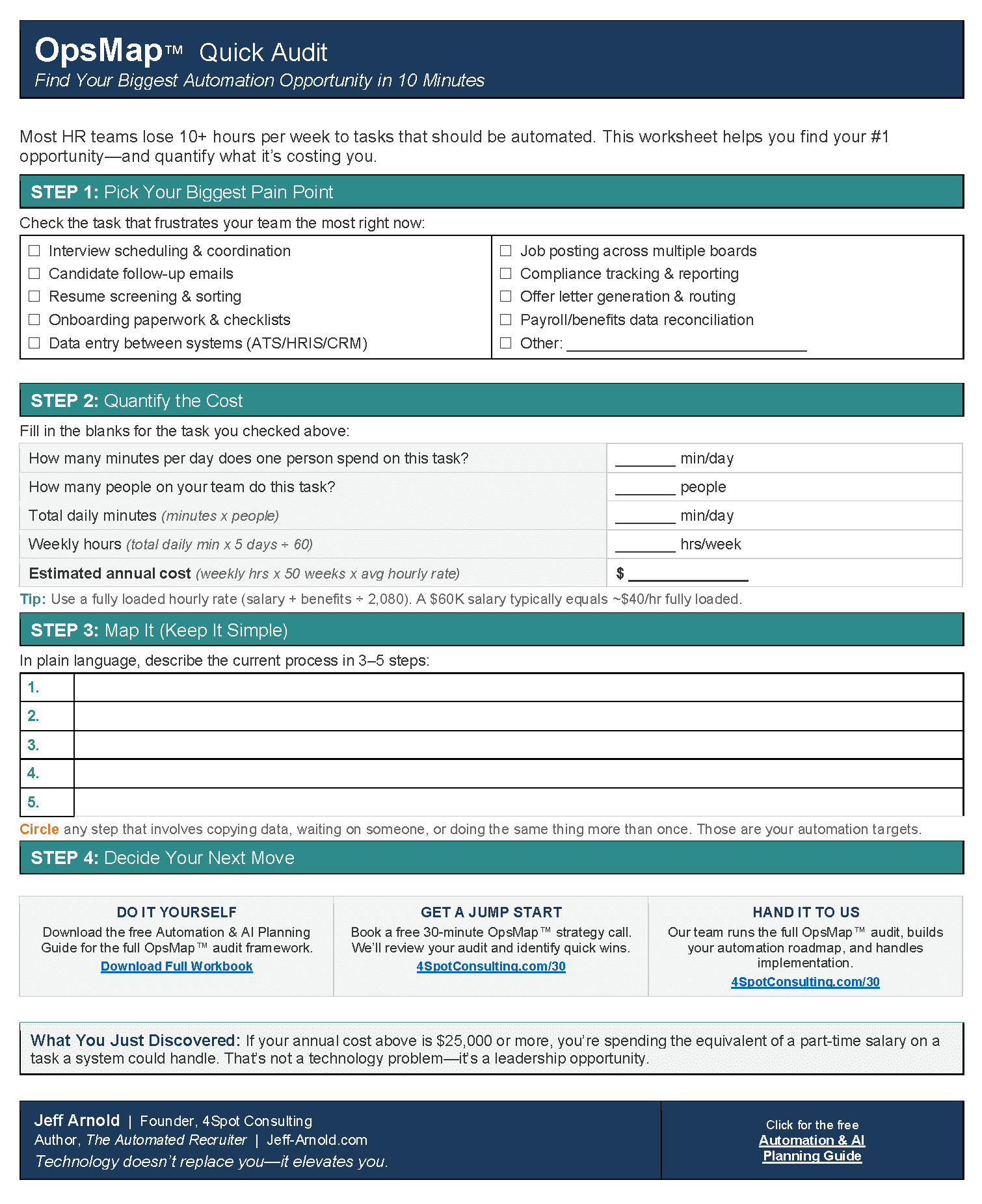
At 4Spot Consulting, we understand that implementing predictive HR reporting isn’t just about adopting new software; it’s about a strategic transformation. Our approach starts with the OpsMap™ – a strategic audit designed to uncover current inefficiencies in your HR data landscape, surface automation opportunities, and roadmap a pathway to predictive capabilities. We don’t just build systems; we build strategies.
We specialize in using low-code automation platforms like Make.com to integrate disparate HR systems – whether it’s connecting your HRIS to your ATS, your performance management tool to your engagement surveys, or your compensation platform to your payroll. This seamless data flow is critical for building the robust datasets required for advanced analytics. By breaking down these data silos, we empower your HR team to move beyond descriptive reporting and start asking, “What will happen next?” and “How can we influence that outcome?”
For instance, consider how we helped an HR tech client save over 150 hours per month. By automating their resume intake and parsing process using Make.com and AI enrichment, then syncing this data directly into their Keap CRM, we drastically reduced manual effort. This isn’t just about efficiency; it’s about data quality and speed. High-quality, real-time data is the bedrock for any predictive model. The hours saved were reinvested into analyzing this richer, more integrated data, enabling them to make more informed hiring forecasts and talent strategies. We help organizations like yours move from simply collecting data to intelligently leveraging it to predict, prevent, and profit.
Embracing the Future: What’s Next for Your HR Reporting?
The shift from reactive to predictive HR reporting is not merely an upgrade; it’s a fundamental change in how organizations view and utilize their most valuable asset – their people. It transforms HR from a cost center into a strategic partner, capable of providing actionable insights that drive business outcomes. By eliminating human error, reducing operational costs, and increasing scalability through automation and AI, you gain a significant competitive edge.
Ready to uncover automation opportunities that could save your HR team countless hours and transform your reporting from hindsight to foresight? It’s time to leverage your HR data as a strategic asset.
If you would like to read more, we recommend this article: Comprehensive CRM Data Backup & Recovery for Keap & HighLevel
RELATED POST