
Post: ATS Advanced Screening: Maximize ROI and Improve Hiring
Maximizing Your ATS Investment: Integrating Advanced Screening Features
In today’s competitive talent landscape, an Applicant Tracking System (ATS) is no longer a luxury but a fundamental requirement for any serious recruiting effort. Yet, many organizations find themselves using their ATS as little more than a resume repository or a basic workflow tool. The true potential, the transformative capability that unlocks significant efficiency and improves hiring outcomes, often remains untapped. This oversight represents a missed opportunity to not just streamline, but to strategically enhance the entire recruitment lifecycle, turning your ATS into a powerful engine for identifying and securing top talent.
The core challenge lies in moving beyond reactive candidate management to proactive talent intelligence. Traditional ATS functions, while essential for organizing applications, often fall short when it comes to sophisticated candidate evaluation. The sheer volume of applicants, especially for high-demand roles, can overwhelm even the most diligent human recruiters, leading to unconscious bias, overlooked qualified candidates, and prolonged time-to-hire. This is where the integration of advanced screening features becomes not just beneficial, but critical to maintaining a competitive edge and ensuring your ATS delivers real ROI.
Beyond Keywords: Intelligent Candidate Matching
The initial phase of candidate screening is often the most bottlenecked. Manual resume reviews, even with keyword searches, are inherently limited. They often miss subtle qualifications, transferable skills, or candidates who use different terminology for similar experiences. Advanced screening features, powered by artificial intelligence and machine learning, transcend simple keyword matching. These systems can analyze resumes and applications for contextual understanding, identifying skill adjacencies, predicting cultural fit based on past experience patterns, and even assessing soft skills through linguistic analysis of self-descriptions or written responses.
Imagine an ATS that doesn’t just filter for “project manager” but understands the nuances of project management methodologies, industry-specific challenges, and the scope of projects a candidate has successfully led. This deeper level of analysis allows recruiters to spend their valuable time engaging with truly relevant candidates, rather than sifting through hundreds of marginally qualified applications. This strategic shift moves the recruiting function from a data entry and administrative role to a strategic business partner, capable of delivering precisely matched talent with greater speed and accuracy.
Automating the Initial Assessment: Saving High-Value Time
The initial qualification of candidates often involves repetitive, time-consuming tasks. Sending out templated email screens, conducting preliminary phone screens, or distributing basic skills assessments can consume hours, if not days, for each role. By integrating advanced automation directly into your ATS, these tasks can be handled with remarkable efficiency. AI-powered chatbots can conduct initial Q&A sessions, collecting essential information and qualifying candidates against predefined criteria before a human ever intervenes.
Furthermore, automated skills assessments, directly integrated and scored within the ATS, provide objective data points early in the process. This not only reduces the administrative burden on recruiters but also introduces a layer of objectivity, mitigating human bias that can inadvertently creep into manual screening processes. The data generated from these automated assessments can then be seamlessly fed into candidate profiles, enriching the information available to hiring managers and facilitating more informed decision-making.
Predictive Analytics and Candidate Engagement
The power of a truly optimized ATS extends to predictive analytics. By analyzing historical hiring data, candidate profiles, and performance metrics, advanced systems can identify patterns that correlate with successful hires. This allows for proactive identification of high-potential candidates who might otherwise be overlooked, and helps refine future recruitment strategies. Beyond identification, these systems can also enhance candidate engagement. Automated, personalized communication, tailored to a candidate’s stage in the pipeline and their specific interests, ensures a positive candidate experience, even for those not immediately selected.
For example, if a candidate doesn’t fit the current opening but possesses skills highly valued for future roles, the ATS can automatically add them to a talent pool, trigger nurturing campaigns, or alert recruiters when a more suitable position arises. This transforms the ATS from a transactional system into a relationship management tool, building a robust pipeline of qualified talent for future needs and significantly reducing time-to-fill for subsequent roles.
Implementing a Strategic Approach
Integrating advanced screening features is not about replacing human recruiters; it’s about empowering them to operate at a higher strategic level. It’s about freeing them from the drudgery of administrative tasks and enabling them to focus on what they do best: building relationships, assessing nuanced fit, and making critical hiring decisions. The key to successful integration lies in a strategic-first approach, understanding your organization’s unique hiring challenges and then mapping how automation and AI can directly address those pain points.
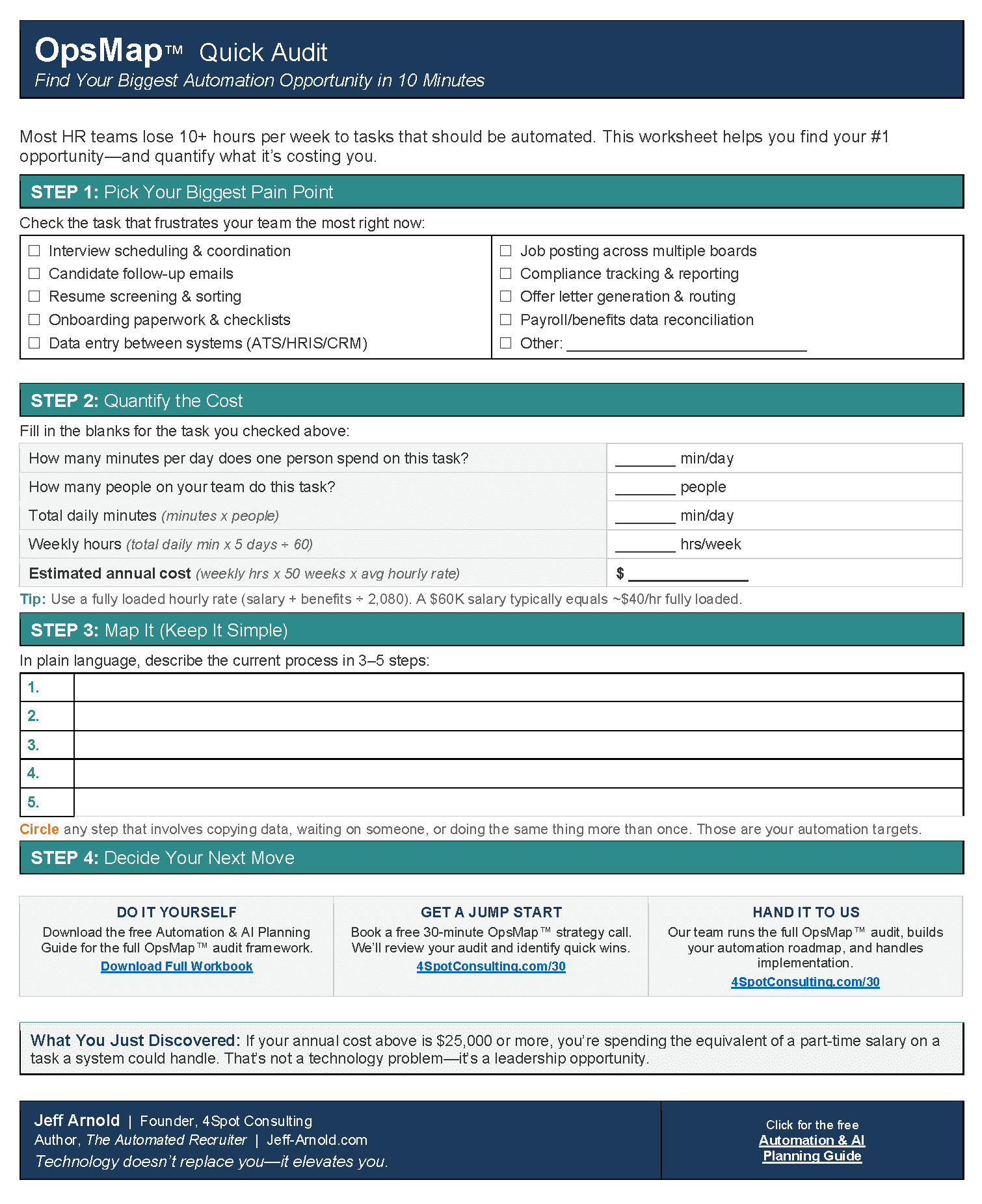
At 4Spot Consulting, we specialize in helping businesses like yours transform their ATS into a true talent acquisition powerhouse. Through our OpsMap™ framework, we conduct a strategic audit to uncover inefficiencies, surface opportunities for automation and AI integration, and roadmap profitable automations tailored to your specific needs. This isn’t just about implementing technology; it’s about optimizing your entire recruitment ecosystem to save high-value time, reduce operational costs, and secure the talent essential for growth.
By leveraging advanced screening features, you’re not just investing in technology; you’re investing in a smarter, faster, and more effective way to build your team. It’s an investment that pays dividends in reduced time-to-hire, improved candidate quality, and ultimately, a stronger, more agile workforce.
If you would like to read more, we recommend this article: CRM Data Protection and Recovery for Keap and High Level



RELATED POST