
Post: Smart Sorting: The AI Revolution in Candidate Assessment
From Manual Sifting to Smart Sorting: The Evolution of Candidate Assessment
The quest for talent has always been a cornerstone of business success, but the methods we employ to find and vet the right people have undergone a seismic shift. For decades, the hiring process was largely a manual endeavor – a marathon of resume sifting, phone screenings, and in-person interviews, all reliant on human intuition and often burdened by inherent biases and inefficiencies. Today, we stand at the precipice of a new era, one where smart sorting, powered by automation and artificial intelligence, isn’t just a luxury but a strategic imperative for businesses aiming for scalable growth.
Consider the HR and recruiting landscape just a generation ago. Recruiters would spend countless hours manually reviewing stacks of paper resumes, searching for keywords, trying to piece together a candidate’s story from static documents. The process was slow, prone to human error, and often led to overlooked qualified candidates or, conversely, a deluge of unqualified ones making it through initial gates. This manual drudgery wasn’t just tedious; it was a significant bottleneck, directly impacting time-to-hire, quality of hire, and ultimately, an organization’s bottom line.
The Dawn of Digitalization: Early Steps Towards Efficiency
The first significant evolutionary leap came with the advent of applicant tracking systems (ATS). These platforms digitized the application process, moving resumes from paper to pixels. While a monumental improvement, early ATS still largely served as digital filing cabinets. They streamlined the submission process but offered limited capabilities for intelligent assessment. Recruiters could search for keywords, but the interpretation, the contextual understanding, and the proactive identification of top talent still heavily relied on manual review.
This period, while foundational, introduced a new challenge: data overload. Companies were collecting more applicant information than ever before, but without sophisticated tools to process and analyze it, much of its potential value remained locked away. The problem wasn’t a lack of candidates; it was a lack of efficient, unbiased, and predictive methods to identify the *right* candidates from an ever-growing pool.
The AI Revolution: Smart Sorting Takes Center Stage
Fast forward to today, and the landscape is dramatically different. Artificial intelligence and advanced automation have fundamentally reshaped how businesses approach candidate assessment. We’ve moved beyond simple keyword matching to sophisticated algorithms that can analyze vast amounts of data, identify patterns, and even predict candidate success with remarkable accuracy.
From Parsing to Predictive Analytics
Modern AI-powered tools can parse resumes and applications not just for keywords, but for context, skills alignment, and even behavioral indicators. These systems can quickly process thousands of applications, extracting relevant information and ranking candidates based on predefined criteria. This significantly reduces the manual sifting burden, allowing human recruiters to focus their valuable time on higher-value activities: engaging with top candidates, building relationships, and making final, nuanced judgments.
Beyond initial screening, AI is now used for more advanced assessments. Chatbots can conduct initial interviews, screening for basic qualifications and cultural fit. Behavioral assessments, powered by AI, can analyze responses, engagement patterns, and even video interviews to provide insights into a candidate’s soft skills, problem-solving abilities, and alignment with company values, often reducing unconscious bias inherent in human-led initial assessments.
The Impact on Operations and Scalability
For organizations like those 4Spot Consulting serves – high-growth B2B companies with $5M+ ARR – the shift to smart sorting isn’t just about making HR easier; it’s about operational excellence and scalability. Manual assessment processes are inherently unscalable. As a company grows, the volume of applications increases exponentially, quickly overwhelming human resources and leading to slower hiring cycles, missed talent, and increased operational costs.
By integrating AI and automation into candidate assessment workflows, businesses can:
- **Reduce Time-to-Hire:** Automated screening and initial assessment drastically cut down the time it takes to move a candidate from application to interview.
- **Improve Quality of Hire:** AI’s ability to analyze data without human bias helps identify candidates whose skills and potential might be overlooked by traditional methods.
- **Enhance Candidate Experience:** Faster responses and a more streamlined process create a positive impression for applicants.
- **Free Up High-Value Employees:** Recruiters and HR professionals can shift their focus from administrative tasks to strategic talent acquisition and retention.
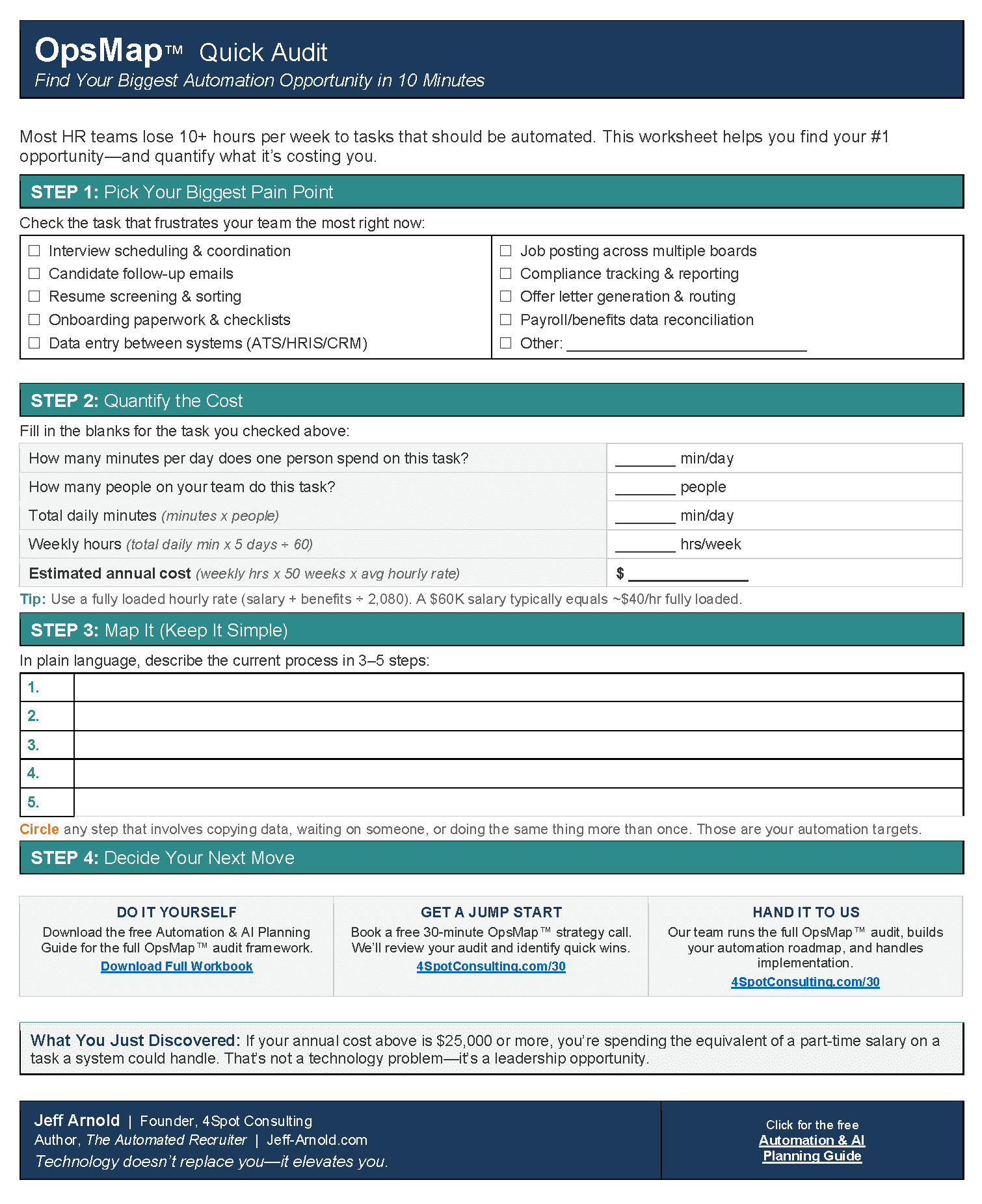
At 4Spot Consulting, we specialize in helping businesses implement these transformative automation strategies. Using platforms like Make.com, we connect disparate HR tools, CRMs, and assessment platforms to create a cohesive, intelligent system. Our OpsMap™ strategic audit helps uncover existing inefficiencies in candidate assessment, identifying opportunities to leverage AI for everything from initial application processing to integrating assessment results directly into your Keap or HighLevel CRM, ensuring a single source of truth for all candidate data.
The evolution from manual sifting to smart sorting represents more than just technological advancement; it’s a paradigm shift in how businesses approach their most critical asset: their people. Embracing this evolution is not merely an option but a necessity for any organization committed to sustainable growth, operational efficiency, and securing the best talent in a competitive market.
If you would like to read more, we recommend this article: Keap & High Level CRM Data Protection: Your Guide to Recovery & Business Continuity
RELATED POST