Post: Recruitment Lag: The Silent Killer of Profitability (and Your Automation Solution)
The Real Cost of Slow Hiring: Calculating Your Recruitment Lag
Every business leader understands the direct costs associated with hiring: recruitment fees, advertising spend, onboarding expenses. These are tangible line items that appear on a balance sheet. What’s far less visible, yet equally, if not more, damaging, is the insidious drain caused by slow hiring processes—a phenomenon we at 4Spot Consulting call “Recruitment Lag.” This isn’t merely an inconvenience; it’s a profound operational and financial liability that quietly erodes profitability and stifles growth.
The problem isn’t always a lack of suitable candidates or even an inefficient recruiter. Often, the bottleneck lies within the internal processes: disjointed communication, manual data entry, approvals trapped in email inboxes, and a general lack of automation from application to offer. When a critical role sits vacant for weeks or even months, the ripple effects spread throughout the organization, impacting everything from project timelines to team morale.
Understanding Recruitment Lag: More Than Just Time-to-Hire
Time-to-hire is a standard metric, but Recruitment Lag dives deeper. It encompasses not just the duration from job posting to offer acceptance, but also the period during which the vacancy actively impairs your business operations. It’s the time a sales territory goes uncovered, a development project stalls, or an existing team is forced to carry an unsustainable workload. This lag represents lost opportunity, delayed innovation, and a tangible drag on your company’s forward momentum.
The Tangible Price of Vacancy: Direct Costs
The most immediate and calculable cost of Recruitment Lag is the lost productivity of an unfilled position. Consider a role with a $100,000 annual salary. That translates to approximately $400 in lost value for every single business day the position remains open. If that role is revenue-generating, such as a salesperson, the cost escalates dramatically. Not only are you not generating the expected revenue from that individual, but you might also be missing out on sales entirely. For technical or operational roles, the cost manifests as delayed project completion, increased workload and potential burnout for existing team members, and the opportunity cost of what that person would have contributed to innovation or problem-solving.
Beyond lost productivity, you might be incurring overtime costs for employees who are picking up the slack, or even spending on temporary staff who are less integrated and often less efficient. Each week a critical position remains open, you’re not just missing out on output; you’re actively paying for the absence through diluted efficiency and strained resources.
The Shadowy Impact: Indirect Costs and Brand Erosion
While direct costs are painful, the indirect costs of Recruitment Lag are often far more corrosive to a business over the long term. These include:
- Decreased Morale and Burnout: Existing team members stretched thin to cover a vacant role can experience increased stress, reduced job satisfaction, and a higher propensity for their own departure—creating a vicious cycle.
- Missed Innovation and Strategic Delays: A critical engineering or product role left unfilled can mean product development stalls, competitors gain an advantage, or strategic initiatives are pushed back, impacting market position and future revenue streams.
- Damaged Brand Reputation: A perception of an understaffed or constantly hiring company can negatively impact your talent brand, making it even harder to attract top talent in the future. It can also signal internal inefficiencies to clients and partners.
- Reduced Customer Satisfaction: If client-facing roles are vacant, or if back-office support is struggling, customer service quality can decline, leading to churn and negative reviews.
Calculating Your Recruitment Lag: A Practical Approach
To truly understand the impact, businesses need to quantify their Recruitment Lag. A simple calculation involves estimating the daily value of a position and multiplying it by the number of days it remains unfilled beyond an optimal hiring window. For instance, if your average time-to-hire is 60 days, but your ideal is 30, that’s 30 days of lag. Multiply those 30 days by the daily value of the role (e.g., annual salary / 260 working days + estimated revenue contribution) to get a clear picture.
Another method involves tracking project delays and their associated revenue impacts. If a project worth $500,000 is delayed by two months due due to a critical vacancy, that’s a direct $500,000 cost of your lag.
The Solution: Strategic Automation & AI for Talent Acquisition
The good news is that Recruitment Lag is not an inevitable reality. It’s a symptom of inefficient processes that can be systematically addressed and optimized through strategic automation and AI. At 4Spot Consulting, we specialize in implementing solutions that dramatically cut down these lag times.
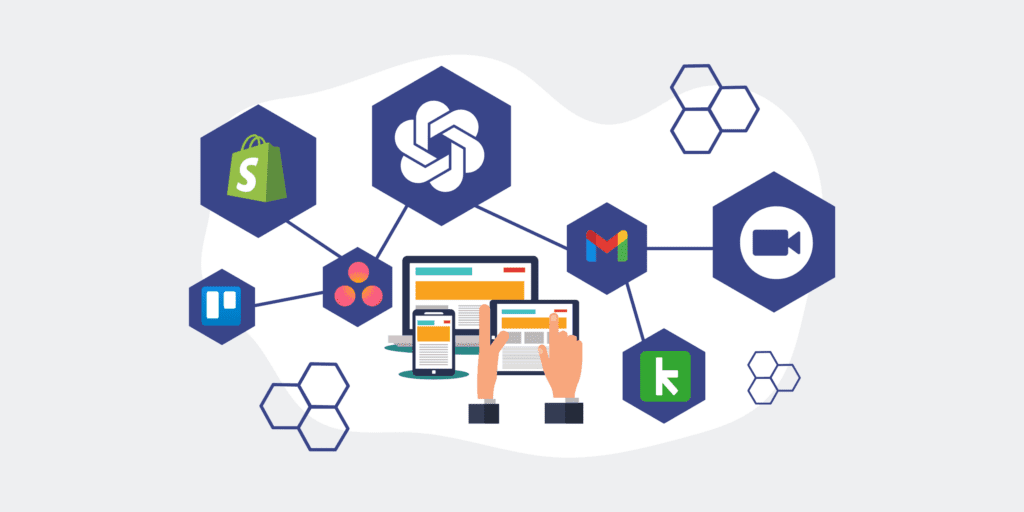
Our OpsMesh framework focuses on creating a seamless, interconnected operational system. For HR and recruiting, this means automating repetitive, time-consuming tasks: initial candidate screening, scheduling interviews, sending personalized communications, managing application data in systems like Keap CRM, and even generating offer letters. By leveraging tools like Make.com, we connect disparate systems, ensuring data flows effortlessly and bottlenecks are eliminated.
Imagine a system where a candidate applies, their resume is automatically parsed, enriched with AI, and synced to your CRM. The system then automatically sends a pre-screening questionnaire, schedules interviews based on team availability, and triggers reminders. This isn’t futuristic; it’s what we implement today. We’ve seen firsthand how an HR tech client saved over 150 hours per month by automating their resume intake and parsing process, freeing up their valuable HR team to focus on strategic talent engagement rather than manual data entry.
By conducting an OpsMap™—a strategic audit—we pinpoint the exact points of friction in your recruitment pipeline and design an OpsBuild solution tailored to your specific needs. This approach doesn’t just shorten time-to-hire; it fundamentally transforms your ability to attract, engage, and onboard top talent swiftly and efficiently, eliminating the silent killer of Recruitment Lag.
The real cost of slow hiring is far greater than most businesses realize. It’s a compounding interest on inefficiency, quietly subtracting from your bottom line and hindering your potential. By strategically investing in automation and AI for your recruitment processes, you’re not just saving time—you’re unlocking growth, boosting morale, and future-proofing your talent acquisition strategy.
If you would like to read more, we recommend this article: Keap & High Level CRM Data Protection: Your Guide to Recovery & Business Continuity


RELATED POST