Post: Secure Stakeholder Buy-In for AI Screening Initiatives
Navigating the Human Element: Securing Stakeholder Buy-in for AI Screening Initiatives
Implementing transformative technology within any organization isn’t merely a technical challenge; it’s profoundly a human one. While the allure of AI screening promises unprecedented efficiency and precision in talent acquisition, the path to adoption is often paved with skepticism, concern, and outright resistance from key stakeholders. At 4Spot Consulting, we’ve guided numerous businesses through these waters, understanding that successful integration hinges less on the AI’s capabilities and more on a carefully crafted strategy for gaining consensus and enthusiasm.
The promise of AI in the screening process is undeniable: faster candidate qualification, reduction of human bias, consistent evaluation criteria, and the ability to process vast applicant pools with remarkable speed. Imagine reclaiming hundreds of hours previously spent on manual resume reviews, allowing your HR team to focus on strategic human interaction rather than administrative bottlenecks. Yet, despite these clear advantages, a common scenario we encounter involves a forward-thinking leader championing AI, only to face a wall of apprehension from departmental heads, legal teams, or even executive leadership. This isn’t a failure of the technology; it’s a gap in communication and strategic alignment.
Understanding the Roots of Resistance
To overcome resistance, we must first understand its source. Stakeholders typically harbor concerns stemming from several areas:
Fear of the Unknown: AI often feels like a black box. Without a clear understanding of how it works, its limitations, and its benefits, fear can easily breed. Misconceptions about job displacement or dehumanization of the hiring process are common.
Data Privacy & Security: The handling of sensitive applicant data is paramount. Legal and compliance teams rightly worry about potential breaches, regulatory non-compliance, and ethical implications.
Bias and Fairness: Concerns about embedded biases within AI algorithms are legitimate. If an AI system perpetuates or amplifies existing human biases, it undermines the very goal of fair and equitable hiring.
Return on Investment (ROI): Executives want to see a clear business case. How will this investment translate into tangible cost savings, increased productivity, or improved talent quality?
Disruption to Existing Workflows: Any new system will alter established processes. Employees may resist change simply due to the discomfort of learning something new or the perception that it will add to their workload.
Building a Coalition: Strategies for Buy-in
Gaining buy-in requires a proactive, transparent, and results-oriented approach. It’s about building a compelling narrative that addresses concerns head-on while highlighting the strategic imperative.
Educate and Demystify
Start with clarity. Conduct workshops or informational sessions to explain what AI screening is, how it functions, and precisely what it is designed to achieve within your specific context. Emphasize that AI is a tool to augment human capabilities, not replace them. Showcase examples of how AI can handle repetitive tasks, freeing up human talent for more complex, empathetic, and strategic work.
Focus on Tangible Business Outcomes
Translate the benefits of AI into the language of business leaders. Instead of talking about “machine learning algorithms,” discuss “a 30% reduction in time-to-hire” or “a 15% improvement in new hire retention due to better candidate-job fit.” Present a clear financial model demonstrating cost savings from reduced manual hours, lower recruitment agency fees, and decreased new-hire ramp-up time. This ROI-centric approach resonates deeply with those accountable for the bottom line.
Address Ethics, Bias, and Compliance Proactively
Acknowledge concerns about bias and privacy. Outline your strategy for mitigating these risks, whether through diverse data sets, regular audits, human oversight, or selecting AI solutions with explainable AI (XAI) capabilities. Work closely with legal and HR to ensure compliance with all relevant data protection regulations and internal ethical guidelines. Transparency here builds trust.
Involve Key Stakeholders Early and Often
Don’t present AI screening as a fait accompli. Instead, involve key stakeholders from HR, IT, legal, and operational departments in the exploration and planning phases. Their input can help shape the solution to better fit organizational needs, and their early involvement fosters a sense of ownership rather than imposition. Consider pilot programs with smaller teams to demonstrate success and gather internal champions.
Champion the Augmented Human
Frame AI as an enabler. It allows human recruiters to be more strategic, more engaged, and more effective. By automating the initial screening, recruiters can spend more time building relationships with top candidates, conducting deeper interviews, and focusing on the human elements of the hiring process that AI cannot replicate. This shift from transactional to transformational work is a powerful argument for the workforce.
The 4Spot Consulting Advantage: Strategic Partnership
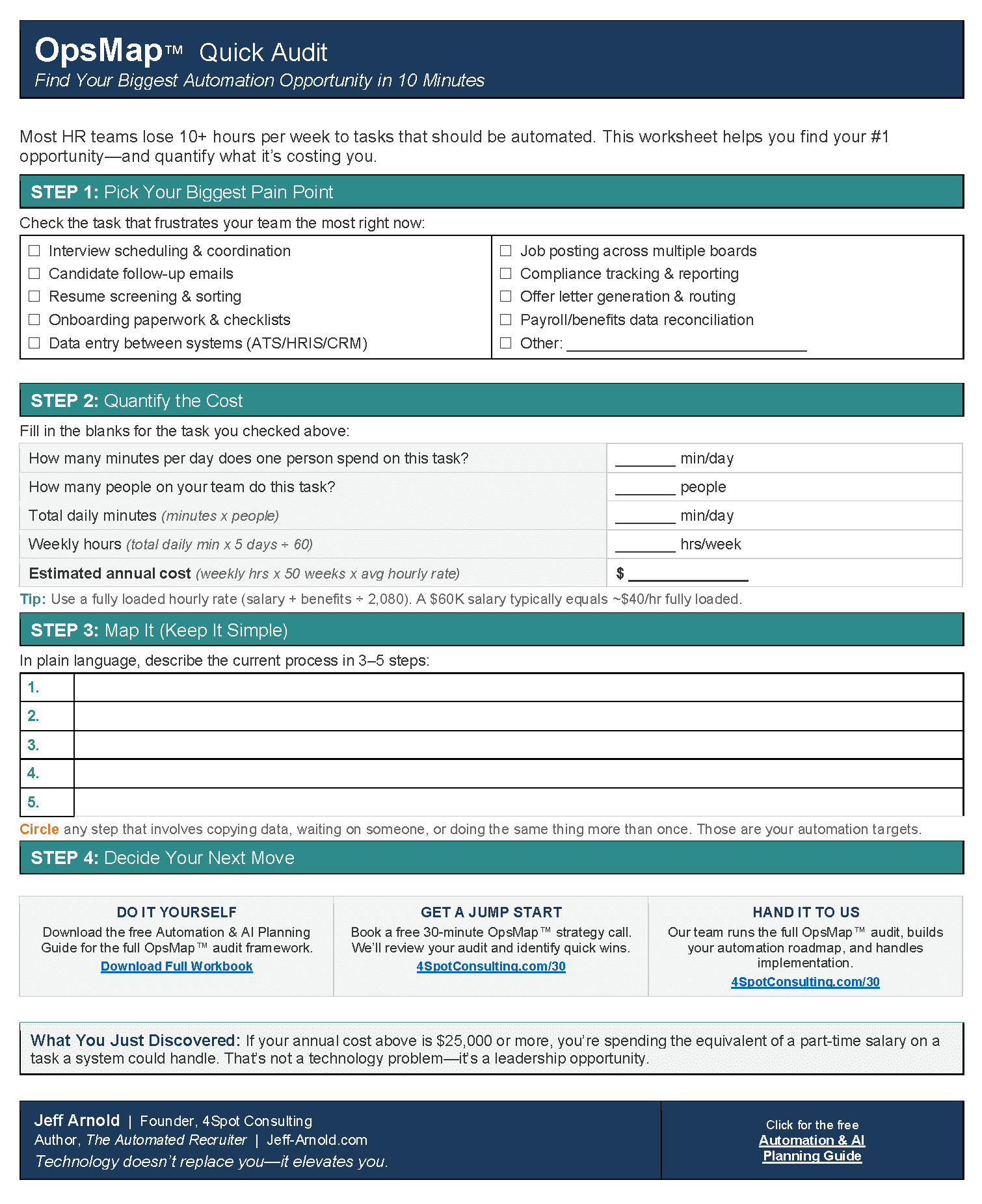
At 4Spot Consulting, we specialize in helping businesses not just implement AI and automation, but strategically integrate it into their operational fabric. Our approach goes beyond mere technical deployment; we engage with your leadership to understand anxieties, articulate value propositions, and develop a phased adoption roadmap that builds confidence at every level. Our OpsMap™ strategic audit, for instance, helps uncover the precise inefficiencies AI screening can solve, translating complex technological potential into clear, actionable business benefits that win over even the most skeptical stakeholders. We’ve seen firsthand how a well-articulated strategy, backed by clear ROI, can transform initial skepticism into enthusiastic advocacy.
Overcoming resistance to AI screening is not about forcing technology upon an organization. It’s about strategic communication, empathetic understanding, and a clear demonstration of how AI can serve the collective goals of efficiency, fairness, and ultimately, a stronger, more capable workforce. With the right strategy, your organization can harness the power of AI to build a more robust and responsive talent acquisition function.
If you would like to read more, we recommend this article: Keap & High Level CRM Data Protection: Your Guide to Recovery & Business Continuity
RELATED POST