Post: Make.com for HR: The Strategic Automation Upgrade from Zapier
Migrating from Zapier to Make.com: A Strategic Step-by-Step for HR Leaders
In the evolving landscape of HR and recruiting technology, the ability to automate critical workflows is no longer a luxury but a strategic imperative. For years, platforms like Zapier have served as an accessible entry point for organizations looking to connect their disparate HR tools. However, as business operations mature and the demand for more robust, cost-effective, and complex automation grows, many HR leaders are discovering the limitations of these earlier solutions.
Enter Make.com, a powerful integration platform that offers a significant leap forward in automation capabilities. For HR departments, transitioning from Zapier to Make.com isn’t merely a software switch; it’s a strategic upgrade that promises enhanced flexibility, deeper integrations, and substantial cost savings. This isn’t just about connecting apps; it’s about building an intelligent, interconnected HR ecosystem capable of handling the intricate demands of talent acquisition, employee experience, and operational efficiency.
Why Make.com is the Strategic Choice for Modern HR
The Strategic Imperative for HR Leaders
HR operations are inherently complex, involving numerous systems from Applicant Tracking Systems (ATS) and Human Resources Information Systems (HRIS) to learning platforms, communication tools, and payroll. Manual data entry, repetitive tasks, and disjointed workflows lead to human error, wasted time, and a less-than-optimal experience for both candidates and employees. A sophisticated automation platform like Make.com empowers HR leaders to overcome these challenges, transforming reactive processes into proactive, seamless experiences.
This shift isn’t just about saving time on individual tasks; it’s about creating an agile HR function that can scale with organizational growth, adapt to changing market conditions, and truly drive strategic value. Make.com provides the underlying infrastructure to build these intelligent connections, ensuring that HR data flows accurately and efficiently across the entire tech stack, freeing up valuable HR professionals to focus on people, not processes.
Beyond Basic Connections: The Power of Make.com
While Zapier excels at simple, trigger-action workflows, Make.com extends beyond this with its visual, flow-based interface. It enables the creation of highly sophisticated scenarios that can involve multiple steps, conditional logic, error handling, data transformation, and parallel processing. For HR, this translates into the ability to:
- Automate complex onboarding sequences involving multiple department handoffs and system updates.
- Streamline candidate screening and communication based on intricate criteria.
- Synchronize employee data across various HRIS, payroll, and benefits platforms.
- Generate custom reports and analytics by pulling data from diverse sources.
This level of detail and control is particularly crucial in HR, where data integrity and process compliance are paramount. Make.com’s robust capabilities ensure that HR automation is not just efficient but also reliable and compliant.
Preparing for the Migration: The OpsMap™ Approach
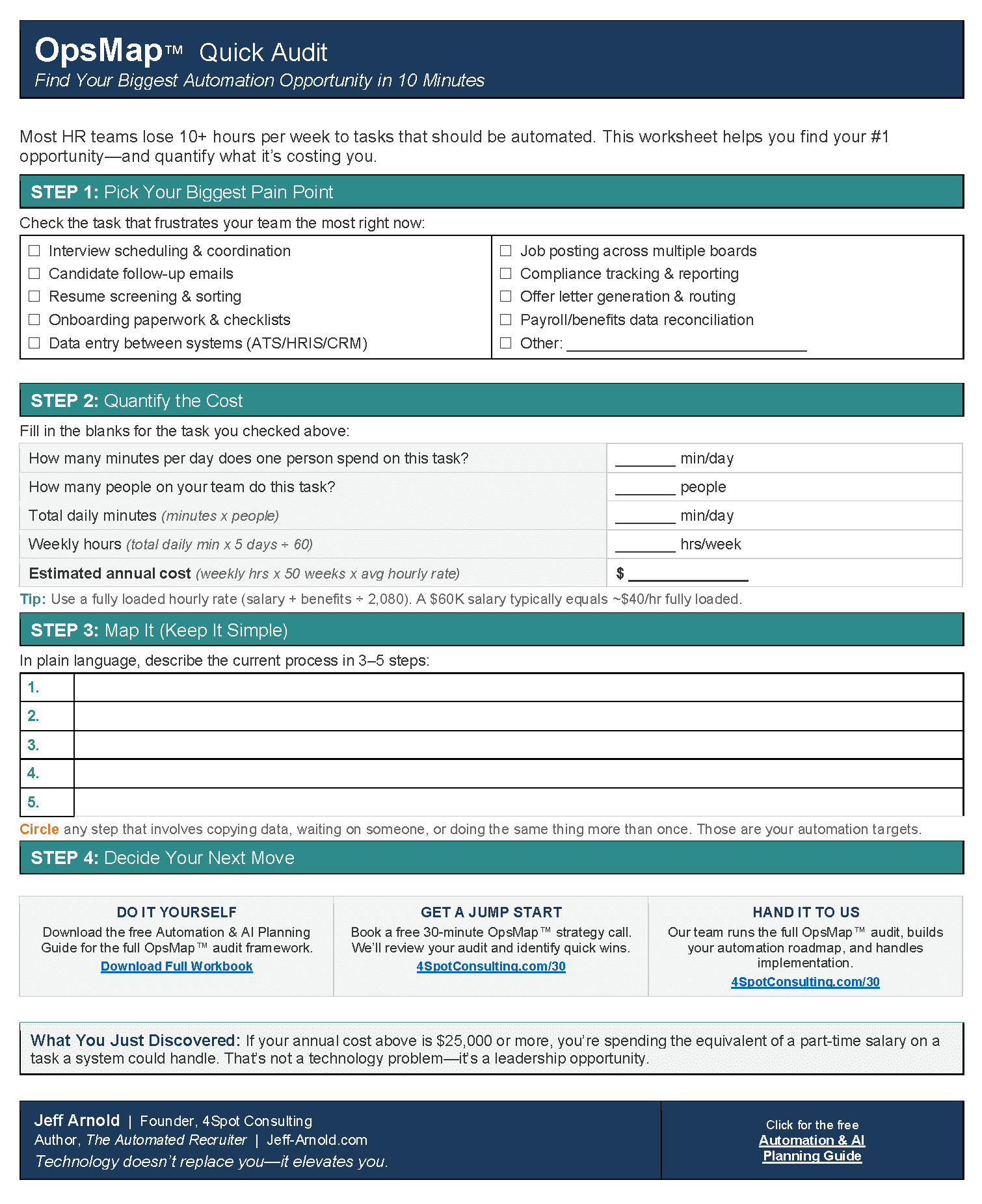
A successful migration isn’t about rushing to rebuild; it’s about thoughtful planning. At 4Spot Consulting, we advocate for an “OpsMap™” approach—a strategic audit to identify inefficiencies and chart a clear path for automation.
Inventorying Your Zapier Workflows
Before making the switch, it’s essential to meticulously document every Zapier workflow currently in use within your HR department. For each Zap, identify:
- Its purpose and the problem it solves.
- The applications involved (triggers and actions).
- The data points being transferred.
- Any conditional logic or filters.
- Its criticality to daily HR operations.
This inventory serves as your blueprint, ensuring no critical automation is overlooked during the transition. It also provides an opportunity to identify redundant or inefficient Zaps that may not need to be rebuilt.
Defining Your Make.com Vision
With your inventory in hand, consider not just replicating existing Zaps, but improving upon them. What new efficiencies can be gained? What bottlenecks can be eliminated? A clear vision for your Make.com environment will guide your migration strategy, allowing you to prioritize workflows that deliver the highest ROI and integrate seamlessly with your overall HR tech strategy. This is where 4Spot Consulting helps clients move from simply connecting apps to building a cohesive, automated operational fabric.
The Step-by-Step Migration Process for HR
Step 1: Account Setup and Initial Exploration
Begin by setting up your Make.com account. Spend time familiarizing yourself with its intuitive visual builder, module types, and the vast library of app connectors. For HR, focus on integrations for your ATS (e.g., Greenhouse, Workable), HRIS (e.g., BambooHR, ADP), communication tools (e.g., Slack, Microsoft Teams), and CRM systems (e.g., Keap, HubSpot).
Step 2: Rebuilding Critical Workflows
Start with your most critical, yet straightforward, HR automations. These are often the Zaps that save the most time or impact the most people. For instance, consider rebuilding an automation that:
- Sends a welcome email to new candidates upon application.
- Creates an onboarding task list in a project management tool when a new hire is added to your HRIS.
- Synchronizes candidate interview schedules between your ATS and team calendars.
Translate the logic from your Zapier workflows into Make.com “scenarios.” Leverage Make.com’s branching and error-handling capabilities to build more resilient and intelligent automations than were possible before.
Step 3: Testing and Iteration
Thorough testing is paramount in HR automation. Use dummy data or test environments to run each new Make.com scenario multiple times. Verify that data flows correctly, conditions are met, and actions are performed as expected. Pay close attention to error logs and make necessary adjustments. This iterative process ensures the reliability and accuracy of your HR automations.
Step 4: Phased Rollout and Optimization
Avoid a “big bang” rollout. Instead, gradually deploy your new Make.com scenarios, starting with less critical functions, and then moving to more complex, high-impact workflows. Continuously monitor their performance, gather feedback from your HR team, and look for opportunities to optimize. Make.com’s flexibility allows for ongoing refinement, ensuring your HR automations evolve with your business needs – a key component of our OpsCare™ service.
Realizing the ROI: Beyond the Migration
Tangible Benefits for HR
The migration to Make.com offers significant, measurable benefits for HR:
- **Cost Savings:** Make.com typically offers a more competitive pricing model than Zapier, especially for high-volume or complex automations.
- **Time Efficiency:** Automating repetitive HR tasks frees up HR professionals to focus on strategic initiatives like talent development and employee engagement.
- **Reduced Errors:** Automated data transfer minimizes manual errors, improving data integrity across all HR systems.
- **Improved Candidate & Employee Experience:** Seamless, timely communication and process execution enhance both recruiting and employee onboarding/lifecycle experiences.
- **Scalability:** Make.com can handle greater complexity and volume, enabling HR operations to scale without proportional increases in manual workload.
Partnering for Strategic Automation
Migrating automation platforms can be a substantial undertaking, but it’s an investment that pays dividends. For HR leaders seeking to unlock the full potential of Make.com and build an automated HR function that truly supports business goals, partnering with experts like 4Spot Consulting can accelerate the process and ensure a seamless, strategic transition. We specialize in designing and implementing Make.com solutions that deliver tangible ROI, allowing you to save 25% of your day.
The move from Zapier to Make.com represents a forward-thinking decision for HR, one that elevates operational efficiency, reduces costs, and positions the HR department as a strategic driver of organizational success. It’s not just about changing tools; it’s about embracing a more powerful, flexible, and scalable approach to HR automation.
If you would like to read more, we recommend this article: Make.com: Strategic HR & Recruiting Automation at 1/8th Zapier’s Cost (Plus 10,000 Free Credits)
RELATED POST