Post: Strategic AI Platform Selection for HR Service Delivery
Beyond the Buzzwords: Strategically Choosing Your Next AI Platform for HR Service Delivery
The promise of Artificial Intelligence in revolutionizing HR service delivery is tantalizing, offering visions of automated workflows, hyper-personalized employee experiences, and unparalleled efficiency. Yet, beneath the compelling rhetoric and glossy vendor presentations lies a complex landscape, a veritable labyrinth of platforms, features, and integrations. For HR leaders and COOs, the challenge isn’t whether to adopt AI, but how to navigate this crowded marketplace to select a solution that genuinely transforms operations rather than adding another layer of complexity. This isn’t a task for the faint of heart, nor for those prone to chasing the latest shiny object; it demands a strategic, outcomes-driven approach.
The Imperative of Strategic AI Adoption in HR
Many organizations jump into AI adoption with a tactical mindset, focusing on a single pain point or an intriguing feature. While this might offer short-term fixes, it often overlooks the broader operational ecosystem. HR service delivery, at its core, is a network of interconnected processes, from onboarding and benefits administration to performance management and employee support. Introducing a new AI platform without understanding its holistic impact can create new bottlenecks, data silos, and a fractured employee experience. The goal isn’t just to automate a task; it’s to enhance the entire HR value chain, eliminate human error, reduce operational costs, and build a scalable infrastructure that supports growth.
Why a “Plug-and-Play” Mentality Fails
The notion of a “plug-and-play” AI solution for HR is largely a myth. True value from AI emerges when it integrates seamlessly with your existing HRIS, CRM, ATS, and other critical business systems. A platform that stands alone, requiring manual data transfers or duplicated efforts, negates the very benefits it promises. Such an approach often leads to more administrative burden, not less. Strategic AI adoption means looking beyond standalone capabilities to how a platform enhances your overall operational “mesh,” ensuring data flows freely, intelligently, and securely across all touchpoints. This demands a partner who understands how to connect dozens of SaaS systems and ensure they communicate effectively, turning disjointed data into actionable intelligence.
Navigating the Vendor Minefield: Key Considerations
With countless AI platforms vying for attention, distinguishing between genuine innovation and mere marketing hype requires a critical eye. Your evaluation process must be rigorous, focused on tangible business outcomes rather than abstract technological prowess.
Understanding Your Unique HR Service Delivery Needs
Before even looking at vendors, an honest internal assessment is paramount. What are the specific, measurable pain points in your current HR service delivery? Where are human errors most prevalent? Which manual processes consume the most high-value employee time? What’s the true cost of these inefficiencies? For one HR firm we worked with, the bottleneck was in resume intake and parsing – a repetitive, time-consuming task. Identifying this precise challenge allowed us to implement an AI solution that saved them over 150 hours per month. Without this clear understanding, any AI investment risks being a solution in search of a problem.
The Non-Negotiables: Integration, Scalability, and Security
Once you’ve identified your core needs, evaluate platforms against a few critical criteria. First, **integration**: Can the AI platform truly connect with your existing tech stack without extensive custom coding or disruptive overhauls? Seamless integration is the bedrock of efficiency. Second, **scalability**: Will the platform grow with your organization? As your employee base expands or your HR processes evolve, will the AI solution adapt without requiring a complete re-implementation? Third, and perhaps most crucially, **security and compliance**: HR data is highly sensitive. Ensure the platform adheres to the strictest data privacy regulations (GDPR, CCPA, etc.) and has robust security protocols to protect employee information. A breach not only carries significant financial penalties but can also severely damage trust and reputation.
User Experience and Adoption: Beyond the Feature List
An AI platform, however advanced, is only as effective as its adoption rate among your HR team and employees. A clunky interface, unintuitive workflows, or a steep learning curve can undermine even the most sophisticated technology. Prioritize platforms that offer a clean, user-friendly experience for both administrators and end-users. Consider the level of training and ongoing support provided by the vendor. A platform that requires constant intervention or extensive IT support will quickly erode its ROI and become a source of frustration rather than empowerment.
From Evaluation to Implementation: A Phased Approach
Selecting an AI platform is merely the first step. Successful implementation requires careful planning, piloting, and continuous optimization.
Piloting and Proving ROI
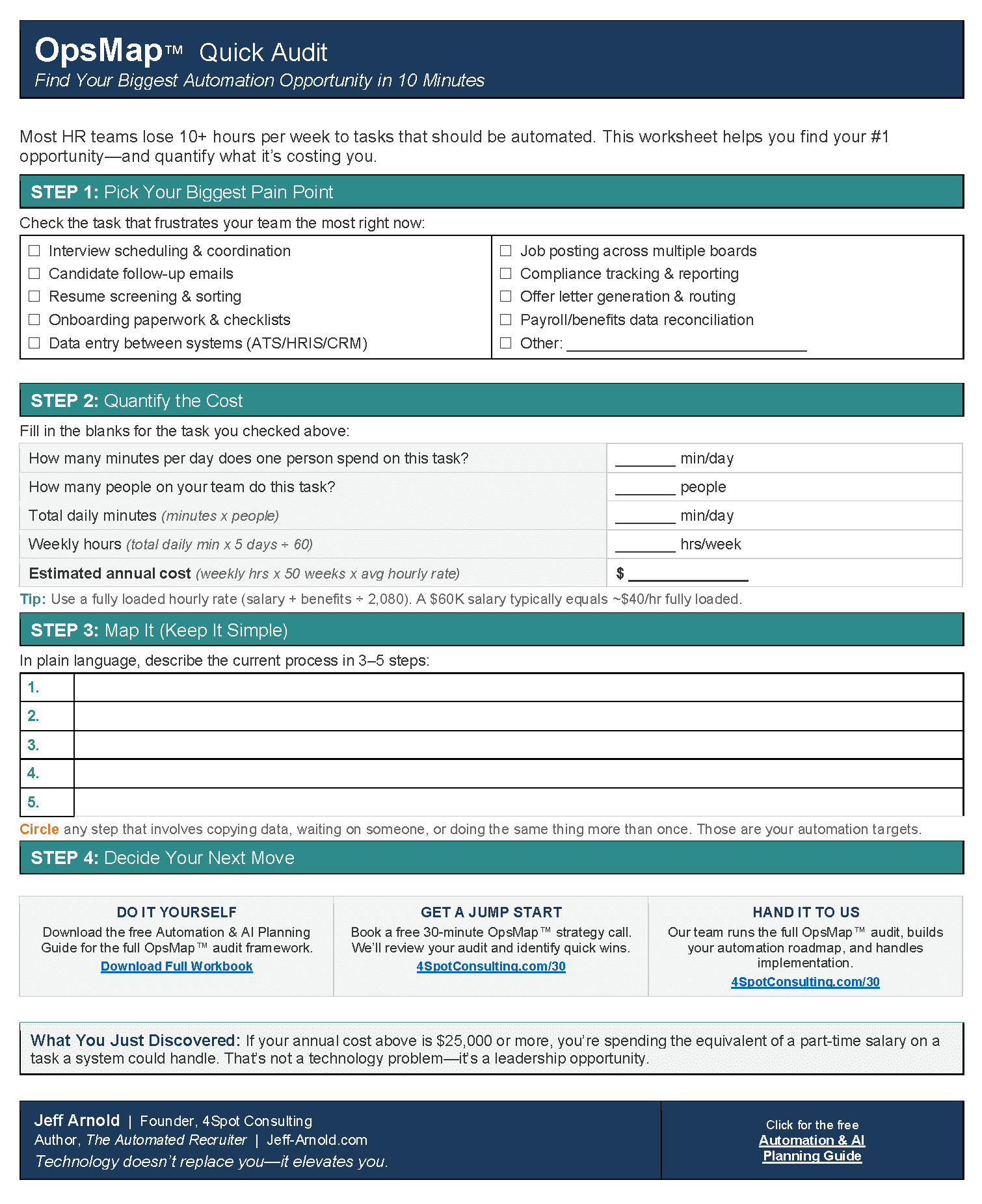
Before a full-scale rollout, consider a pilot program. Start with a specific, manageable use case and a defined set of metrics to track. This allows you to test the platform’s efficacy in a real-world scenario, identify potential issues, and, critically, demonstrate tangible ROI. Whether it’s a reduction in time-to-hire, a decrease in HR ticket resolution times, or significant cost savings from automating routine tasks, proving impact in a controlled environment builds internal confidence and secures executive buy-in for broader adoption. Our strategic audit, the OpsMap™, helps companies uncover these specific inefficiencies and roadmap profitable automations, ensuring every implementation is tied to clear business outcomes.
The Role of Expertise in Seamless Integration
Implementing sophisticated AI platforms, especially those requiring deep integration across multiple systems, is often beyond the scope of internal HR or IT teams, who are already stretched thin. This is where strategic partners, experienced in low-code automation and AI integration, become invaluable. They bring the expertise to bridge the gap between your business needs and the technological capabilities, ensuring systems are not just connected, but optimized to drive maximum efficiency and value. We’ve seen organizations achieve 240% production increases and millions in annual cost savings by approaching automation and AI strategically, focusing on how all systems work together rather than in isolation.
The journey to selecting and implementing the best AI platform for HR service delivery is complex, but immensely rewarding when approached strategically. By focusing on genuine business needs, rigorous evaluation, and a phased, outcomes-driven implementation, organizations can move beyond the buzzwords and realize the transformative potential of AI, saving time, reducing costs, and empowering their most valuable asset: their people.
If you would like to read more, we recommend this article:

RELATED POST