Post: The AI Revolution in Human Resources and Talent Acquisition
11 Ways AI is Revolutionizing HR and Recruiting for Smart Companies
The landscape of Human Resources and Recruiting is undergoing a seismic shift, driven by the relentless pace of technological innovation. For too long, HR departments have been burdened by manual, repetitive tasks, sifting through countless resumes, scheduling endless interviews, and managing complex administrative processes. This not only saps valuable time from high-value employees but also introduces human error, slows down critical talent acquisition, and hinders strategic HR initiatives. In today’s competitive market, simply “keeping up” is no longer enough; organizations must proactively leverage cutting-edge tools to gain a sustainable advantage.
Enter Artificial Intelligence (AI). AI is no longer a futuristic concept but a present-day imperative, transforming how companies attract, hire, manage, and retain their most valuable asset: their people. For HR and recruiting professionals, the adoption of AI isn’t about replacing human judgment but augmenting it, freeing teams to focus on strategic initiatives, employee engagement, and critical decision-making. At 4Spot Consulting, we’ve seen firsthand how integrating intelligent automation and AI can lead to significant operational efficiencies, faster hiring cycles, improved candidate experience, and a stronger bottom line. This isn’t just about buzzwords; it’s about practical applications that deliver measurable ROI, saving businesses 25% of their day by eliminating bottlenecks and errors. Let’s explore the eleven most impactful ways AI is reshaping HR and recruiting for forward-thinking organizations.
1. Intelligent Candidate Sourcing and Screening
One of the most time-consuming aspects of recruiting is the initial identification and screening of candidates. Traditional methods involve recruiters manually sifting through hundreds, if not thousands, of resumes, a process prone to bias and oversight. AI-powered sourcing tools can scour vast databases, professional networks, and the open web to identify passive candidates who possess the precise skills, experience, and cultural fit an organization needs. Beyond basic keyword matching, these advanced algorithms can analyze contextual information, predict candidate suitability, and even assess potential for growth within the company.
For screening, AI takes the initial burden off human recruiters. Rather than a quick glance, AI can process resumes and cover letters at scale, extracting key data points, ranking candidates based on predefined criteria, and flagging potential matches with remarkable accuracy. This goes beyond simple parsing; AI can understand nuances in experience, identify transferable skills, and cross-reference information against job requirements to present a highly curated shortlist. This drastic reduction in manual review time allows recruiters to engage with only the most qualified candidates, significantly shortening the time-to-hire and enhancing the quality of initial applicants. We’ve leveraged tools in our OpsBuild framework to integrate these AI insights directly into CRM systems like Keap, ensuring a seamless flow from initial contact to candidate management.
2. Enhanced Candidate Experience Through AI Chatbots and Virtual Assistants
In a competitive talent market, the candidate experience is paramount. A poor experience can deter top talent, damage employer brand, and increase drop-off rates. AI chatbots and virtual assistants are revolutionizing this by providing instant, 24/7 support to applicants. These intelligent systems can answer frequently asked questions about job descriptions, company culture, benefits, and the application process, eliminating the need for candidates to wait for human interaction.
Beyond answering queries, AI assistants can guide candidates through the application process, help them upload documents, and even schedule interviews based on both candidate and recruiter availability. This level of responsiveness creates a positive, engaging experience, making candidates feel valued and informed, regardless of the time zone. Furthermore, these chatbots can proactively collect feedback from candidates, providing valuable insights into the efficiency and effectiveness of the recruitment funnel. By automating these touchpoints, HR teams can dedicate their human expertise to more complex candidate interactions, personalizing the experience where it truly counts and building stronger relationships with prospective hires.
3. Predictive Analytics for Talent Retention and Attrition
High employee turnover is a costly problem, impacting productivity, morale, and the bottom line. AI-powered predictive analytics tools are providing HR leaders with unprecedented insights into potential attrition risks. By analyzing a multitude of data points—including tenure, performance reviews, compensation, promotion history, engagement survey results, and even external market conditions—AI algorithms can identify patterns that indicate a likelihood of an employee leaving the organization.
This predictive capability allows HR departments to move from reactive damage control to proactive retention strategies. For instance, if the AI flags a high-performing employee as being at risk, HR can intervene with targeted initiatives such as career development opportunities, mentorship programs, or compensation adjustments. These systems also help in identifying the root causes of turnover, allowing organizations to address systemic issues within their culture or management practices. Implementing such a system requires robust data management, a core focus of our OpsMesh strategy, ensuring that all relevant data points are integrated into a single source of truth for accurate analysis and actionable insights, ultimately reducing the costly cycle of recruitment and training.
4. Streamlined Onboarding and Offboarding Processes
The efficiency of onboarding directly impacts employee engagement, productivity, and retention, while offboarding needs to be seamless for compliance and data security. Both are typically administrative heavy, involving a flurry of forms, signatures, and departmental coordination. AI and automation can drastically streamline these processes, reducing human error and freeing HR staff.
For onboarding, AI can personalize the experience by delivering tailored information and training modules based on the new hire’s role and department. Chatbots can answer initial questions, guiding new employees through company policies and system access. Automated workflows, often built using tools like Make.com, ensure that all necessary paperwork (e.g., W-4s, I-9s) is completed digitally, benefits enrollment is prompted, IT accounts are created, and equipment is ordered, all without manual triggers. In offboarding, AI can ensure all compliance checks are met, access to systems is revoked promptly, and final paychecks are processed accurately. This automation minimizes the risk of compliance breaches and ensures a smooth, professional transition for departing employees, protecting the company’s reputation and data. Our OpsBuild services specialize in creating these intricate, cross-departmental automation sequences, ensuring nothing falls through the cracks.
5. AI-Powered Interview and Assessment Tools
Interviews are crucial, but they are also subject to human bias and can be inconsistent across candidates. AI is introducing new levels of objectivity and efficiency to the interview process. Video interviewing platforms integrated with AI can analyze non-verbal cues, sentiment, and speech patterns, providing objective data points to complement human assessment. These tools can identify specific competencies or communication styles relevant to the job role, offering insights that might be missed in traditional interviews.
Furthermore, AI-powered assessments can evaluate candidates on job-specific skills, cognitive abilities, and personality traits through gamified tests or simulations, offering a standardized and fair evaluation. These assessments are designed to mitigate unconscious bias by focusing solely on performance metrics directly relevant to the role. For instance, an AI tool might analyze a candidate’s problem-solving approach in a simulated scenario, providing a data-driven score. This not only enhances the fairness of the hiring process but also improves the predictive validity of hiring decisions, ensuring that organizations select candidates who are genuinely the best fit for the role and culture, rather than simply those who interview well. This translates directly to reduced mis-hires and improved team performance.
6. Dynamic Compensation and Benefits Optimization
Attracting and retaining top talent often hinges on offering competitive compensation and benefits packages. However, determining optimal offerings can be complex, requiring extensive market research and internal analysis. AI-powered tools simplify this by providing dynamic, real-time insights into market trends, salary benchmarks, and employee preferences. These systems can analyze vast datasets to recommend fair and competitive salary ranges for specific roles, factoring in geography, industry, and individual experience levels.
Beyond base salary, AI can optimize benefits packages by understanding employee demographics, performance data, and engagement surveys to suggest customized offerings that resonate most with the workforce. For example, if a segment of the workforce expresses a strong preference for enhanced wellness programs, AI can highlight the ROI of such an investment. This data-driven approach ensures that HR departments are not just spending on benefits but investing strategically in packages that genuinely attract and retain talent, aligning with business objectives and optimizing resource allocation. It allows companies to be agile in their compensation strategies, ensuring they remain competitive in a rapidly evolving talent market without overspending.
7. Automated HR Support and Employee Self-Service
A significant portion of an HR department’s time is spent addressing routine employee inquiries about policies, benefits, payroll, and leave requests. This high volume of transactional questions can divert HR professionals from more strategic work. AI-powered HR support systems, often manifesting as internal chatbots or virtual assistants, revolutionize this by providing immediate, accurate answers to common employee questions.
These self-service portals empower employees to find information independently, reducing the need to contact HR directly. For instance, an employee can ask a chatbot about their remaining vacation days, how to update their direct deposit information, or details about the company’s parental leave policy, and receive an instant, accurate response. This not only significantly reduces the administrative burden on HR staff but also enhances employee satisfaction by providing convenient, 24/7 access to information. When integrated with an OpsMesh strategy, these AI tools can even initiate automated workflows for more complex requests, like updating personal information or submitting a formal complaint, routing them to the appropriate human expert only when necessary, ensuring efficient and error-free processing.
8. Data-Driven Diversity, Equity, and Inclusion (DEI) Initiatives
Building a diverse, equitable, and inclusive workforce is not just a moral imperative but a proven driver of innovation and business success. AI offers powerful tools to identify and mitigate biases throughout the employee lifecycle, helping organizations achieve their DEI goals. From job description analysis to talent assessment, AI can flag language that might deter certain demographic groups or identify potential biases in hiring patterns that are unconscious to human decision-makers.
AI algorithms can analyze demographic data, promotion rates, pay equity, and engagement survey responses to pinpoint areas where disparities exist. For example, AI can highlight if certain groups are consistently underrepresented in leadership roles or if pay gaps exist for similar positions. Armed with these insights, HR leaders can develop targeted interventions, training programs, and policy changes to foster a more equitable environment. By removing subjective biases from processes like resume screening or performance reviews, AI creates a more level playing field, ensuring that decisions are based on merit and potential. This data-driven approach to DEI moves beyond good intentions, providing actionable intelligence to build a truly inclusive culture that attracts and retains a broader range of talent.
9. AI for Performance Management and Continuous Feedback
Traditional annual performance reviews are often seen as backward-looking, stressful, and ineffective for driving continuous improvement. AI is transforming performance management into a more dynamic, real-time, and development-focused process. AI tools can collect and analyze continuous feedback from various sources—peers, managers, direct reports, and even project performance data—providing a holistic view of an employee’s contributions and development areas.
These systems can identify trends in performance, highlight skill gaps, and even suggest personalized learning paths or mentorship opportunities. For instance, if an AI detects consistent delays in a project manager’s work, it might recommend a course on agile project management or connect them with a mentor skilled in time management. Furthermore, AI can help managers provide more objective and constructive feedback by analyzing their language for bias or inconsistency. This shift towards continuous, data-informed feedback not only improves individual employee performance but also fosters a culture of growth and transparency. It allows organizations to proactively address underperformance and nurture high potential, aligning individual development with organizational goals, and ensuring that every employee is operating at their peak.
10. Automated Compliance and Risk Management
Staying compliant with the ever-evolving labyrinth of labor laws, regulations, and internal policies is a significant challenge for HR departments. Manual compliance checks are time-consuming and prone to human error, potentially leading to costly penalties and reputational damage. AI and automation offer a robust solution by continuously monitoring for changes in regulations and ensuring internal processes adhere to them.
AI-powered systems can automatically flag potential compliance risks in everything from hiring practices and employee contracts to data privacy regulations (like GDPR or CCPA). For example, during the onboarding process, automated workflows can ensure all necessary legal documents are signed and stored securely. In talent acquisition, AI can audit job postings to ensure they meet non-discrimination guidelines. Furthermore, AI can monitor employee data for anomalies that might indicate fraudulent activity or policy violations. This proactive approach not only mitigates legal and financial risks but also frees HR professionals from the minutiae of compliance, allowing them to focus on strategic risk management and policy development. At 4Spot Consulting, our OpsMesh framework ensures that compliance checks are woven into the fabric of your automated HR systems, creating a resilient and secure operational environment.
11. Enhanced Employee Engagement and Wellness Initiatives
Employee engagement is a critical driver of productivity, innovation, and retention. AI is providing HR with deeper insights into employee sentiment and well-being, enabling more effective engagement strategies. AI-powered sentiment analysis tools can process internal communications, anonymous surveys, and feedback platforms to gauge overall employee morale and identify specific pain points or areas of concern. This goes beyond simple survey data, often detecting subtle shifts in sentiment that might indicate emerging issues.
For wellness, AI can personalize recommendations for mental health resources, fitness programs, or stress reduction techniques based on individual employee needs and preferences. For example, if an AI identifies an employee expressing stress related to workload, it might suggest specific time management tools or offer links to mindfulness resources. By understanding the collective pulse of the workforce and the individual needs within it, HR can design targeted engagement initiatives that truly resonate. This proactive, data-driven approach to employee well-being not only fosters a healthier, happier workforce but also leads to increased productivity, reduced absenteeism, and a more vibrant company culture, ultimately contributing to a more resilient and high-performing organization.
The strategic integration of AI and automation is no longer a luxury for HR and recruiting; it’s a foundational element for building a resilient, efficient, and forward-thinking organization. By embracing these advancements, HR departments can move beyond administrative tasks to become true strategic partners, driving business growth and fostering a thriving workforce. The real power of AI lies in its ability to augment human capabilities, allowing your high-value employees to focus on what they do best: building relationships, strategizing for the future, and innovating.
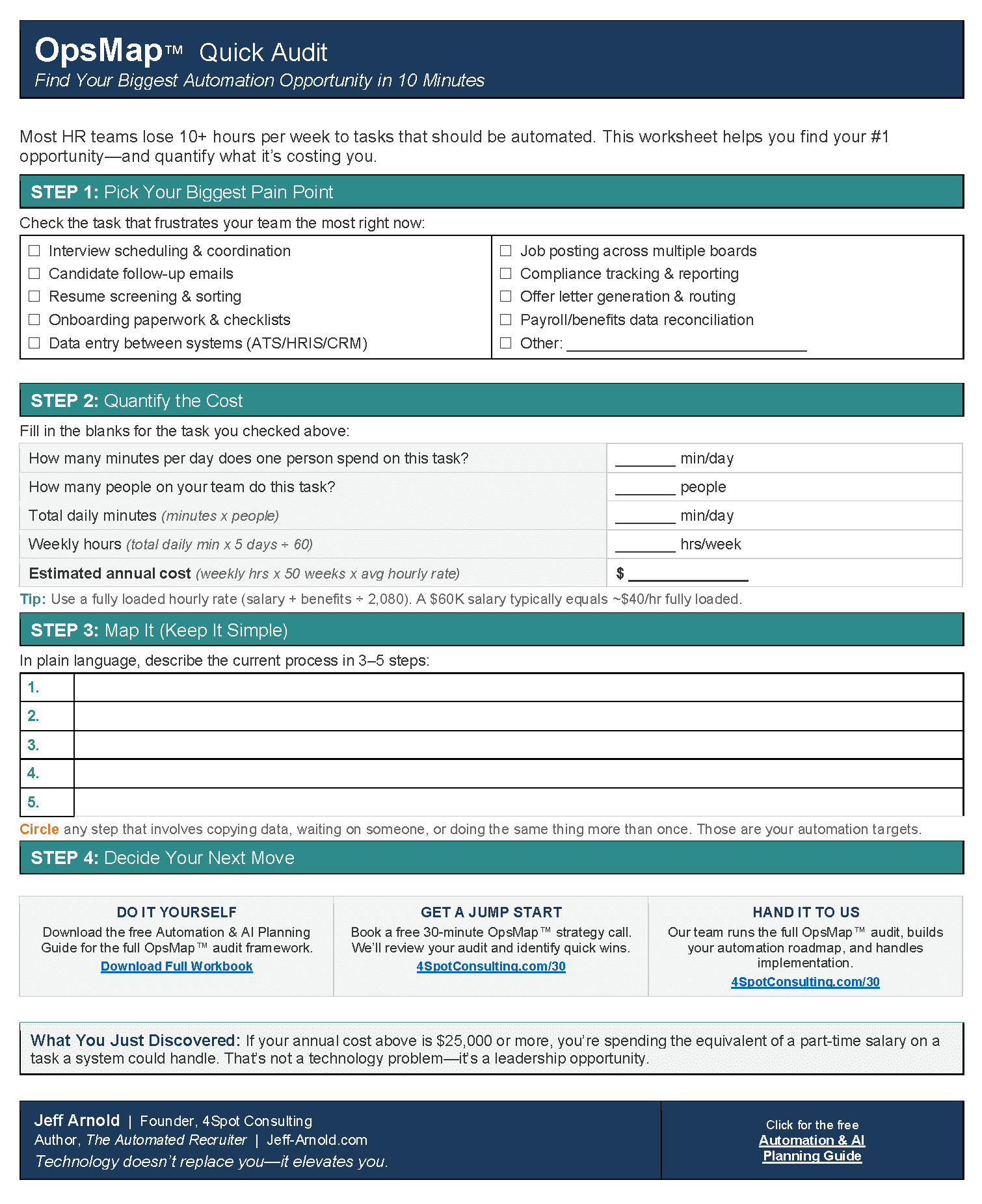
At 4Spot Consulting, we specialize in helping high-growth B2B companies eliminate human error, reduce operational costs, and increase scalability through intelligent automation and AI. Our OpsMap™ diagnostic is the first step to uncovering how these eleven strategies—and many more—can be tailored to your specific needs, saving your team 25% of their day. Don’t let manual processes hold you back. The future of HR is here, and it’s automated.
If you would like to read more, we recommend this article: The Ultimate Guide to HR & Recruiting Automation
RELATED POST