HR Leaders Speak: Real-World Success with AI Ticket Reduction

The modern HR landscape is dynamic, demanding agility, empathy, and increasingly, strategic efficiency. For too long, HR departments have been swamped by a deluge of routine inquiries, repetitive tasks, and operational tickets that consume valuable time and divert focus from critical strategic initiatives. This isn’t just an inefficiency; it’s a bottleneck that can hinder employee experience, delay crucial decisions, and ultimately impact an organization’s bottom line. At 4Spot Consulting, we’ve engaged with countless HR leaders who are not just recognizing this problem but actively seeking and implementing transformative solutions.

The conversation around Artificial Intelligence in HR is shifting from theoretical potential to tangible, measurable outcomes. Specifically, we’re seeing a significant movement among forward-thinking HR leaders towards leveraging AI to drastically reduce the volume of incoming support tickets. This isn’t about replacing human interaction; it’s about intelligently triaging, automating, and resolving the mundane so HR professionals can dedicate their expertise to complex, high-value employee relations, strategic planning, and fostering a thriving company culture.

The Undeniable Burden of Routine HR Inquiries

Consider the typical HR inbox or service desk queue: password resets for forgotten systems, requests for benefits information, queries about PTO policies, onboarding checklist clarifications, or even simple status updates on existing cases. Each of these, while seemingly minor, adds up to a substantial drain on HR resources. When HR teams are constantly reacting to a flurry of basic questions, their capacity to proactively address employee development, succession planning, or diversity initiatives diminishes significantly. This reactive posture not only burns out HR teams but can also lead to slower response times for employees, fostering frustration and a perception of inefficiency.

For organizations scaling rapidly, this problem compounds. As employee counts grow, the volume of routine tickets scales proportionally, or even exponentially, without a corresponding increase in HR staff. This creates a critical breaking point where HR leaders must choose between compromising service quality or incurring unsustainable operational costs. It’s a classic business challenge that, when viewed through an automation and AI lens, reveals clear pathways to resolution.

AI as a Strategic Partner in Ticket Triage and Resolution

The real-world success stories emerging from companies adopting AI for ticket reduction are compelling. These aren’t just about implementing a chatbot; they’re about building an intelligent, integrated system that learns, adapts, and empowers employees to find answers quickly and accurately. An AI-powered virtual assistant, for example, can be trained on an organization’s specific HR policies, FAQs, and knowledge base. This allows it to instantly answer a vast majority of common questions, from “What’s the process for requesting parental leave?” to “How do I update my direct deposit information?” without any human intervention.

Furthermore, AI excels at intelligent routing. If an employee’s query is too complex for the AI to resolve autonomously, the system can automatically categorize the ticket, gather relevant initial information, and route it to the most appropriate HR specialist. This ensures that when a human HR professional does get involved, they have all the context they need, reducing back-and-forth communication and speeding up resolution times. We’ve seen this lead to a significant decrease in misdirected tickets and a marked improvement in overall HR efficiency.

Tangible Outcomes: What Leaders Are Reporting

HR leaders who have embarked on this journey are reporting transformative results. One director of HR at a mid-sized tech firm shared how their team saw a 40% reduction in basic HR inquiries within three months of implementing an AI-driven self-service portal. This freed up their HR generalists to focus on a critical employee retention strategy that involved personalized career development plans. Another head of people operations highlighted how AI-driven insights allowed them to identify patterns in employee questions, leading to clearer policy communications and a reduction in repeat inquiries across the board.

The impact extends beyond mere ticket counts. Employees report higher satisfaction with HR services due to faster access to information and quicker resolution of complex issues. HR teams, no longer bogged down by repetitive tasks, experience reduced burnout and a greater sense of purpose, engaging in work that truly leverages their expertise and makes a strategic difference. This shift transforms HR from a cost center struggling with operational overhead into a strategic partner driving employee well-being and organizational success.

Beyond the Hype: Practical Steps to AI Implementation

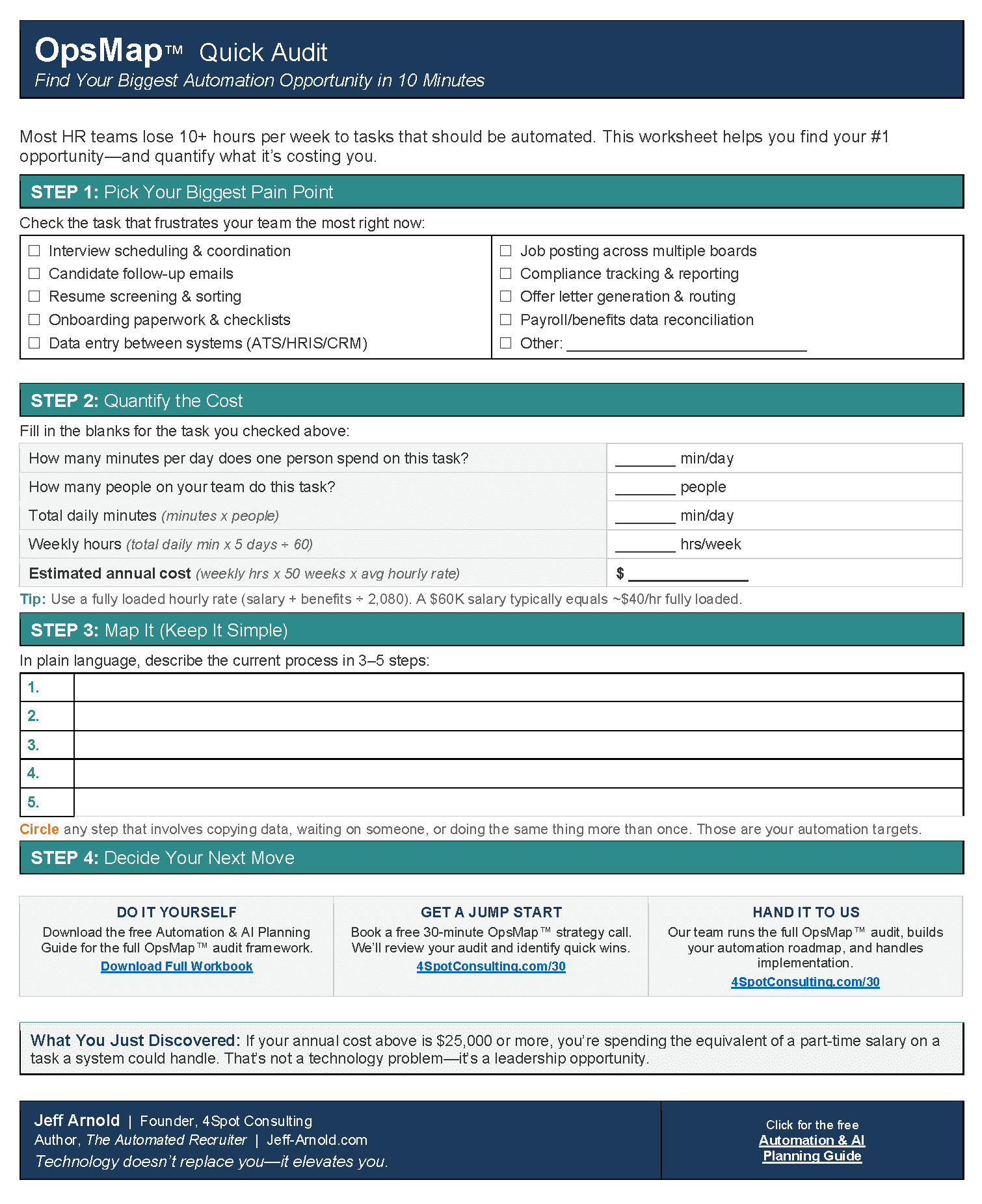
Achieving this level of success requires a strategic approach, not just a technological one. It begins with a comprehensive audit of current HR processes, identifying high-volume, low-complexity tasks ripe for automation. This is where a strategic framework like 4Spot Consulting’s OpsMap™ becomes invaluable—pinpointing inefficiencies and outlining a clear roadmap for AI and automation integration. The goal isn’t just to implement technology; it’s to redesign workflows to maximize the impact of AI, ensuring seamless integration with existing systems like HRIS and payroll platforms.

The insights from HR leaders are clear: AI is no longer an optional innovation but a necessary tool for building a resilient, efficient, and employee-centric HR function. By embracing intelligent automation for ticket reduction, organizations are not just saving time and money; they are empowering their HR teams to be true strategic partners, capable of driving meaningful change and elevating the entire employee experience.

If you would like to read more, we recommend this article: AI for HR: Achieve 40% Less Tickets & Elevate Employee Support

By Published On: January 24, 2026

Ready to Start Automating?

Let’s talk about what’s slowing you down—and how to fix it together.

Share This Story, Choose Your Platform!