Post: From Stalled to Scaled: Automating Manual Data Entry for Recruiting Efficiency & Growth
The Unseen Drain: How Manual Data Entry Stalls Your Recruiting Engine
Every business leader understands the value of a strong team. Yet, many high-growth B2B companies, particularly in HR and recruiting, are unknowingly sabotaging their own efforts through a pervasive, silent killer: manual data entry. It’s not just about the time wasted; it’s about the ripple effect on candidate experience, recruiter morale, and ultimately, your company’s ability to scale effectively. At 4Spot Consulting, we’ve witnessed firsthand how this operational bottleneck can cost far more than a few wasted minutes – it can derail growth and stifle innovation.
For businesses generating $5M+ ARR, the stakes are significantly higher. You’re not just looking for talent; you’re looking for strategic hires who can drive market advantage. But how can your recruitment team focus on high-value engagement and strategic sourcing when they’re bogged down in repetitive tasks? The answer is, they can’t. This isn’t a theoretical problem; it’s a tangible barrier to achieving your strategic HR goals, turning what should be a dynamic function into a bureaucratic chore.
Beyond Time-Loss: The Multi-Faceted Impact on Your Business
Erosion of Candidate Experience
In a competitive talent market, candidates expect a seamless, professional experience. Delays caused by manual data processing – from application intake to scheduling – reflect poorly on your organization. This leads to candidates dropping out, accepting other offers, or forming negative perceptions before they even reach an interview. This is not just a ‘nice to have’; it’s critical to attracting top-tier talent in an increasingly discerning job market. High-value candidates, especially, will often opt for organizations that demonstrate operational excellence from the first touchpoint.
Recruiter Burnout and Inefficiency
Your high-value recruiters should be building relationships and making strategic decisions, not copying and pasting information between spreadsheets, applicant tracking systems (ATS), and CRMs. This low-value work saps their energy, reduces their productivity, and contributes to burnout. The opportunity cost is immense: imagine the additional candidates they could engage or placements they could make if 25% of their day wasn’t consumed by administrative overhead. This also leads to a higher turnover rate among recruiters, adding further costs and disruption to your talent acquisition efforts.
Data Inconsistencies and Compliance Risks
Manual entry is synonymous with human error. Typos, missing fields, and inconsistent formatting plague databases, leading to a fragmented “single source of truth.” In industries like HR, where data integrity is paramount for compliance and reporting, these errors can have serious legal and financial repercussions. Without reliable, unified data, strategic decision-making becomes guesswork, jeopardizing your ability to accurately assess recruitment metrics, forecast needs, and demonstrate adherence to regulatory requirements.
Hindrance to Scalability
As your company grows, so does the volume of applications and candidate data. A manual process doesn’t scale; it breaks. What works for 10 hires a month becomes an insurmountable challenge for 50. This creates a bottleneck that prevents your recruiting function from supporting your ambitious growth targets, forcing you to hire more administrators instead of more revenue-generating talent. Ultimately, this limits your market responsiveness and ability to capitalize on growth opportunities.
The Strategic Imperative: Automation as a Growth Enabler
At 4Spot Consulting, our philosophy is rooted in the belief that operational excellence is a prerequisite for sustained growth. This is where automation and AI become not just tools, but strategic enablers. We don’t just automate for the sake of it; we automate to unlock potential, to free up your most valuable assets – your people – to focus on what truly matters: strategic sourcing, meaningful candidate engagement, and securing the talent that drives your business forward.
Consider the journey of a resume. From an initial application, through parsing, data extraction, CRM integration (like Keap or HighLevel), email follow-ups, and interview scheduling, each step presents an opportunity for automation. Imagine a system where a candidate applies, and within minutes, their data is accurately populated across all relevant systems, an acknowledgment email is sent, and a pre-screening questionnaire is delivered – all without a single human touchpoint. This is not futuristic fantasy; it’s today’s reality with the right architecture and expertise.
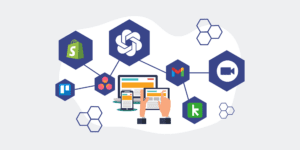
We leverage platforms like Make.com to connect disparate systems, creating an ‘OpsMesh’ that ensures data flows seamlessly and tasks are executed flawlessly. Our ‘OpsMap’ diagnostic reveals precisely where these inefficiencies lie, uncovering the hidden pockets of manual work that are draining resources. Then, through ‘OpsBuild’, we implement robust, AI-powered solutions that transform these pain points into streamlined processes, optimizing everything from candidate relationship management to onboarding handoffs.
Take the example of one HR tech client we partnered with. They were drowning in manual resume intake and parsing, wasting over 150 hours per month. By implementing an automated workflow using Make.com and AI enrichment, we integrated their resume parsing directly with their Keap CRM. The result? Not only did they save a significant amount of time, but their data accuracy improved, candidate response times plummeted, and their recruiters could focus entirely on interviewing and engaging top talent. As their leader put it, “We went from drowning in manual work to having a system that just works.” This is the tangible ROI our clients experience.
Reclaiming Your Day: The Path Forward
The era of tolerating manual data entry as a necessary evil is over. In today’s fast-paced, competitive landscape, businesses that embrace intelligent automation are the ones that lead, innovate, and attract the best talent. By eliminating low-value, repetitive tasks, you empower your teams, enhance your candidate experience, and build a scalable foundation for future growth. You reclaim the 25% of your day that was previously lost to inefficiency, redirecting that time towards strategic initiatives that truly move the needle.
This strategic shift isn’t just about adopting new technology; it’s about reimagining your operations to prioritize human ingenuity and strategic impact. It’s about understanding that the true cost of not automating extends far beyond a spreadsheet – it impacts your competitive edge, your brand reputation, and your ultimate capacity for sustained success. Ready to uncover automation opportunities that could save you 25% of your day? Book your OpsMap™ call today.
If you would like to read more, we recommend this article: Mastering Business Automation with AI: A Comprehensive Guide



RELATED POST