Post: Power Your HR & Recruiting: 12 Practical AI Applications for Scalability
12 Practical Applications of AI for Scalable HR and Recruiting Operations
In today’s fast-paced business landscape, HR and recruiting departments often find themselves swamped with repetitive administrative tasks, manual data entry, and inefficient workflows. This operational drag isn’t just a nuisance; it’s a significant bottleneck hindering growth, increasing costs, and preventing high-value employees from focusing on strategic initiatives that truly impact the bottom line. The promise of artificial intelligence (AI) is often discussed in abstract terms, but for HR and recruiting leaders, the question boils down to practical, actionable applications that deliver tangible ROI. It’s no longer about whether AI will transform HR, but how quickly and effectively organizations can harness its power to achieve greater scalability, accuracy, and employee engagement. At 4Spot Consulting, we’ve seen firsthand how integrating AI and automation can dramatically reduce human error, cut operational costs, and build a more resilient, agile HR ecosystem. This article will unpack 12 concrete ways AI is being applied to revolutionize HR and recruiting, offering practical insights and real-world examples for professionals ready to embrace the future.
From automating candidate sourcing to personalizing employee development, AI provides solutions that save precious time, enhance decision-making, and free up your most valuable assets—your people—to focus on what truly matters: building great teams and fostering a thriving company culture. The goal isn’t to replace human judgment but to augment it, providing HR professionals with intelligent tools that streamline processes, extract insights from vast datasets, and ultimately allow them to operate with unprecedented efficiency and strategic depth. Let’s dive into how AI can be a game-changer for your HR and recruiting operations.
1. AI-Powered Candidate Sourcing and Discovery
Traditional candidate sourcing is a time-intensive process, often relying on keyword searches and manual database sifting that can miss qualified individuals or result in biased selections. AI revolutionizes this by leveraging advanced algorithms to analyze vast pools of talent data—from professional networks and public profiles to internal databases—identifying candidates who not only match specific skill sets but also exhibit alignment with company culture and values. AI tools can proactively scour the web, identifying passive candidates who might be a perfect fit but aren’t actively looking. They can go beyond keywords, understanding the nuances of job descriptions and candidate profiles to predict success. For instance, an AI system might analyze the career trajectory, project contributions, and even publicly available thought leadership of a candidate to suggest a stronger match than a human recruiter could achieve manually in the same timeframe. This significantly broadens the talent pool, reduces time-to-hire, and introduces a more objective, data-driven approach to initial candidate identification, freeing up recruiters for more high-touch engagement. The precision and speed of AI in this domain allow organizations to save hundreds of hours annually, refocusing human effort on relationship building rather than endless searching.
2. Intelligent Resume Screening and Parsing
The sheer volume of resumes received for popular job postings can be overwhelming, leading to manual review backlogs and the potential for excellent candidates to be overlooked. AI-powered resume screening tools parse resumes at lightning speed, extracting key information such as skills, experience, education, and even relevant project keywords. Beyond simple keyword matching, these systems use natural language processing (NLP) to understand context, identify transferable skills, and rank candidates based on sophisticated criteria. This automation eliminates unconscious bias often present in manual reviews, ensuring every applicant is evaluated fairly against a consistent set of parameters. For example, an AI could identify a candidate with less traditional experience but a strong aptitude for problem-solving, something a human might miss when scanning hundreds of documents. This not only dramatically cuts down the time spent on initial screening but also improves the quality of candidates moving to the next stage, significantly enhancing the efficiency of the hiring funnel. We’ve helped HR tech clients save over 150 hours per month by automating their resume intake and parsing processes using Make.com and AI enrichment, syncing directly to their Keap CRM, proving the immense ROI of such applications.
3. Automated Interview Scheduling and Coordination
The back-and-forth of interview scheduling is a notorious time sink for both candidates and recruiters, often involving multiple emails, calendar checks, and rescheduling headaches. AI-driven scheduling tools integrate directly with calendars, allowing candidates to self-schedule interviews based on real-time availability of interviewers. These systems can also manage complex scheduling scenarios, such as coordinating panel interviews with multiple busy stakeholders across different time zones. Beyond simple booking, AI can send automated reminders, provide candidates with necessary pre-interview information, and even suggest optimal interview slots to minimize disruption to existing workflows. This automation eliminates a significant administrative burden, reduces no-shows, and creates a smoother, more professional candidate experience. The impact on recruiter productivity is substantial; instead of spending hours on logistics, they can allocate that time to more strategic tasks like candidate engagement, pipeline development, and collaborating with hiring managers on talent strategy. It’s a low-hanging fruit for automation that delivers immediate and measurable time savings.
4. AI-Enhanced Candidate Experience and Communication
A positive candidate experience is crucial for attracting top talent, yet many organizations struggle to maintain consistent, timely, and personalized communication. AI-powered chatbots can serve as the first point of contact for candidates, answering frequently asked questions about job openings, company culture, and the application process 24/7. These bots can guide candidates through the application, provide status updates, and even offer personalized suggestions for other relevant roles. By providing instant responses and continuous support, AI enhances transparency and reduces candidate frustration, leading to higher application completion rates and a stronger employer brand. This isn’t about impersonal interaction; it’s about providing immediate, accurate information and freeing up human recruiters to engage in more meaningful conversations. It creates a perception of efficiency and responsiveness that sets a company apart in a competitive talent market, ensuring that even candidates who aren’t selected have a positive impression of the organization.
5. Predictive Analytics for Employee Turnover and Retention
Employee turnover is a costly problem, disrupting productivity and requiring significant resources for recruitment and training. AI-driven predictive analytics tools analyze historical employee data—such as performance reviews, compensation, tenure, departmental changes, and even engagement survey results—to identify patterns and predict which employees might be at risk of leaving. These insights allow HR leaders to proactively intervene with targeted retention strategies, such as personalized development plans, mentorship opportunities, or adjustments to roles and responsibilities. For example, an AI might flag that employees in a specific department with a certain manager, who haven’t received a promotion in two years, are statistically more likely to leave. This enables HR to address root causes before they manifest as departures. By understanding these predictors, organizations can significantly reduce turnover costs, retain valuable institutional knowledge, and foster a more stable, engaged workforce. It shifts HR from a reactive to a proactive strategic function.
6. Personalized Employee Learning and Development
Effective employee development is key to retaining talent and fostering growth, but generic training programs often fall short. AI platforms can analyze an employee’s current skills, career aspirations, performance data, and even project assignments to recommend highly personalized learning paths. These recommendations can include specific courses, workshops, mentors, or internal projects tailored to bridge skill gaps and accelerate professional growth. For instance, if an employee is working on a project requiring advanced data analysis, the AI might suggest relevant online modules or connect them with an internal expert. This ensures that development efforts are highly relevant and impactful, increasing engagement and the practical application of new skills. Personalized learning not only empowers employees to take ownership of their development but also ensures that the organization’s workforce is continuously upskilling and adapting to evolving business needs, directly supporting strategic objectives and maintaining a competitive edge.
7. AI in Performance Management and Feedback Systems
Traditional performance reviews can be subjective, infrequent, and often lack actionable insights. AI can transform performance management by providing continuous, objective feedback and insights. AI tools can analyze aggregated data from various sources—project management tools, communication platforms, peer feedback, and self-assessments—to offer a more holistic and unbiased view of employee performance. They can identify trends, highlight areas for improvement, and even suggest personalized coaching tips for managers. For instance, an AI might detect that a team member consistently misses deadlines on a particular type of task and suggest targeted training or a change in workflow. This moves performance management away from annual events to a continuous, developmental process. By providing richer, real-time data and objective analysis, AI helps foster a culture of continuous improvement, ensures fairness in evaluations, and allows managers to provide more effective, data-backed guidance to their teams, driving overall organizational performance.
8. AI for Compensation and Benefits Optimization
Determining competitive and equitable compensation packages is a complex challenge, requiring analysis of market data, internal equity, and individual performance. AI tools can analyze vast datasets of salary benchmarks, industry trends, geographical factors, and internal performance metrics to recommend optimal compensation structures. They can help identify pay gaps, ensure compliance with equal pay regulations, and model the impact of different benefits packages on employee satisfaction and retention. For example, an AI could flag that a certain role within the company is underpaid compared to industry standards for similar roles in the same region, prompting proactive adjustments. This enables HR to make data-driven decisions that attract top talent, maintain internal fairness, and optimize benefit expenditures for maximum employee value. By leveraging AI, organizations can ensure their compensation and benefits strategies are competitive, compliant, and directly aligned with their talent acquisition and retention goals, crucial for financial health and employee morale.
9. AI-Driven Workforce Planning and Analytics
Strategic workforce planning is critical for ensuring an organization has the right talent in the right roles at the right time. AI provides powerful capabilities for workforce analytics, going beyond simple headcount to predict future talent needs, identify skill gaps, and model the impact of various strategic initiatives. AI can analyze internal data (e.g., employee skills, tenure, career paths) alongside external market trends (e.g., industry growth, technological advancements, talent availability) to forecast future demand for specific roles and skills. It can also identify potential bottlenecks in the talent pipeline. For instance, an AI might predict a surge in demand for data scientists in three years based on product roadmap, combined with a current shortage in the internal pipeline. This allows HR to proactively plan recruitment, training, or upskilling initiatives. By providing a clearer, data-backed view of the future workforce landscape, AI empowers HR leaders to make informed decisions that support long-term business strategy and ensure organizational agility.
10. Enhancing DEI (Diversity, Equity, and Inclusion) Initiatives with AI
Building a diverse, equitable, and inclusive workplace is a top priority for many organizations, yet unconscious biases can often impede progress. AI can be a powerful tool to identify and mitigate these biases across the employee lifecycle. In recruiting, AI tools can help anonymize resumes, analyze job descriptions for biased language, and ensure a diverse slate of candidates is presented. During performance reviews, AI can analyze feedback patterns to identify potential biases in evaluations. Furthermore, AI can monitor internal communication channels to detect exclusionary language or cultural issues, providing anonymous insights to HR. For example, an AI might highlight that a particular department disproportionately assigns critical projects to only one demographic. By providing objective data and flagging potential areas of concern, AI enables HR to take targeted action, create more inclusive policies, and foster a truly equitable environment. It moves DEI from aspiration to measurable, actionable strategy, driving tangible improvements in workplace culture and representation.
11. AI for Employee Onboarding and Integration
A seamless and engaging onboarding experience is crucial for new hire retention and productivity, but it often involves a labyrinth of paperwork, training modules, and introductions. AI can personalize and streamline this process significantly. Beyond automating the distribution and collection of necessary forms via tools like PandaDoc, AI can create tailored onboarding journeys based on the new hire’s role, department, and prior experience. Chatbots can answer common new hire questions, guide them through initial tasks, and even introduce them to key team members. AI can also analyze the new hire’s progress and engagement, identifying potential areas where they might need additional support or resources. For instance, an AI might notice a new hire is struggling with a specific software and proactively recommend a tutorial or connect them with an expert. This reduces the administrative burden on HR and managers, accelerates time-to-productivity for new employees, and fosters a sense of belonging from day one, leading to higher engagement and reduced early-stage attrition.
12. AI-Powered Internal Communications and Knowledge Management
Effective internal communication and easy access to company knowledge are vital for employee productivity and engagement. AI can dramatically improve both. AI-powered search engines within internal wikis or knowledge bases can provide employees with instant, accurate answers to their questions, reducing reliance on HR or IT support. AI can also personalize internal communications, ensuring employees receive only the most relevant updates, news, and announcements based on their role, department, and preferences. For instance, an AI might summarize a lengthy policy update into key bullet points relevant to a specific team, or proactively push information about a new project to relevant stakeholders. This reduces information overload, ensures critical messages are received, and makes it easier for employees to find the information they need to do their jobs effectively. By streamlining access to knowledge and personalizing communication, AI fosters a more informed, connected, and efficient workforce, saving countless hours otherwise spent searching for information or answering redundant questions.
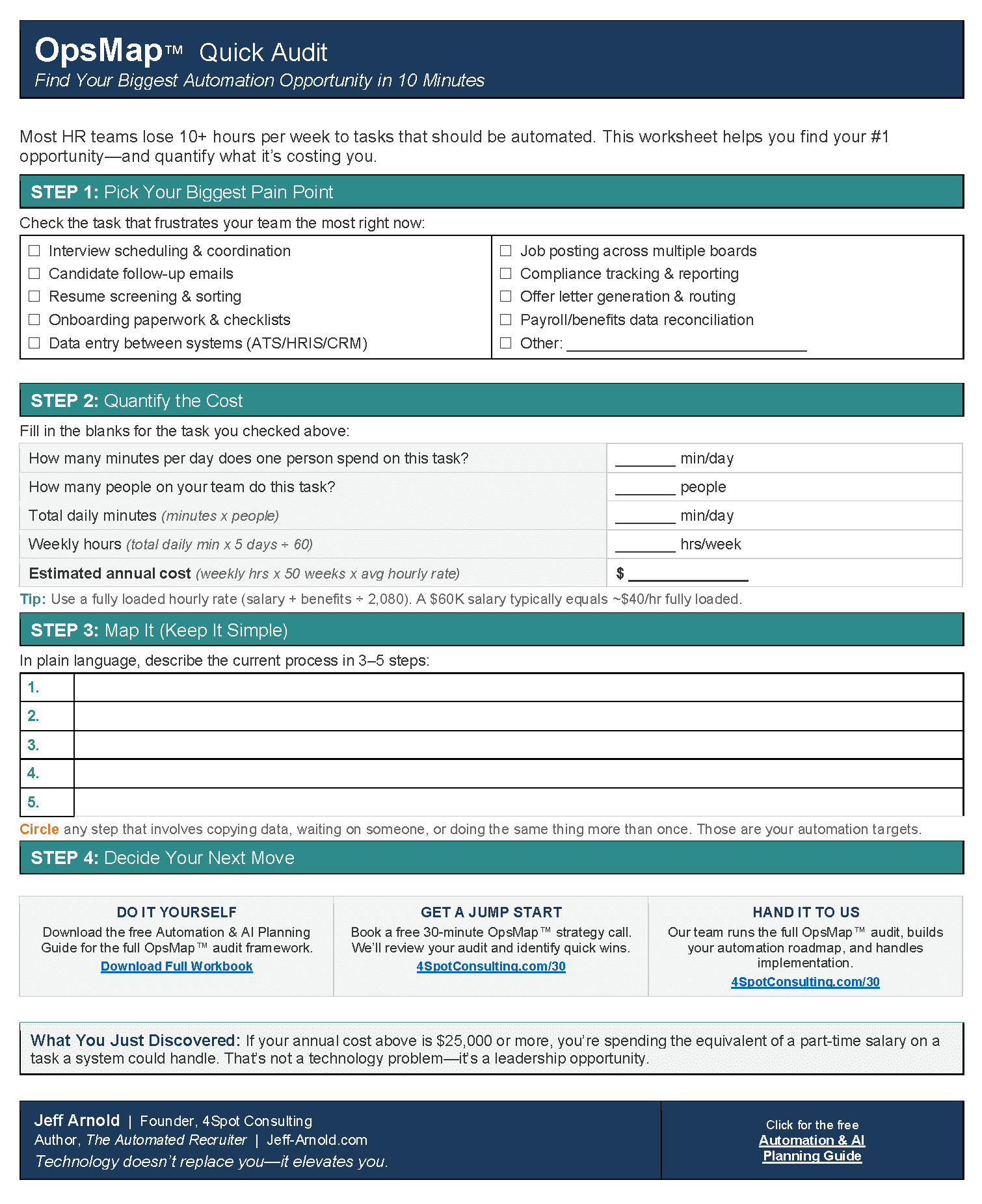
The integration of AI into HR and recruiting operations is no longer a futuristic concept; it’s a present-day imperative for organizations aiming for scalability, efficiency, and a competitive edge in the war for talent. From automating the mundane to providing deep predictive insights, AI empowers HR professionals to move beyond administrative tasks and become true strategic partners in business growth. These 12 applications demonstrate how AI can fundamentally transform how we attract, develop, and retain talent, saving valuable time and resources while significantly enhancing the employee and candidate experience. Embracing these technologies isn’t about replacing human intuition; it’s about augmenting it with data-driven precision and efficiency. The time saved and errors eliminated allow your high-value employees to focus on strategic initiatives, relationship building, and fostering the human connection that technology can only enhance, not replace. Ready to uncover automation opportunities that could save you 25% of your day? Book your OpsMap™ call today.
If you would like to read more, we recommend this article: The Definitive Guide to HR and Recruiting Automation for High-Growth Companies
RELATED POST