Post: Revolutionizing HR & Recruiting with AI
10 Practical AI Applications Revolutionizing HR & Recruiting Workflows
The landscape of HR and recruiting is undergoing a seismic shift, driven by the relentless advancement of artificial intelligence. For many HR leaders, COOs, and recruitment directors, the promise of AI can feel overwhelming, a buzzword without clear, actionable pathways. Yet, at 4Spot Consulting, we see AI not as a distant future, but as a practical, immediately implementable tool for streamlining operations, eliminating human error, and achieving unprecedented scalability. The core problem we consistently observe is the drain of valuable time and resources on repetitive, low-value tasks – a bottleneck that AI is uniquely positioned to dismantle.
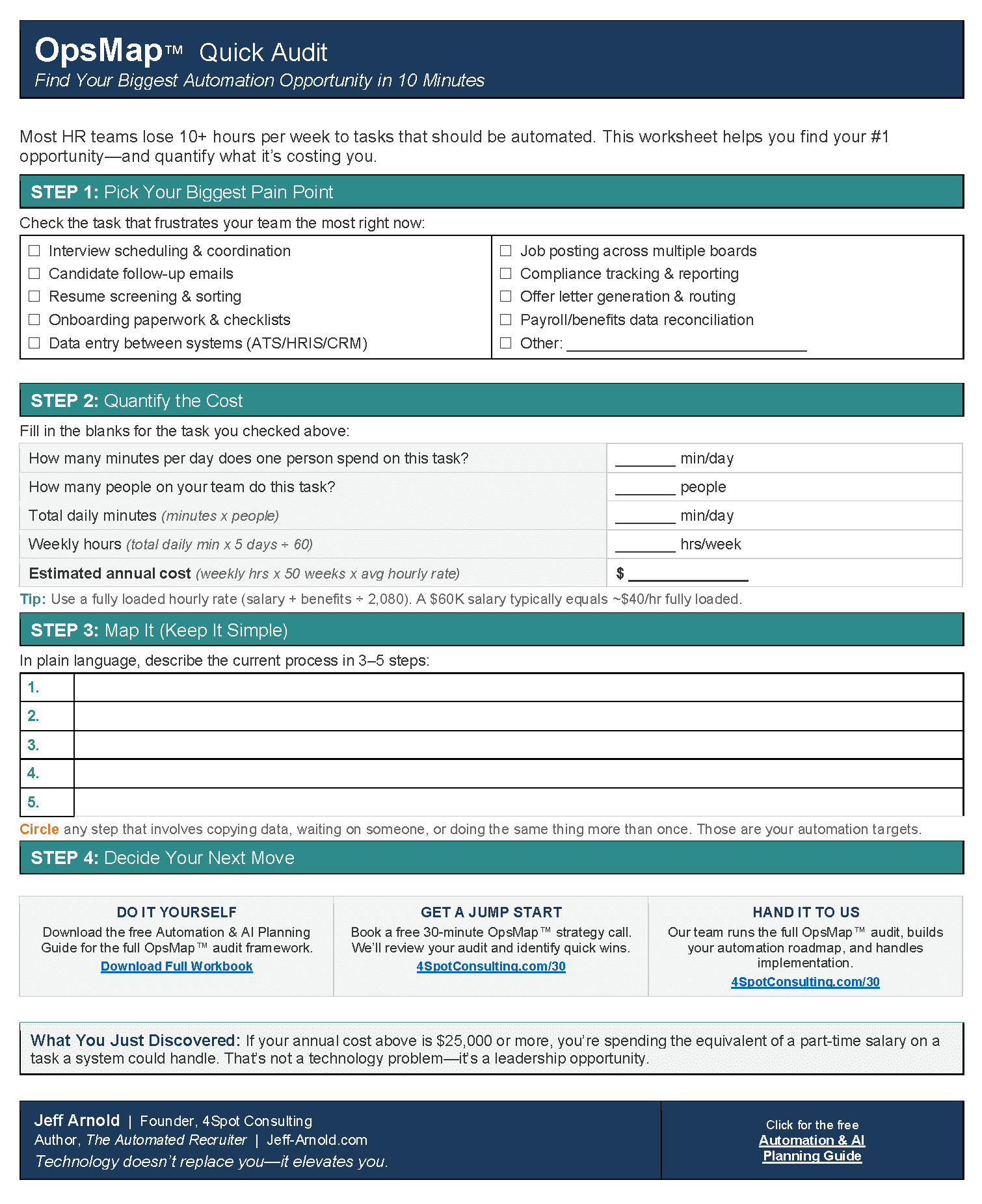
Imagine reclaiming 25% of your day, not by working harder, but by working smarter, leveraging intelligent systems to handle the grunt work. This isn’t a pipe dream; it’s the tangible outcome of strategically integrating AI into your HR and recruiting workflows. Our approach, guided by frameworks like OpsMap™ and OpsBuild™, focuses on identifying precise inefficiencies and deploying AI-powered solutions that deliver clear ROI. From the initial stages of talent acquisition to ongoing employee development and retention, AI is no longer a luxury but a strategic imperative for high-growth B2B companies. This article will cut through the hype, presenting 10 practical AI applications that are revolutionizing HR and recruiting, providing actionable insights for professionals ready to transform their operations.
1. AI-Powered Resume Screening and Shortlisting
One of the most time-consuming and often biased tasks in recruiting is the initial screening of resumes. Traditional methods rely on keywords, often missing qualified candidates or leading to lengthy manual reviews. AI-powered resume screening tools transcend keyword matching by analyzing broader context, identifying skills, experience, and even cultural fit indicators within a candidate’s profile. These systems can process hundreds, even thousands, of resumes in minutes, extracting relevant data points and scoring candidates against predefined job criteria. This drastically reduces the initial funnel, presenting recruiters with a significantly smaller, highly qualified shortlist.
For instance, an AI can parse an unstructured resume, identify a candidate’s proficiency in specific software (like HubSpot or Salesforce), their project management experience, and even infer soft skills from their project descriptions. This level of analysis goes far beyond what a human reviewer can accomplish efficiently. The benefit is twofold: a dramatic reduction in time-to-hire and a significant decrease in unconscious bias, as the AI focuses solely on job-relevant attributes. At 4Spot Consulting, we’ve implemented OpsBuild™ solutions using platforms like Make.com to connect applicant tracking systems (ATS) with AI parsing engines, automatically enriching candidate profiles in CRMs like Keap and even flagging candidates who align with specific “ideal candidate” personas. This frees up recruiting professionals to focus on meaningful engagement, rather than sifting through digital paperwork, leading to better hires faster.
2. Intelligent Chatbots for Candidate Engagement and FAQs
Candidates often have numerous questions throughout the application process, from job specifics and company culture to benefits and interview logistics. Manually answering these repetitive queries consumes vast amounts of recruiter time, particularly during high-volume hiring periods. AI-powered chatbots provide instant, 24/7 responses to common candidate FAQs, delivering a seamless and responsive experience. These chatbots can be deployed on careers pages, job boards, or even integrated directly into messaging platforms.
Beyond simple FAQs, advanced chatbots can guide candidates through the application process, pre-qualify them based on essential criteria, or even initiate preliminary screenings. They can collect basic information, answer questions about company values, explain the next steps in the hiring process, and provide a consistently branded communication experience. The impact on recruiter efficiency is profound; imagine an AI handling 80% of routine inquiries, allowing your team to focus on personalized interactions with top candidates. This not only improves candidate experience, reducing drop-off rates, but also dramatically boosts the productivity of your recruiting team. Our clients leverage these bots, often integrated via Make.com and Bland AI for voice interactions, to ensure no candidate question goes unanswered, providing a responsive experience that sets them apart.
3. Automated Interview Scheduling and Coordination
The back-and-forth of scheduling interviews with multiple candidates and hiring managers is a notorious time sink. Coordinating calendars, sending invitations, managing reschedules, and issuing reminders can easily consume hours of administrative time per week. AI-driven scheduling tools integrate directly with calendar systems and ATS platforms to automate this entire process. Candidates can view available slots and book appointments themselves, significantly reducing the administrative burden.
These systems can factor in interviewer availability, time zone differences, meeting room bookings, and even buffer times between interviews. They send automated confirmations, reminders, and follow-up communications, ensuring all parties are informed and prepared. The precision and efficiency of AI in scheduling eliminate errors and minimize no-shows, creating a smoother experience for both candidates and internal teams. For high-volume recruiting, this automation is invaluable, allowing recruiters to focus on strategic talent acquisition rather than logistical headaches. We often implement solutions where a candidate’s successful application in the ATS triggers a scheduling automation via Make.com, sending personalized invitations and dynamically updating calendars without any human intervention, saving critical hours for our clients.
4. Predictive Attrition Modeling and Retention Strategies
Employee turnover is a significant cost center for any organization, impacting productivity, morale, and recruitment budgets. AI can analyze vast datasets of employee information—including performance reviews, compensation, tenure, engagement survey results, and even external market factors—to identify patterns and predict which employees are at a high risk of leaving. This isn’t about surveillance, but about identifying leading indicators for proactive intervention.
Once potential attrition risks are identified, HR teams can deploy targeted retention strategies, such as personalized development plans, mentorship programs, compensation adjustments, or enhanced engagement initiatives. For example, an AI might flag that employees in a specific department with a certain tenure and performance rating tend to leave within 18 months, prompting HR to implement a tailored retention program for that demographic. This proactive approach allows organizations to address issues before they escalate into costly turnover. Our OpsMap™ diagnostic often uncovers these data silos, enabling us to build OpsBuild™ solutions that integrate HRIS data with AI analytics to give leaders an early warning system and actionable insights for retention, ultimately protecting their most valuable assets.
5. AI-Powered Performance Feedback Analysis
Performance reviews and feedback cycles are critical for employee development, but manually sifting through qualitative data from multiple sources can be overwhelming and subjective. AI tools can analyze free-text feedback from performance reviews, 360-degree assessments, and employee surveys to identify themes, sentiment, and key areas for development or recognition. This allows HR to gain objective, comprehensive insights much faster.
For example, an AI could pinpoint recurring mentions of “communication skills” as an area for improvement across a team, or highlight consistent praise for “innovative problem-solving” in another. This aggregated and analyzed data provides a clearer picture of individual and team strengths and weaknesses, enabling more targeted coaching and training interventions. It moves beyond anecdotal evidence to data-driven insights, ensuring feedback is acted upon effectively. This capability is particularly powerful when integrated with our OpsCare™ services, where ongoing AI analysis can track the effectiveness of interventions and provide continuous feedback loops for leadership, ensuring continuous improvement in talent management.
6. Personalized Learning and Development Recommendations
Employee upskilling and reskilling are vital for staying competitive, but generic training programs often miss the mark. AI can analyze an employee’s current skills, career aspirations, performance data, and the evolving needs of the organization to recommend highly personalized learning paths. This ensures that training is relevant, engaging, and directly contributes to both individual growth and business objectives.
These systems can integrate with learning management systems (LMS) to suggest specific courses, modules, or even mentorship opportunities. For example, if an employee expresses interest in a leadership role and their performance data indicates a need for improved delegation skills, the AI might recommend specific leadership training modules focused on delegation and team empowerment. This hyper-personalization maximizes the ROI of training budgets and significantly boosts employee engagement and retention by demonstrating a clear investment in their future. Automating this recommendation process, often via Make.com and integration with an LMS, ensures that employees always have access to the right resources at the right time, a key component of a robust OpsMesh™ strategy.
7. AI for Enhanced Onboarding Experience and Sentiment Analysis
A well-structured onboarding process is crucial for new hire success and retention, but it can be complex and time-intensive. AI can automate many administrative aspects of onboarding, from document completion and benefits enrollment reminders to IT provisioning requests. More importantly, AI can enhance the human element by performing sentiment analysis on new hire feedback or interactions.
By analyzing communication channels (e.g., internal chat, survey responses during the first 90 days), AI can gauge a new hire’s sentiment, identify potential issues, or flag areas where additional support might be needed. This allows HR and managers to proactively address concerns, ensuring new employees feel supported and integrated into the company culture. Imagine an AI flagging a new hire who expresses confusion about their role or team dynamics, prompting a timely check-in from their manager. This proactive sentiment analysis, often powered by AI integrated with communication platforms via Make.com, transforms onboarding from a procedural checklist into a truly supportive and data-driven experience, significantly improving early-stage retention rates and overall employee satisfaction.
8. Dynamic Talent Pooling and Rerecruiting
Many organizations have a wealth of talent in their past applicant pools – candidates who were highly qualified but weren’t hired for a specific role at a specific time. AI can transform these dormant databases into dynamic talent pools, continuously updating candidate profiles with new public data (e.g., LinkedIn updates, professional accomplishments) and matching them to new job openings as they arise. This is effectively “re-recruiting” from an existing, high-quality source.
Instead of starting from scratch for every new role, AI can proactively identify silver medalist candidates from previous searches who are now a perfect fit for a current opening. It can also categorize and segment these pools based on skills, experience, and even expressed interest, making it easy for recruiters to target specific groups. This reduces time-to-hire, lowers recruitment costs, and provides a superior candidate experience by reaching out to individuals who have already shown interest in the organization. Our CRM & Data Backup solutions using Keap are perfectly suited to manage these rich talent pools, with AI integrations via Make.com keeping profiles fresh and automatically notifying recruiters of potential matches, turning a neglected asset into a powerful hiring advantage.
9. AI-Driven Compliance Checks and Risk Mitigation
Navigating the complex and ever-changing landscape of HR compliance is a significant challenge, particularly for organizations operating across multiple jurisdictions. Manual compliance checks are prone to human error and can easily miss critical updates to labor laws, regulations, or internal policies. AI can automate and enhance compliance processes, significantly mitigating risk.
AI tools can analyze employment contracts, internal policies, and even communication logs to ensure adherence to legal requirements and ethical standards. They can flag potential compliance violations in real-time, such as incorrect wording in job descriptions, inconsistent application of policies, or potential discrimination risks in hiring practices. For example, an AI could review a series of interview notes and highlight phrases that might indicate bias. This proactive identification of risks allows HR teams to make immediate corrections, avoiding costly legal battles, fines, and reputational damage. By integrating AI into document management (e.g., PandaDoc workflows) and data analysis, 4Spot Consulting helps clients establish robust, automated compliance safeguards that provide peace of mind and protect the business.
10. Automated Reference Checking with AI Augmentation
Reference checks are a crucial step in the hiring process, providing valuable third-party insights into a candidate’s past performance and work ethic. However, they are often a time-intensive and manual process, involving phone calls, emails, and follow-ups. AI can significantly streamline and even augment reference checking, without losing the human touch.
Automated platforms can send digital reference forms, collect structured feedback, and even use natural language processing (NLP) to analyze open-ended responses for sentiment and key themes. This dramatically reduces the administrative burden on recruiters and ensures a consistent, unbiased collection of reference data. While direct human conversations remain valuable, AI can handle the initial collection and analysis, allowing recruiters to focus their personalized follow-up calls on specific areas flagged by the AI. This blended approach ensures efficiency without sacrificing depth, leading to more informed hiring decisions and faster offer extensions. This is a prime example of where 4Spot’s expertise in connecting systems via Make.com can create a seamless flow from interview to automated reference collection, accelerating the entire hiring lifecycle.
The integration of AI into HR and recruiting is no longer a futuristic concept but a present-day reality for forward-thinking organizations. The ten applications outlined above demonstrate how AI can tackle some of the most persistent challenges in talent acquisition and management, from eliminating manual inefficiencies to providing data-driven insights that empower strategic decision-making. By leveraging these technologies, HR and recruiting professionals can reclaim valuable time, reduce operational costs, enhance candidate and employee experiences, and ultimately drive the scalability and growth that modern businesses demand.
At 4Spot Consulting, we believe in a strategic-first approach. We don’t just build technology; we partner with you to identify the precise bottlenecks costing your business time and money. Our OpsMap™ diagnostic is designed to uncover these inefficiencies and roadmap profitable automation and AI integrations. The future of HR is automated, intelligent, and human-centric, and we are here to guide you through that transformation, helping you save 25% of your day. Ready to uncover automation opportunities that could save you 25% of your day? Book your OpsMap™ call today.
If you would like to read more, we recommend this article: The Ultimate Guide to AI & Automation in Modern HR