Post: The AI HR Revolution: 12 Practical Ways to Optimize Recruiting & HR Workflows
12 Practical Ways AI is Revolutionizing HR and Recruiting Workflows
The landscape of Human Resources and Recruiting is undergoing a seismic shift, driven by the relentless pace of technological innovation, particularly in Artificial Intelligence. For too long, HR professionals and recruiters have been mired in repetitive, time-consuming administrative tasks, detracting from the strategic, human-centric work that truly adds value to an organization. This is where AI steps in, not as a replacement for human ingenuity, but as a powerful co-pilot, automating the mundane and amplifying efficiency. At 4Spot Consulting, we’ve witnessed firsthand how integrating AI with robust automation platforms like Make.com can transform operational bottlenecks into streamlined, high-performance systems. Our clients, often high-growth B2B companies with $5M+ ARR, are constantly seeking ways to eliminate human error, reduce operational costs, and scale without simply throwing more bodies at the problem. The core promise of AI in HR and recruiting isn’t just about speed; it’s about precision, personalization, and foresight, enabling teams to save up to 25% of their day and focus on strategic initiatives that drive growth and employee satisfaction. This isn’t theoretical; it’s being implemented today, yielding tangible ROI.
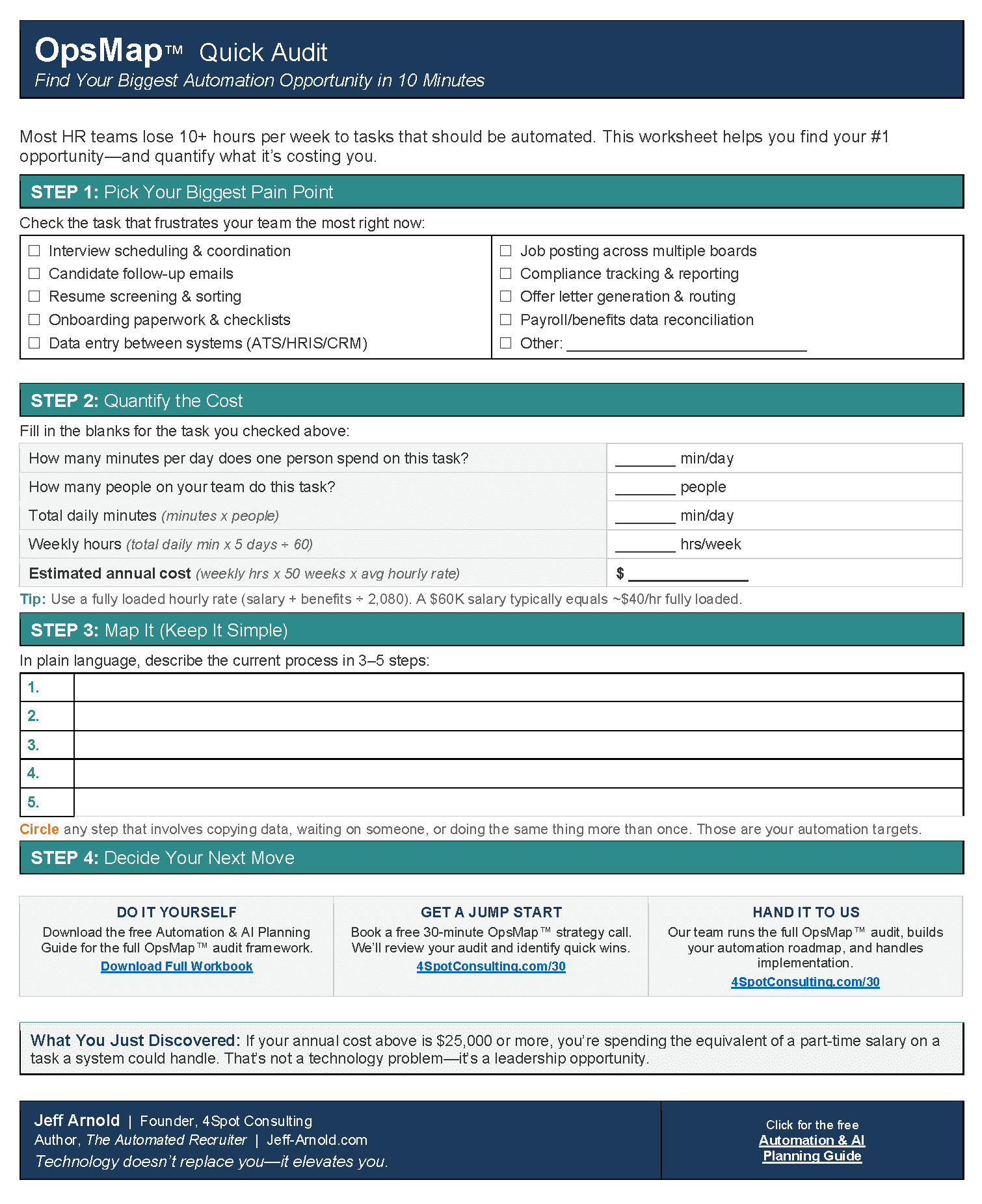
Navigating the hype cycle surrounding AI can be challenging. Many business leaders understand the potential but struggle with practical implementation, often feeling overwhelmed by the sheer volume of tools and techniques available. The truth is, AI’s most profound impact often comes from its integration into existing workflows, systematically tackling specific pain points. From the initial stages of candidate sourcing to the ongoing engagement of employees, AI offers solutions that were once the stuff of science fiction. Our strategic approach, encapsulated in frameworks like OpsMap™ and OpsBuild™, focuses on identifying these high-impact opportunities and then building tailored automation and AI systems that directly address them. This article will delve into 12 concrete, actionable ways AI is not just enhancing, but fundamentally revolutionizing how HR and recruiting departments operate, offering practical insights that you can begin to explore within your own organization.
1. Automated Candidate Sourcing and Matching
One of the most significant time sinks in recruiting is the initial identification and outreach to suitable candidates. Traditionally, this involved manual searches across various job boards, LinkedIn, and internal databases, often leading to inconsistent results and missed opportunities. AI-powered sourcing tools now automate this entire process, leveraging sophisticated algorithms to scour the web for passive and active candidates who perfectly match a given job description. These systems go beyond simple keyword matching, analyzing skills, experience, company culture fit, and even predictive indicators of success based on vast datasets. For example, an AI might analyze a candidate’s GitHub activity, portfolio, or past project contributions to gauge their proficiency in a specific programming language, rather than just relying on their self-reported skills. This capability drastically reduces the time recruiters spend on initial screening, allowing them to engage with a higher volume of qualified leads. Furthermore, AI can identify potential candidates from non-traditional pools, helping companies diversify their talent pipelines and reach a broader range of skilled individuals, which is crucial for fostering inclusive workplaces. By connecting these AI sourcing tools with a CRM like Keap via automation platforms like Make.com, organizations can seamlessly add identified candidates to their talent pools, trigger personalized outreach sequences, and track engagement, ensuring no promising lead falls through the cracks and building a robust, evergreen pipeline for future roles.
2. Intelligent Resume Screening and Parsing
The sheer volume of applications for a single role can be overwhelming, often leading to qualified candidates being overlooked due to time constraints or human error in manual screening. AI-driven resume screening tools are designed to read, parse, and analyze resumes with unparalleled speed and accuracy. These systems can extract key information—such as skills, work history, education, and certifications—from various document formats, standardizing data for easy comparison. More advanced AI can even go a step further by evaluating the relevance of each experience point to the job requirements, assigning scores, and ranking candidates. For instance, an AI can identify if a candidate’s project experience aligns with specific technical challenges outlined in the job description, even if the exact keywords aren’t present. This intelligence drastically reduces the manual effort involved in reviewing hundreds or thousands of applications, freeing up recruiters to focus on deeper qualitative assessments and candidate interaction. Our work with an HR tech client exemplifies this; by automating their resume intake and parsing process using Make.com and AI enrichment, we helped them save over 150 hours per month. The AI extracted critical data, scored candidates based on predefined criteria, and then synced the enriched data directly to their Keap CRM, transforming what was once a bottleneck into a hyper-efficient system. This not only speeds up the time-to-hire but also ensures a more objective initial review process, mitigating unconscious bias that can creep into manual screening.
3. AI-Powered Chatbots for Candidate Engagement
Candidate experience is paramount in today’s competitive talent market, but providing immediate, personalized responses to every applicant query is resource-intensive. AI-powered chatbots and virtual assistants solve this by offering 24/7 support and engagement. These chatbots can handle a wide range of common questions, from “What’s the status of my application?” to “What are the benefits of working at your company?” They can provide instant answers, guide candidates through the application process, and even pre-qualify applicants by asking a series of screening questions. For example, a chatbot integrated into a company’s career page can engage a potential applicant, understand their primary interest, and then direct them to the most relevant job postings or even collect initial contact information to initiate a lead. This immediate interaction enhances the candidate experience, making applicants feel valued and informed, reducing drop-off rates, and significantly cutting down on the volume of routine inquiries that HR teams receive. Beyond simple Q&A, sophisticated chatbots can also initiate conversations, gather feedback, and even schedule interviews, integrating seamlessly with calendar systems. The implementation of such a system, perhaps using platforms like Bland AI for voice interactions or a robust chatbot framework connected via Make.com, transforms recruitment from a reactive process into a proactive, engaging experience, allowing human recruiters to step in at critical, value-add junctures rather than spending hours on repetitive communication.
4. Predictive Analytics for Turnover and Performance
Retaining top talent and ensuring high performance are critical for business success, yet predicting who might leave or struggle is notoriously difficult. AI-driven predictive analytics tools utilize vast datasets—including employee demographics, performance reviews, compensation, engagement survey results, and even external market data—to identify patterns and forecast potential issues. These models can predict which employees are at a higher risk of turnover, allowing HR to proactively intervene with retention strategies such as personalized development plans, mentorship opportunities, or compensation adjustments. For instance, an AI might flag an employee who hasn’t received a promotion in three years, whose engagement scores have dipped, and whose skills are in high demand externally, indicating a high flight risk. Similarly, AI can analyze performance metrics to identify employees who might benefit from targeted training or support, optimizing their contributions to the organization. This proactive approach saves significant costs associated with employee turnover (recruitment, onboarding, lost productivity) and ensures that human capital is maximized. Implementing such a system requires careful data integration, often orchestrated through platforms like Make.com, to pull data from various HRIS, performance management systems, and survey tools, creating a “single source of truth” for workforce insights. The ability to anticipate these challenges empowers HR leaders to shift from reactive problem-solving to strategic workforce planning, directly impacting the bottom line and fostering a more stable, productive workforce.
5. Personalized Candidate Experience at Scale
In today’s talent market, every interaction a candidate has with your company contributes to their perception of your brand. A generic, one-size-fits-all approach is no longer sufficient. AI enables organizations to deliver a highly personalized candidate experience, from initial outreach to post-interview follow-ups, without overwhelming HR teams. Imagine a scenario where a candidate applies for a software engineering role. AI can tailor the application process based on their reported skills, providing custom forms or assessments that are directly relevant to their expertise. After an interview, AI can generate personalized follow-up emails, referencing specific points of discussion and providing resources that align with the candidate’s interests or potential role. This level of personalization makes candidates feel seen and valued, significantly improving their perception of the company. For example, a candidate who excels in front-end development might receive a follow-up email with links to the company’s public-facing projects or relevant tech blog posts, reinforcing their interest. AI can also power dynamic career pages that recommend jobs based on a visitor’s browsing history or profile, much like an e-commerce site recommends products. This isn’t just about sending custom emails; it’s about crafting an entire journey that feels bespoke to each individual, fostering a stronger connection and encouraging higher acceptance rates. This personalized journey can be orchestrated through platforms like Keap, with automation built using Make.com to trigger specific communications and content based on candidate progress and interactions, creating a seamless and compelling experience that truly stands out.
6. Automated Interview Scheduling and Coordination
The logistical nightmare of coordinating interviews across multiple calendars, time zones, and stakeholders is a notorious bottleneck in the hiring process. Recruiters often spend hours on back-and-forth emails, trying to find a common slot, which delays the process and can lead to candidate drop-off. AI-powered scheduling tools virtually eliminate this administrative burden. These systems integrate directly with interviewers’ calendars, understand their availability, and offer candidates a selection of open slots. The candidate chooses their preferred time, and the system automatically books the interview, sends calendar invites to all participants, and provides necessary details like video conferencing links. For example, a candidate applying for a role might receive an email with a link to a scheduling tool that shows the availability of the hiring manager and team members, allowing them to pick a time that works for everyone. The AI ensures there are no double bookings and can even send automated reminders to reduce no-shows. Beyond initial scheduling, these tools can manage rescheduling requests, send pre-interview information (e.g., interviewer bios, specific topics to prepare for), and collect post-interview feedback forms. This frees recruiters from tedious administrative tasks, allowing them to focus on building relationships with candidates and conducting high-quality interviews. Leveraging such automation through a platform like Make.com, integrated with calendar systems and CRM, means interview coordination becomes an invisible, highly efficient process, accelerating time-to-hire and enhancing the professional image of the organization.
7. Bias Reduction in Hiring Processes
Unconscious bias is a pervasive challenge in hiring, often leading to less diverse workforces and missed opportunities to hire top talent. AI offers powerful tools to identify and mitigate these biases across various stages of the recruitment funnel. For instance, AI can analyze job descriptions for gender-coded language or phrases that might unintentionally deter certain demographics, suggesting more inclusive alternatives. When screening resumes, properly designed AI algorithms can focus purely on skills, experience, and qualifications, reducing the impact of factors like name, age, or educational institution that can sometimes trigger human bias. Some AI platforms offer anonymized screening, removing identifying information from resumes before human review. Furthermore, AI can be used in structured interview processes to ensure consistency across candidates. While AI should not be the sole decision-maker, it can provide objective data points and flag potential inconsistencies in how candidates are evaluated. For example, an AI could analyze the questions asked in interviews and the criteria used for evaluation to ensure fairness. It’s crucial that these AI systems are developed and trained on diverse datasets and are continuously audited for fairness and accuracy, as biased data can lead to biased AI. When implemented thoughtfully, and overseen by human expertise, AI serves as a powerful ally in building truly meritocratic and diverse teams. At 4Spot Consulting, our strategic approach to automation and AI emphasizes ethical implementation, ensuring that technology serves to enhance, not diminish, fairness and inclusion within our clients’ operations.
8. AI for Onboarding Workflow Streamlining
A smooth and efficient onboarding process is crucial for new hire retention and productivity, but it often involves a labyrinth of paperwork, departmental coordination, and information dissemination. AI and automation can radically streamline this entire experience. Imagine an AI-powered system that automatically triggers a series of onboarding tasks the moment a candidate accepts an offer. This could include generating necessary legal documents via tools like PandaDoc, initiating IT provisioning requests, setting up email accounts, enrolling the new hire in benefits programs, and even scheduling introductory meetings with key team members. For example, an AI could automatically send a welcome email containing links to the company’s internal knowledge base, a personalized onboarding checklist, and access to an employee self-service portal. It can also manage the collection of required forms, tracking their completion and sending automated reminders to both the new hire and relevant departments. This reduces the administrative burden on HR and hiring managers, ensuring that new employees have all the necessary tools and information from day one. By connecting these systems through a robust automation platform like Make.com, organizations can create a seamless, consistent, and highly personalized onboarding journey. This not only makes a strong first impression on new employees but also accelerates their time-to-productivity, allowing them to integrate into their roles much faster and contribute value sooner. This level of automation is about creating a structured, yet fluid, entry into the company culture.
9. Proactive Employee Engagement and Sentiment Analysis
Understanding employee sentiment and engagement levels is vital for fostering a positive work environment and preventing disengagement before it leads to turnover. Traditional methods often rely on annual surveys, which provide lagging indicators. AI-powered sentiment analysis tools can offer real-time insights by analyzing internal communications (with appropriate privacy safeguards and ethical considerations), feedback platforms, and anonymous surveys. These tools can identify emerging patterns in employee sentiment, pinpointing areas of dissatisfaction or potential issues before they escalate. For instance, AI can analyze free-text responses in regular pulse surveys or internal forums to detect themes related to workload stress, communication breakdowns, or lack of recognition, even if employees don’t explicitly state “I’m unhappy.” This allows HR leaders to proactively address concerns, implement targeted interventions, and demonstrate that employee voices are being heard. Beyond problem identification, AI can also highlight positive sentiment, recognizing teams or initiatives that are fostering high levels of engagement. This data-driven approach transforms employee relations from reactive problem-solving to proactive well-being management. Integrating these insights with HRIS data via automation platforms enables a holistic view of employee experience, allowing organizations to tailor engagement strategies and cultivate a culture where employees feel supported and valued. The goal is to create an environment where feedback loops are continuous and actionable, significantly enhancing retention and overall workforce morale.
10. Skill Gap Identification and Training Recommendations
As industries evolve rapidly, identifying and closing skill gaps within the workforce is critical for maintaining competitiveness and fostering internal growth. AI provides sophisticated tools to analyze the current skill inventory of an organization’s employees against the skills required for future strategic goals or emerging market demands. By integrating data from performance reviews, project assignments, learning management systems, and even external market trends, AI can pinpoint precise skill deficiencies at both individual and organizational levels. For example, an AI might analyze job roles and project requirements, then cross-reference them with employee profiles to identify a widespread need for advanced data analytics skills within a marketing department. Once gaps are identified, AI can then recommend personalized learning paths and training resources tailored to each employee’s needs and career aspirations, drawing from internal courses, external platforms, or even suggesting mentorship opportunities. This not only empowers employees to develop relevant skills but also ensures the organization has the necessary capabilities to meet future challenges. Automation, often orchestrated through Make.com, can then trigger enrollment in recommended courses or alert managers to specific training needs, making the process seamless. This strategic approach to learning and development, driven by AI insights, ensures that talent investments are targeted and effective, transforming an organization’s workforce into a future-ready, adaptable asset, and reducing the need to constantly hire externally for every new skill requirement.
11. Automated Compliance and Data Management
HR departments are burdened with an immense volume of regulatory compliance requirements and sensitive employee data, making manual management a high-risk, error-prone endeavor. AI and automation are transforming this area by ensuring accuracy, consistency, and security in data handling and compliance processes. AI can monitor changes in labor laws and regulations, automatically flagging any organizational policies or practices that may need updating to remain compliant. For example, if new data privacy laws are enacted, an AI could alert HR to update consent forms or data retention policies. Furthermore, AI-powered systems can automate the generation of compliance reports, ensure data integrity across various HR systems, and manage the lifecycle of employee records, ensuring proper archiving and deletion in accordance with legal requirements. This significantly reduces the risk of penalties, legal challenges, and data breaches. Integrating these systems with robust CRM and data backup solutions, like those 4Spot Consulting provides for Keap and HighLevel, ensures that all employee data is securely stored, easily retrievable for audits, and compliant with privacy regulations like GDPR or CCPA. Automation platforms like Make.com can connect different HRIS, payroll, and document management systems, creating a single source of truth for all employee data and automating critical compliance checks and reporting workflows. This not only saves HR countless hours but also provides peace of mind, knowing that complex regulatory requirements are being met with precision and diligence, safeguarding both the organization and its employees.
12. Leveraging AI for Workforce Planning and Optimization
Strategic workforce planning involves anticipating future talent needs and aligning them with business objectives, a complex task that traditionally relied on extensive manual analysis and educated guesses. AI brings unprecedented precision to this discipline by leveraging predictive analytics and scenario modeling. AI can analyze historical hiring patterns, employee demographics, business growth projections, market trends, and even external economic indicators to forecast future staffing requirements with much greater accuracy. For example, an AI could predict the number of software engineers needed in three years, factoring in anticipated project pipeline, attrition rates, and the company’s growth targets. Beyond simply forecasting headcount, AI can also optimize workforce distribution, identifying optimal team structures, skill mixes, and geographical placements to maximize productivity and efficiency. It can simulate different “what-if” scenarios, showing the impact of various hiring strategies or organizational changes on productivity and cost. This allows HR and business leaders to make data-driven decisions about talent allocation, succession planning, and budget forecasting. Integrating these AI capabilities with core HR data via automation platforms allows for dynamic adjustments to workforce plans as business conditions change. This shifts workforce planning from an annual, static exercise to a continuous, agile process, ensuring the organization always has the right people with the right skills in the right places, driving strategic growth and operational excellence. At 4Spot Consulting, our OpsMesh™ framework helps integrate these disparate data points to provide a holistic view for truly optimized workforce strategies.
The integration of AI into HR and recruiting is not merely an incremental improvement; it’s a fundamental transformation that redefines how organizations attract, manage, and retain their most valuable asset: their people. From automating the tedious initial stages of candidate sourcing and screening to providing predictive insights into employee turnover and optimizing workforce planning, AI empowers HR and recruiting professionals to move beyond administrative tasks and embrace a more strategic, data-driven role. The practical applications explored in this article demonstrate a clear path towards increased efficiency, enhanced candidate and employee experience, and a reduction in operational costs. For high-growth B2B companies struggling with scalability, human error, and the burden of low-value work, AI, when strategically implemented with robust automation like Make.com, offers a powerful solution. At 4Spot Consulting, we believe this is not about replacing humans with machines, but about augmenting human capabilities, freeing up valuable time (up to 25% of your day) so that HR and recruiting leaders can focus on what truly matters: strategic talent management that drives business growth. The future of HR is here, and it’s intelligent, automated, and incredibly efficient.
If you would like to read more, we recommend this article: The Ultimate Guide to HR and Recruiting Automation with AI