Beyond Applicant Tracking: How AI Transforms the Full Recruiting Lifecycle
For decades, the applicant tracking system (ATS) has been the cornerstone of recruiting operations, a foundational database for managing candidates. Yet, for many high-growth B2B companies, a robust ATS alone isn’t enough to tackle the complexities and inefficiencies of modern talent acquisition. Business leaders, particularly in HR and operations, consistently grapple with bottlenecks that extend far beyond simply collecting resumes. They’re facing challenges with manual screening, inconsistent candidate communication, scheduling nightmares, and the sheer volume of administrative tasks that detract from strategic talent engagement. The real promise of efficiency and competitive advantage in recruiting doesn’t lie in just tracking applicants, but in intelligently automating and integrating the entire lifecycle, from initial outreach to successful onboarding, leveraging AI and strategic automation frameworks.
The Bottlenecks Beyond the Initial Application
The journey a candidate takes through your organization is often fraught with friction points that an ATS, by itself, cannot resolve. After an applicant hits “submit,” the manual work often begins. Recruiters spend countless hours sifting through resumes, attempting to identify qualified candidates amidst a sea of applications. This process is prone to human error, bias, and significant time delays, leading to missed opportunities and a diluted candidate experience. What follows is often a disjointed series of emails, phone calls, and calendar gymnastics to schedule interviews, gather feedback, and coordinate subsequent steps. Each of these manual handoffs represents a potential point of failure, a delay, or an inconsistency that can deter top talent.
The Cost of Inefficiency: More Than Just Time
The cumulative effect of these inefficiencies extends far beyond lost hours. Manual, repetitive tasks siphon off valuable time from high-value employees, preventing them from focusing on strategic initiatives like talent nurturing, employer branding, or critical stakeholder engagement. This operational drag directly impacts your bottom line through increased cost-per-hire, longer time-to-hire, and a diminished return on investment for your recruiting efforts. Moreover, a clunky, inconsistent candidate experience can damage your employer brand, leading to a higher rate of candidate drop-offs and “ghosting,” ultimately impacting your ability to attract and retain the best talent in a competitive market. The strategic imperative for business leaders is clear: reduce these inefficiencies not just to save time, but to safeguard revenue, enhance scalability, and secure a competitive edge.
AI and Automation: A Strategic Overhaul, Not Just a Tech Add-on
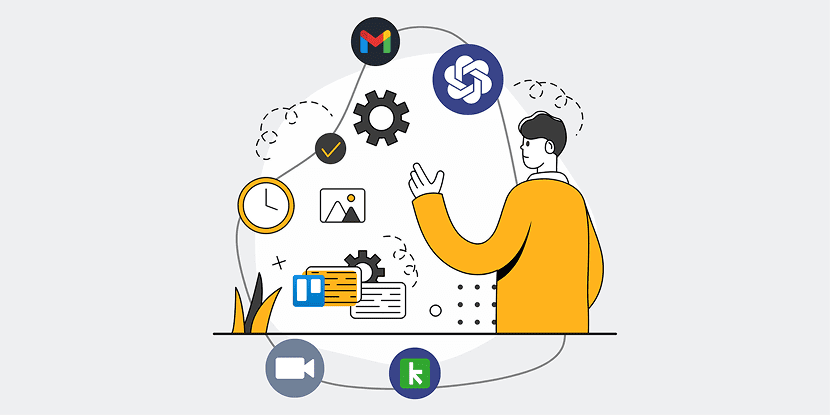
True transformation in the recruiting lifecycle comes not from simply adding more tools, but from strategically integrating AI and automation to create a cohesive, intelligent system. This isn’t about replacing human interaction, but augmenting it, allowing your team to focus on the human elements of hiring while machines handle the repetitive, data-intensive tasks. By applying automation across various stages, organizations can achieve a level of precision, speed, and personalization previously unattainable.
Intelligent Sourcing and Screening
AI-powered tools can revolutionize the initial stages of recruiting by moving beyond keyword matching. They can analyze resumes and profiles for deeper contextual relevance, identifying candidates whose skills, experience, and even cultural fit align more closely with specific roles. This intelligent screening significantly reduces the volume of unqualified applicants reaching a recruiter’s desk, ensuring that human efforts are directed towards the most promising prospects. Furthermore, AI can assist in proactive sourcing, identifying passive candidates who meet precise criteria across various platforms, effectively expanding your talent pool with relevant individuals.
Streamlining Candidate Engagement and Communication
Once a candidate is identified, AI and automation can ensure a seamless, personalized experience. Automated chatbots can answer common applicant questions 24/7, providing instant feedback and guiding candidates through the application process. Personalized email sequences can keep candidates informed about their application status, next steps, and what to expect, dramatically improving communication consistency. Crucially, automated scheduling tools can eliminate the frustrating back-and-forth typically involved in coordinating interviews across multiple calendars, providing candidates with flexible options and immediate confirmations. This proactive, intelligent communication reduces candidate anxiety and significantly minimizes the likelihood of “ghosting.”
Enhancing Interview Processes and Feedback Loops
Beyond the initial engagement, automation can optimize the interview stage itself. AI can help create structured interview guides, ensuring consistency in questioning and evaluation across candidates. Automated systems can manage the collection of interviewer feedback, consolidating it into a central, easily accessible location for informed decision-making. This standardization not only streamlines the process but also helps to mitigate bias, promoting fairer and more objective hiring outcomes. Post-interview, automated follow-ups ensure no candidate is left in the dark, maintaining a positive relationship regardless of the outcome.
4Spot Consulting’s Approach: Building an OpsMesh for Recruiting
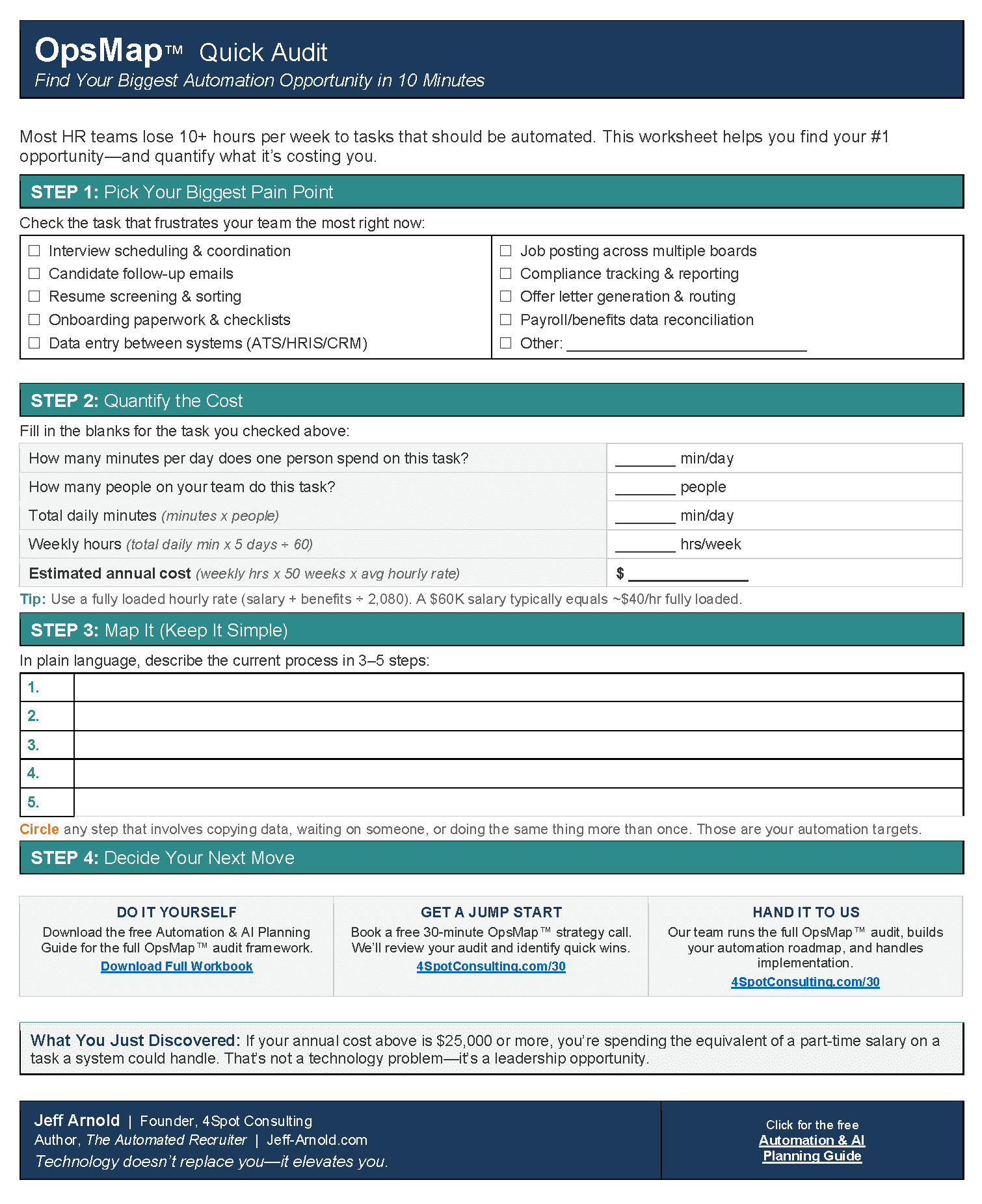
At 4Spot Consulting, we recognize that true operational excellence in recruiting requires more than piecemeal solutions. We employ our OpsMesh framework, a strategic approach to connect disparate systems and processes into a single, cohesive, automated ecosystem. For recruiting, this means moving beyond just an ATS to integrate sourcing tools, communication platforms, scheduling software, HRIS, and even onboarding systems into a harmonious flow. Our process begins with an OpsMap, a strategic audit designed to uncover every inefficiency and bottleneck in your current recruiting workflow, identifying exactly where automation and AI can yield the greatest ROI.
Real-World Impact: Automating for Tangible Savings
Our strategic-first approach means we don’t just build; we plan with your specific business outcomes in mind. We’ve seen firsthand the transformative power of this approach. For example, we helped an HR tech client save over 150 hours per month by automating their resume intake and parsing process using Make.com and AI enrichment, then syncing this data seamlessly to their Keap CRM. This eliminated a massive manual burden, freeing up their team to focus on meaningful candidate engagement rather than data entry. This kind of impact—”We went from drowning in manual work to having a system that just works”—is what our OpsBuild and OpsCare services are designed to deliver: measurable, sustainable efficiency gains directly tied to your profitability and scalability goals.
The Future is Automated, Intelligent Recruiting
The recruiting landscape is evolving rapidly, and companies that embrace strategic AI and automation are best positioned to attract, engage, and retain top talent efficiently. By shifting away from purely manual processes and integrating intelligent systems throughout the entire candidate lifecycle, businesses can not only save significant time and resources but also dramatically improve the candidate experience and strengthen their employer brand. This strategic overhaul allows high-value employees to focus on what they do best: building relationships and driving growth, not battling administrative drudgery.
Ready to uncover automation opportunities that could save you 25% of your day in your recruiting process? Book your OpsMap™ call today.
If you would like to read more, we recommend this article: Reducing Candidate Ghosting: The ROI of Automated Scheduling