Post: 11 Essential AI Applications Revolutionizing HR & Recruiting for Strategic Advantage
11 Essential AI Applications Revolutionizing HR and Recruiting Workflows
The landscape of Human Resources and Recruiting is undergoing a seismic shift, driven by the relentless march of technological innovation, particularly in Artificial Intelligence. For too long, HR departments have been seen as cost centers, burdened by administrative overhead and reactive processes. Manual resume screening, repetitive candidate follow-ups, and fragmented employee data management aren’t just inefficient; they’re direct drains on productivity, talent acquisition, and ultimately, your bottom line. High-growth B2B companies, especially those scaling rapidly, simply cannot afford to let these inefficiencies persist. We’ve seen firsthand how these bottlenecks hinder strategic initiatives, prevent valuable HR professionals from focusing on high-impact work, and even contribute to missed hiring opportunities. At 4Spot Consulting, we believe that the future of HR isn’t just about adopting new tools, but strategically integrating AI and automation to transform operations from a necessary evil into a competitive advantage. This isn’t about replacing human judgment; it’s about augmenting it, freeing up your team to focus on the human elements of HR – strategy, culture, and engagement – while AI handles the heavy lifting of data processing, prediction, and personalization. The challenge isn’t whether to embrace AI, but how to do so effectively and practically to deliver tangible ROI.
This is precisely where AI applications become indispensable. AI isn’t just a buzzword; it’s a suite of powerful technologies capable of streamlining every facet of the employee lifecycle, from initial candidate outreach to long-term talent development and retention. We’re talking about systems that can learn, adapt, and make informed decisions at speeds and scales impossible for human teams alone. For HR and recruiting leaders, understanding these applications isn’t optional; it’s critical for staying competitive, attracting top talent, and building a resilient, high-performing workforce. Our experience automating complex business systems has shown us that the most significant gains come from a strategic-first approach – understanding the business problem before applying the technology. The following 11 AI applications represent proven pathways to optimize your HR and recruiting operations, reduce human error, and unlock new levels of efficiency and strategic impact.
1. Automated Candidate Sourcing and Matching
One of the most time-consuming aspects of recruitment is identifying qualified candidates from a vast and often fragmented talent pool. Traditional methods of sifting through job boards and professional networks can be incredibly inefficient, leading to missed opportunities and prolonged time-to-hire. AI-powered sourcing and matching platforms fundamentally transform this process. These systems leverage advanced algorithms to scan not just internal databases but also external sources like LinkedIn, GitHub, Stack Overflow, and various job boards, identifying passive and active candidates who meet highly specific criteria. Beyond simple keyword matching, AI can analyze skills, experience, project history, and even cultural fit indicators based on publicly available data, creating a much more nuanced profile. For example, an AI might identify a candidate with transferable skills from a different industry that a human recruiter might overlook, simply because they weren’t searching for that specific industry term. The system can then rank candidates based on their likelihood of success in a given role, significantly narrowing the focus for recruiters. This isn’t just about finding more candidates; it’s about finding *better* candidates faster, ensuring that your team spends its valuable time engaging with the most promising individuals. We’ve seen clients use `Make.com` to integrate these sourcing tools directly with their CRM like `Keap`, creating a seamless pipeline from discovery to outreach, automating initial contact and follow-up sequences based on candidate engagement. This strategic integration can save hundreds of hours annually, allowing recruiters to focus on building relationships rather than searching for needles in haystacks.
2. Intelligent Resume Screening and Parsing
The sheer volume of applications for a single job opening can be overwhelming, often leading to qualified candidates being overlooked due to human fatigue or bias during manual screening. Intelligent resume screening and parsing tools address this challenge head-on. These AI systems go far beyond basic keyword searches; they can extract, categorize, and interpret information from resumes with remarkable accuracy, regardless of formatting. Instead of simply looking for “project manager,” AI can understand the context of experience, quantify achievements (e.g., “managed projects with budgets exceeding $1M”), and identify soft skills based on descriptive language. Furthermore, some advanced systems can even detect potential red flags or inconsistencies. By automating this initial screening, HR teams can process applications orders of magnitude faster, ensuring no qualified candidate is missed. This frees recruiters from hours of administrative review, allowing them to dedicate their expertise to deeper dives into candidate profiles and direct engagement. Imagine a system that, once integrated via `Make.com` with your application portal, automatically parses resumes, scores them against job requirements, and updates candidate records in your `Keap` CRM, flagging the top 10% for immediate review. This eliminates human error, significantly speeds up the time-to-screen, and ensures that the most promising candidates are prioritized, leading to a much more efficient talent pipeline.
3. AI-Powered Chatbots for Candidate Engagement and FAQs
Candidate experience is paramount in today’s competitive talent market. Slow response times, unanswered questions, and a lack of personalized communication can quickly deter top talent. AI-powered chatbots are transforming candidate engagement by providing instant, 24/7 support throughout the recruitment process. These chatbots can answer frequently asked questions about company culture, benefits, job details, and application status, often within seconds. Beyond answering FAQs, sophisticated chatbots can also conduct initial pre-screening interviews, asking relevant questions to gauge a candidate’s qualifications and interest, and even scheduling subsequent interviews directly into calendars. This not only significantly improves the candidate experience by providing immediate information and engagement but also dramatically reduces the administrative load on recruiting teams. Instead of recruiters spending hours answering repetitive questions, they can focus on higher-value interactions with pre-qualified candidates. We’ve implemented systems using tools like `Unipile` and `Bland AI` to create conversational interfaces that feel natural and human-like, guiding candidates through the early stages of the application process. This automation ensures that candidates feel valued and informed, increasing engagement rates and reducing candidate drop-off, all while providing your team with highly qualified leads ready for human interaction.
4. Predictive Analytics for Turnover and Retention
Employee turnover is a costly problem for any organization, impacting productivity, morale, and recruitment expenses. Proactively identifying employees at risk of leaving and understanding the underlying factors is crucial for effective retention strategies. AI-powered predictive analytics tools analyze vast datasets – including performance reviews, compensation data, engagement survey results, tenure, management feedback, and even sentiment from internal communications – to identify patterns that correlate with attrition. These systems can then predict which employees are at a higher risk of leaving within a specific timeframe, allowing HR leaders to intervene proactively. For example, the AI might identify that employees with a specific tenure in a particular department, who haven’t received a promotion or significant raise in two years, and whose engagement scores have dipped, are highly likely to depart. This actionable insight empowers HR and management to engage with these individuals, address their concerns, offer development opportunities, or adjust compensation *before* they decide to look elsewhere. Integrating this data with a centralized system, perhaps using an `OpsMesh` strategy to connect HRIS with performance management tools via `Make.com`, provides a holistic view. This strategic application of AI shifts HR from a reactive state to a proactive one, saving significant costs associated with recruitment, onboarding, and lost productivity due to high turnover.
5. Personalized Learning and Development Paths
In an era of rapid technological change, continuous learning and skill development are not just beneficial but essential for employee retention and organizational agility. Generic training programs often miss the mark, failing to address individual skill gaps or career aspirations. AI takes personalization to the next level in learning and development. These systems analyze an employee’s current skills, past performance, career goals, and even the skills required for future roles within the organization. Based on this analysis, AI can recommend highly personalized learning paths, suggesting specific courses, modules, mentors, or projects that will most effectively close skill gaps and foster growth. For instance, an AI might recommend a cybersecurity course for a software developer looking to move into a more security-focused role, or a leadership training module for an aspiring team lead, based on observed strengths and weaknesses. This not only makes learning more engaging and relevant for employees but also ensures that L&D investments are directly aligned with business needs and individual career progression. By integrating these platforms with HRIS and performance management systems using `Make.com`, organizations can create a dynamic, adaptive learning environment. This approach empowers employees to take ownership of their development, increases their engagement, and ensures the workforce remains agile and equipped with the skills needed for future challenges, thereby securing long-term talent pipelines internally.
6. AI-Assisted Interview Scheduling and Logistics
Interview scheduling is a notorious bottleneck in the recruiting process. Coordinating schedules between candidates, multiple interviewers, and various time zones can be a logistical nightmare, leading to significant delays and frustration for all parties. AI-assisted interview scheduling tools virtually eliminate this administrative burden. These systems can access interviewers’ calendars, communicate with candidates to ascertain their availability, and automatically find optimal time slots that work for everyone. Beyond simple scheduling, advanced AI can manage complex logistics, such as booking meeting rooms, sending out calendar invitations with virtual meeting links, sending automated reminders, and even re-scheduling if conflicts arise – all without human intervention. For a fast-paced organization, this efficiency gain is monumental. Recruiters can save hours each week that would otherwise be spent on back-and-forth emails and phone calls, allowing them to focus on more strategic tasks like candidate relationship management and talent assessment. We’ve integrated these scheduling tools with `Keap` and `Make.com` for our clients, creating seamless workflows that reduce time-to-interview, decrease no-show rates, and significantly enhance the overall candidate and interviewer experience. This automation isn’t just about saving time; it’s about creating a smooth, professional, and efficient hiring process that reflects positively on your organization.
7. Sentiment Analysis for Employee Feedback
Understanding employee sentiment is critical for maintaining a healthy and productive work environment, but manually sifting through thousands of open-ended survey responses, internal communications, or exit interview notes is an impossible task. AI-powered sentiment analysis tools offer a scalable solution. These systems use natural language processing (NLP) to analyze text-based feedback, identifying recurring themes, overall sentiment (positive, negative, neutral), and even specific emotions expressed by employees. For example, an AI could quickly identify that a significant portion of employees in a particular department are expressing “frustration” related to “workflow inefficiencies” or “lack of clear communication,” even if they use different phrasing. This allows HR leaders to move beyond anecdotal evidence and gain quantifiable insights into employee morale, engagement, and pain points across the organization. Instead of guessing what’s bothering employees, you get data-driven insights that highlight critical areas for improvement. By regularly deploying surveys and analyzing responses with AI, companies can detect emerging issues early, address them proactively, and foster a more responsive and supportive workplace culture. Integrating this feedback analysis into an `OpsMesh` strategy ensures that insights are not siloed but inform broader operational improvements, saving your business from costly missteps and ensuring a continuously improving employee experience.
8. Bias Mitigation in Hiring
Unconscious bias remains a significant challenge in hiring, leading to less diverse workforces and missed opportunities to attract top talent. AI offers powerful tools to actively mitigate bias throughout the recruitment process. These systems can analyze job descriptions for gender-coded language or exclusionary phrasing, suggesting more inclusive alternatives to attract a broader candidate pool. During resume screening, AI can be configured to anonymize candidate identities, removing names, photos, and even educational institutions that might trigger unconscious biases, allowing reviewers to focus solely on skills and experience. Furthermore, some AI tools can analyze interview transcripts for subtle cues of bias from interviewers or flag inconsistencies in questioning. While AI itself is not inherently bias-free (as it learns from existing data, which may contain historical biases), it can be trained and audited to identify and correct patterns that perpetuate bias, offering a more objective lens than human judgment alone. This isn’t about eliminating human involvement but providing tools that empower human recruiters to make fairer, more objective decisions. By deploying these AI solutions, organizations can foster a more equitable hiring process, leading to a more diverse, innovative, and high-performing workforce, while reinforcing their commitment to fairness and equal opportunity, something that’s increasingly important for attracting new generations of talent.
9. Onboarding and Offboarding Process Automation
The first impressions during onboarding and the final experience during offboarding are critical for employee satisfaction and employer brand. Yet, these processes are often mired in manual paperwork, disjointed tasks, and administrative headaches. AI-powered automation can transform both ends of the employee lifecycle into smooth, efficient, and positive experiences. For onboarding, AI can trigger automated workflows for document signing (`PandaDoc` integration via `Make.com`), IT provisioning, HR system setup, and sending welcome messages. It can personalize onboarding paths based on role, ensuring new hires receive relevant training and introductions. For example, an AI could automatically assign a mentor, schedule initial meetings with key stakeholders, and deliver role-specific learning modules. Similarly, for offboarding, AI can automate exit surveys, ensure all company assets are returned, deactivate system access, and manage final payroll processes. This comprehensive automation reduces the administrative burden on HR and IT departments, minimizes human error, and ensures a consistent, positive experience for employees. It means HR teams can shift their focus from logistical coordination to more meaningful interactions with new hires and departing employees, ensuring a smooth transition. This level of automation is a cornerstone of our `OpsBuild` framework, demonstrating how connecting disparate systems can create a seamless, end-to-end operational flow that saves time and elevates the employee experience.
10. Compensation and Benefits Optimization
Determining fair and competitive compensation and benefits packages is a complex, data-intensive task, requiring constant analysis of market trends, internal equity, and individual performance. AI-powered solutions simplify and optimize this critical HR function. These systems can analyze vast amounts of external market data, including industry benchmarks, geographical variations, and talent demand, alongside internal data such as employee performance, tenure, and existing compensation structures. AI can then identify discrepancies, predict the impact of various pay adjustments, and recommend optimal compensation strategies that align with both budget constraints and talent retention goals. For instance, an AI might flag that a particular role is underpaid compared to market averages for a specific region, or that a high-performing employee’s salary is not competitive, presenting a flight risk. Similarly, AI can help optimize benefits packages by analyzing employee preferences, utilization rates, and cost-effectiveness, suggesting adjustments that maximize value for both the company and its employees. This data-driven approach ensures that compensation and benefits are not only competitive but also strategically aligned with organizational objectives, helping to attract and retain top talent while managing costs effectively. By leveraging AI for these insights, businesses can make more informed, equitable decisions that contribute to overall employee satisfaction and financial health.
11. Workforce Planning and Resource Allocation
Strategic workforce planning is about anticipating future talent needs and ensuring the organization has the right people with the right skills at the right time. This is a dynamic challenge in today’s rapidly evolving business environment. AI and predictive analytics revolutionize workforce planning by analyzing internal data (employee skills, performance, career trajectories) and external market trends (economic forecasts, industry shifts, demographic changes) to forecast future talent gaps and surpluses. For example, an AI might predict an increased demand for data scientists in three years based on company growth projections and market trends, prompting proactive recruitment or internal upskilling initiatives. Beyond forecasting, AI can optimize resource allocation by identifying the most suitable employees for new projects, considering their skills, availability, and development goals. This ensures that talent is utilized effectively and that employees are engaged in work that aligns with their strengths and aspirations. By integrating HR data, project management systems, and business intelligence tools via `Make.com`, an `OpsMesh` strategy can provide a holistic view of your workforce, enabling proactive and agile adjustments. This strategic application of AI transforms workforce planning from a reactive exercise into a powerful, data-driven strategy that ensures your organization is always prepared for future challenges and opportunities, maximizing productivity and minimizing talent-related risks.
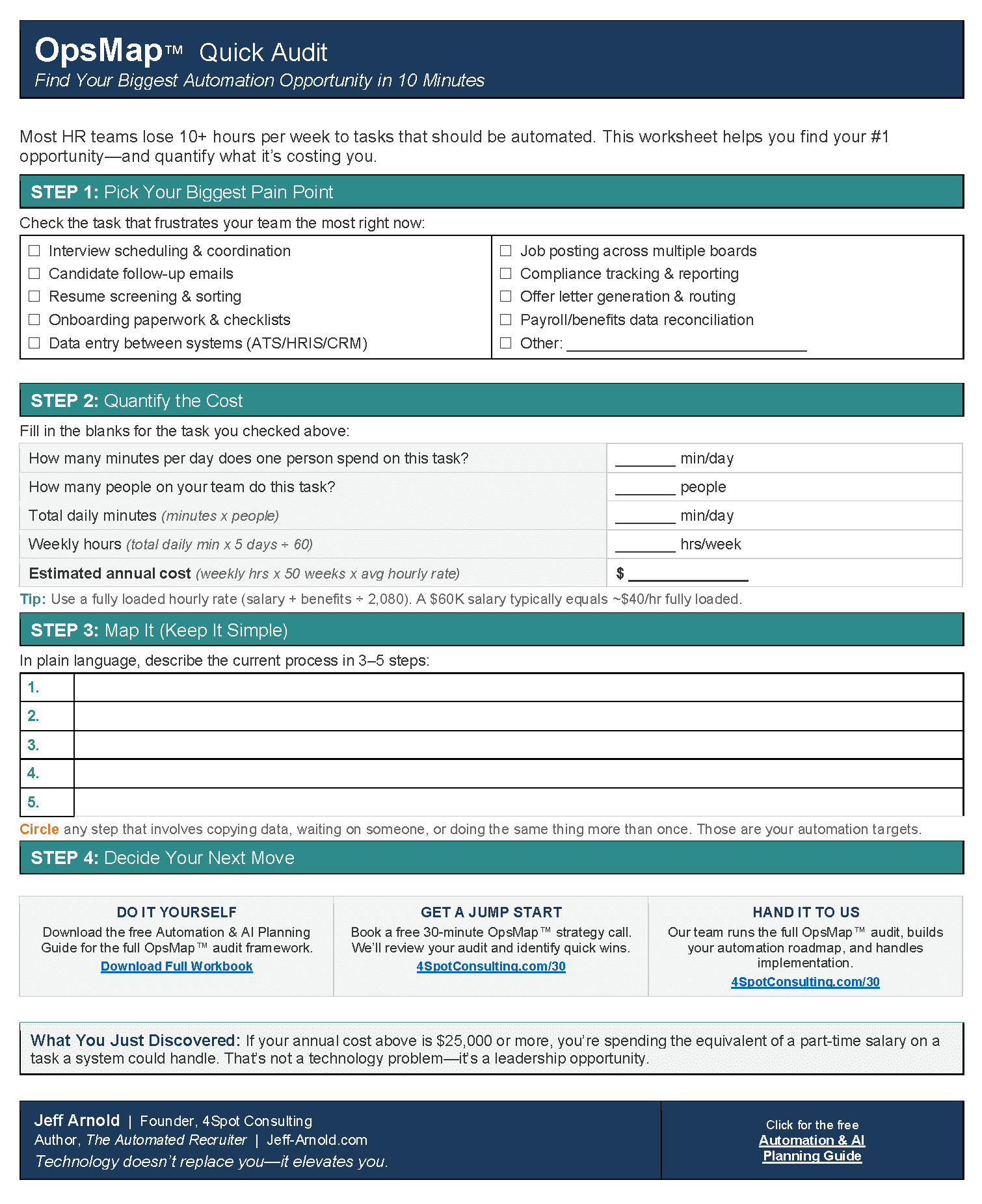
The integration of AI into HR and recruiting is not merely an incremental improvement; it’s a fundamental transformation that redefines how organizations acquire, manage, and develop their most valuable asset: people. From automating the mundane to providing deep, predictive insights, AI empowers HR professionals to move beyond administrative tasks and become true strategic partners in business growth. The eleven applications discussed highlight practical pathways to achieve unprecedented levels of efficiency, accuracy, and personalization across the entire employee lifecycle. For high-growth B2B companies, leveraging these technologies isn’t optional; it’s essential for maintaining a competitive edge, attracting top talent, and fostering a workplace where human potential can truly thrive. At 4Spot Consulting, we’ve seen how strategically implemented AI and automation, guided by our `OpsMap™` diagnostic, can save businesses a quarter of their day, freeing up high-value employees to focus on what truly matters. The journey to a more automated, AI-powered HR future begins with understanding the possibilities and taking decisive action to implement these transformative solutions.
If you would like to read more, we recommend this article: The Complete Guide to AI and Automation for Modern HR & Recruiting
RELATED POST