Post: Unlock Your Single Source of Truth with Automated Data Synchronization
Beyond the Spreadsheet: Automating Data Synchronization for a Single Source of Truth
In the modern business landscape, data is the lifeblood of every decision, every strategy, and every operational process. Yet, for many organizations, this vital resource is fragmented, siloed in various applications, spreadsheets, and databases that refuse to communicate effectively. The result? A perpetual state of manual data entry, constant reconciliation efforts, and the lurking dread of outdated or incorrect information impacting critical business functions. This isn’t just an inconvenience; it’s a silent drain on productivity, profitability, and an organization’s ability to scale effectively.
The Silent Drain: Why Data Silos Cripple Modern Businesses
Imagine your sales team diligently updating CRM records, while your HR department manages employee data in a separate system, and your operations team tracks project progress in another. Each system holds a piece of the puzzle, but none offers a complete picture. This common scenario leads to data silos, where information is isolated and inconsistent. Businesses often find themselves wrestling with:
- **Manual Errors and Duplication:** Human intervention in transferring data between systems is inherently prone to mistakes, leading to costly errors and duplicate records that muddy the waters.
- **Outdated Information:** Delays in data synchronization mean that decisions are often made based on old information, hindering agility and responsiveness in a dynamic market.
- **Wasted Employee Time:** High-value employees spend countless hours on mundane, repetitive data entry and verification tasks instead of focusing on strategic initiatives that drive growth.
- **Poor Decision-Making:** Without a unified view of accurate, real-time data, leadership struggles to make informed decisions, impacting everything from resource allocation to market strategy.
The High Cost of Disconnected Systems
The impact of disconnected systems extends far beyond mere inefficiency. It directly translates to lost revenue, missed opportunities, and a significant drag on operational excellence. For B2B companies with $5M+ ARR, these inefficiencies can cost millions annually in lost productivity and missed growth potential. The ability to truly understand your customer, optimize your talent acquisition, or streamline your project delivery hinges on having a single, authoritative source of truth.
Unlocking Efficiency: The Power of a Single Source of Truth
The concept of a “Single Source of Truth” (SSOT) is not merely a buzzword; it’s a foundational principle for operational excellence. An SSOT ensures that all stakeholders, regardless of their department or the system they are using, are accessing and contributing to the same, consistent, and up-to-date data. This eliminates ambiguity, fosters collaboration, and builds an environment where every decision is backed by reliable information.
How Automation Bridges the Data Gap
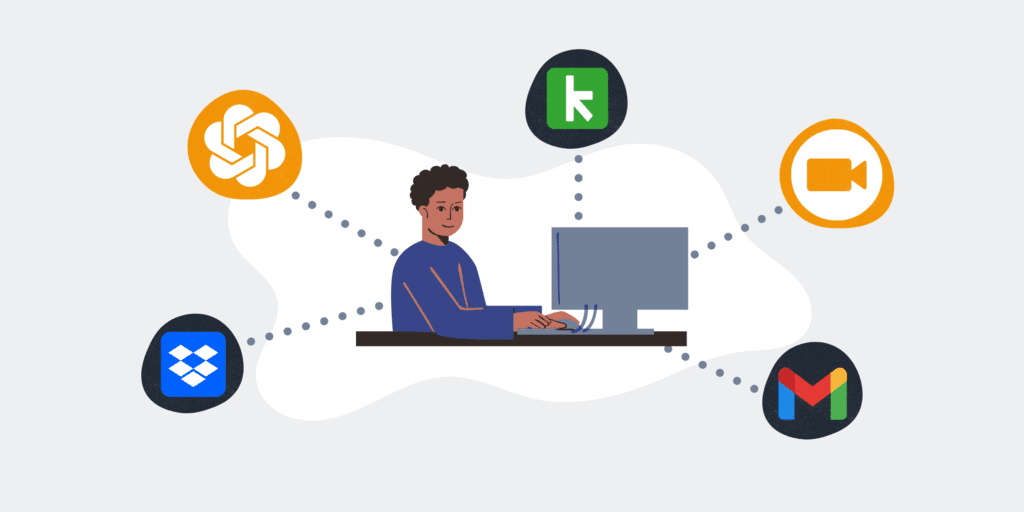
Achieving an SSOT in a complex business environment might seem daunting, but it is precisely where intelligent automation and AI come into play. Tools like Make.com, combined with strategic consulting, allow businesses to create seamless integrations between disparate systems. This isn’t about replacing your existing software; it’s about making them work together harmoniously. Automation can:
- **Automate Data Sync:** Instantly transfer data between your CRM (like Keap or HighLevel), HRIS, project management tools, and other critical applications.
- **Standardize Data Entry:** Enforce consistent data formats and validation rules across all entry points, drastically reducing errors.
- **Trigger Workflows:** Use changes in one system to automatically trigger actions in another, such as updating a client record in Keap when a contract is signed in PandaDoc.
- **Enhance Data Quality with AI:** Leverage AI to parse, enrich, and validate incoming data, ensuring it meets predefined quality standards before it enters your SSOT.
By automating data synchronization, businesses can transform their operations from reactive and chaotic to proactive and streamlined. Data flows freely and accurately, empowering employees to focus on value-added tasks and enabling leaders to make data-driven decisions with confidence.
4Spot Consulting’s Approach to Data Unification
At 4Spot Consulting, we understand that building an SSOT isn’t a one-size-fits-all solution. Our OpsMesh framework is designed to strategically audit, build, and maintain a unified automation ecosystem that eliminates data silos and establishes a reliable single source of truth. Our process begins with an OpsMap™ diagnostic, where we meticulously uncover inefficiencies, map existing data flows, and identify critical opportunities for automation.
Following the OpsMap™, our OpsBuild phase implements robust automation solutions, connecting your diverse SaaS systems via platforms like Make.com. We don’t just build; we architect a future-proof infrastructure that ensures your data is consistently accurate and accessible. This strategic, outcome-focused approach is why our clients experience significant improvements, often saving 25% of their day and achieving exponential growth.
Real-World Impact: Saving Time and Boosting Profitability
Consider an HR firm that saved over 150 hours per month by automating their resume intake, parsing, and syncing to their Keap CRM. This isn’t just about saving time; it’s about enabling faster hiring, reducing human error in critical processes, and allowing HR professionals to focus on strategic talent management rather than manual data entry. Whether it’s unifying client data, streamlining recruitment workflows, or consolidating operational metrics, an automated SSOT translates directly into enhanced productivity, reduced operational costs, and increased scalability.
The journey to a truly efficient, data-driven organization begins with a commitment to breaking down silos. By embracing strategic automation, businesses can transform their disparate data into a powerful, unified asset, paving the way for sustained growth and innovation.
If you would like to read more, we recommend this article: The OpsMesh Framework: Architecting a Unified Automation Ecosystem





RELATED POST