The Strategic Imperative of a Single Source of Truth in Modern Business Operations
In today’s fast-paced digital landscape, businesses are awash in data. From CRM systems to HR platforms, marketing automation tools, and accounting software, information flows from countless directions. While this abundance of data promises insight and efficiency, it often delivers the opposite: fragmentation, confusion, and operational bottlenecks. For business leaders striving for agility, scalability, and reduced human error, the concept of a Single Source of Truth (SSOT) is not merely a technical ideal—it’s a strategic imperative.
The absence of a SSOT manifests in several critical ways that directly impact your bottom line. Teams spend invaluable hours reconciling conflicting spreadsheets, validating customer data across disparate systems, or chasing down the “latest” version of a document. This isn’t just inefficient; it’s a breeding ground for errors, poor decision-making, and a significant drag on employee productivity. High-value employees, those you hire for their strategic thinking and problem-solving capabilities, find themselves bogged down in low-value, repetitive data management tasks. This erodes morale, hinders innovation, and ultimately restricts your company’s growth potential.
The Hidden Costs of Data Fragmentation
Consider the cumulative impact: a sales team working with outdated contact information in their CRM misses key opportunities, leading to lost revenue. An HR department struggles to onboard new hires efficiently because employee data resides in three different systems, causing delays and compliance risks. Operations managers can’t get a clear, real-time view of project progress because status updates are scattered across various project management tools and email threads. Each of these scenarios represents a tangible cost—be it in wasted time, missed sales, compliance penalties, or delayed strategic initiatives.
Furthermore, without a unified data strategy, true scalability becomes an elusive goal. As your business grows, so does the volume and complexity of your data. Adding more systems without a cohesive integration plan only exacerbates the problem, creating an even more intricate web of disconnected information. This reactive approach, often driven by departmental needs rather than a holistic business strategy, leads to redundant data entry, inconsistent reporting, and a lack of cross-functional visibility that prevents you from understanding the full picture of your operations.
Building Your Operational Foundation with a Single Source of Truth
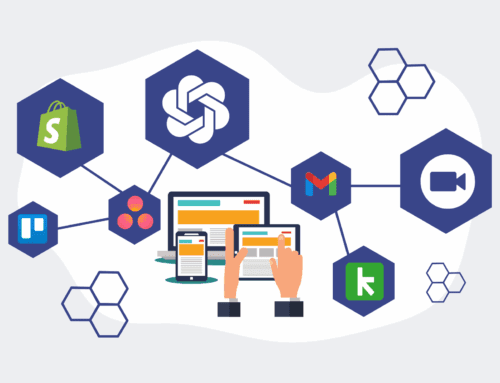
At 4Spot Consulting, we approach the challenge of data fragmentation not as a technical hurdle, but as a strategic opportunity. Our OpsMesh™ framework is designed to help high-growth B2B companies eliminate these silos and establish a true SSOT. It’s about more than just integrating systems; it’s about creating an intelligent, interconnected operational ecosystem where data flows seamlessly and reliably, empowering every department with accurate, real-time insights.
The journey begins with our OpsMap™ diagnostic. This strategic audit meticulously uncovers the inefficiencies and data disconnects within your existing infrastructure. We identify where human error is most prevalent, where operational costs are unnecessarily high, and where a lack of consolidated information is stifling your scalability. It’s not about replacing all your existing tools, but about strategically connecting them, often leveraging powerful low-code automation platforms like Make.com, to ensure that the right data is in the right place, at the right time.
For instance, we’ve helped an HR tech client save over 150 hours per month by automating their resume intake and parsing process. Previously, this was a manual, error-prone task with data scattered across email inboxes and local drives. By establishing a SSOT for applicant data, integrating AI enrichment, and syncing directly to their Keap CRM, they moved from “drowning in manual work to having a system that just works.” This is the power of a well-implemented SSOT: it frees up your team to focus on strategic work, confident that the underlying data is accurate and complete.
Beyond Integration: Strategic Automation for a Unified Business
Implementing a SSOT is not just about connecting systems; it’s about strategically automating your workflows to ensure data integrity and accessibility. Our OpsBuild™ phase focuses on implementing these robust automation and AI systems, creating a “single pane of glass” wherever possible, or at least ensuring that all critical data points converge in a central, accessible hub. This strategic approach minimizes human intervention in data handling, reducing errors, accelerating decision cycles, and driving down operational costs.
The ultimate benefit of a well-executed SSOT is unparalleled business agility. With reliable, unified data, leaders can make informed decisions faster, respond to market changes with greater speed, and identify new opportunities with clarity. It transforms your operations from a reactive, firefighting mode to a proactive, strategically-driven engine for growth. It empowers your high-value employees to perform at their best, knowing they have the accurate information they need, precisely when they need it.
Ready to uncover automation opportunities that could save you 25% of your day by establishing a true Single Source of Truth? Book your OpsMap™ call today and let’s map out a strategy that eliminates data chaos and drives your business forward.
If you would like to read more, we recommend this article: Mastering Business Automation: Strategies for Scalability and Profitability