Navigating the Data Deluge: Building a Single Source of Truth with AI and Automation
In today’s fast-paced business environment, data is often hailed as the new oil. Yet, for many high-growth B2B companies, this invaluable resource remains fragmented, inconsistent, and often locked away in disparate systems. The promise of data-driven decisions clashes with the reality of data silos – isolated pockets of information that prevent a holistic view of operations, customer journeys, and employee performance. This fragmentation isn’t just an IT headache; it’s a significant drain on productivity, a source of costly errors, and a major roadblock to true scalability. Your most valuable employees are likely spending countless hours manually reconciling spreadsheets, cross-referencing CRMs, and attempting to piece together a coherent narrative from conflicting sources. This isn’t just inefficient; it’s unsustainable.
The Pervasive Problem of Disconnected Data
Consider the typical journey of information within a growing business. A sales lead enters the CRM, perhaps Keap or HighLevel. Marketing might have its own platform with customer engagement data. HR uses a separate system for employee records, and recruiting has another for applicant tracking. Finance operates in its own ledger. Each department, optimizing for its specific function, inadvertently creates a barrier to comprehensive understanding. When information needs to flow between these departments, it often relies on manual transfers, CSV exports, or the dreaded copy-paste method. This process is inherently prone to human error, leading to outdated records, missed opportunities, and a constant questioning of data integrity. The sheer volume of data being generated only exacerbates the issue, turning what should be an asset into an overwhelming liability.
We’ve seen firsthand how this lack of a “single source of truth” (SSOT) impacts decision-making. Leaders can’t trust the reports because the underlying data is suspect. Employees waste time hunting for the “latest version” of a client file or struggling to onboard a new hire whose information is spread across three different systems. This isn’t just about efficiency; it’s about the very foundation of your business operations. Without a unified, reliable data source, scaling becomes an exercise in frustration, and true operational excellence remains an elusive goal. It’s a costly problem, both in terms of direct labor hours and the intangible cost of missed strategic opportunities.
Why AI and Automation are the Keys to Unifying Your Data
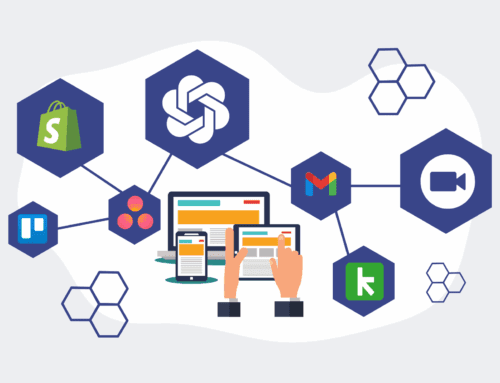
The solution to this data fragmentation isn’t to simply add more software; it’s to strategically connect and automate the flow of information between your existing systems. This is where AI and low-code automation platforms like Make.com become indispensable. By designing intelligent workflows, we can ensure that when data is updated in one system, it automatically reflects in all relevant others. This eliminates manual data entry, drastically reduces human error, and provides real-time consistency across your entire operational footprint.
Beyond Basic Integrations: The Power of Intelligent Workflows
A basic integration might sync two applications. An intelligent workflow, however, goes much deeper. It uses AI to parse, enrich, and validate data as it moves. For instance, in recruiting, an AI can extract key details from a resume (using tools like Bland AI or custom parsers), update the applicant tracking system, inform the HR platform, and even initiate personalized communication campaigns – all without human intervention. This transforms raw data into actionable intelligence, ensuring every piece of information contributes meaningfully to your business objectives. Our OpsMesh™ framework is specifically designed to architect these comprehensive, interconnected systems, ensuring every data point has a clear home and purpose.
Imagine a scenario where a new client is onboarded. Their information is entered once. Automatically, a project is created in your management system, an invoice is generated in your accounting software, and a welcome email sequence is triggered from your CRM. All client documentation is neatly organized in a central, accessible location. This isn’t futuristic fantasy; it’s the operational reality we build for our clients, saving them countless hours and providing unparalleled data integrity. This strategic approach to automation ensures you spend less time managing data and more time leveraging it for growth.
Building Your Single Source of Truth with 4Spot Consulting
At 4Spot Consulting, our approach to establishing an SSOT is rooted in our OpsMap™ diagnostic. We begin by meticulously auditing your current operational landscape, identifying every point of data ingress, egress, and storage. This allows us to uncover critical inefficiencies, pinpoint areas of data inconsistency, and map out a precise strategy for automation and AI integration. We don’t just recommend solutions; we build them. Our OpsBuild™ service leverages platforms like Make.com, Keap, PandaDoc, and Unipile to create robust, interconnected systems that ensure your data flows seamlessly and accurately across your organization.
Our experience, spanning over 35 years in automating businesses from startups to Fortune 500s, has taught us that every solution must be tied to clear ROI and tangible business outcomes. We’re not interested in ‘tech for tech’s sake.’ We focus on eliminating low-value work from your high-value employees, reducing operational costs, and boosting scalability. The result is a unified data ecosystem that empowers your team, enhances decision-making, and ultimately saves you 25% of your day. We’ve seen an HR tech client save over 150 hours per month by automating their resume intake and parsing process, syncing enriched data directly into Keap CRM – a direct testament to the power of a well-implemented SSOT.
Ready to transform your fragmented data into a powerful, unified asset? Stop the endless reconciliation and start making decisions with confidence. Our automation playbook begins with the OpsMap™ – a strategic audit designed to uncover your unique opportunities and roadmap profitable automations.
If you would like to read more, we recommend this article: The OpsMesh™ Framework: Unifying Your Business Through Strategic Automation