Post: **Stop Candidate Ghosting: AI Strategies for Unmatched Engagement**
6 AI-Powered Strategies to Drastically Reduce Candidate Ghosting and Boost Engagement
Candidate ghosting has become an epidemic in today’s competitive talent landscape, costing businesses invaluable time, resources, and often, their top choice candidates. It’s a frustrating reality for HR and recruiting professionals who invest heavily in sourcing, screening, and interviewing, only to have promising candidates disappear without a trace. This isn’t just an inconvenience; it’s a significant drain on your operational efficiency and a direct hit to your hiring ROI. The traditional methods of follow-up are simply not cutting it in an era where candidates expect seamless, personalized, and timely communication.
At 4Spot Consulting, we understand that for high-growth B2B companies, every minute counts, and every hiring misstep impacts the bottom line. Our experience automating complex HR and recruiting workflows has shown us that the solution lies not in more manual effort, but in strategic AI integration. We’re not talking about tech for tech’s sake, but about leveraging intelligent systems to solve real business problems, like the pervasive issue of candidate ghosting. By embracing AI, you can transform your candidate experience, build stronger engagement from the first touchpoint, and dramatically improve your offer acceptance rates. This isn’t just about preventing no-shows; it’s about building a more responsive, respectful, and ultimately, more effective hiring process that saves you valuable time and money.
Here are 6 AI-powered strategies we’ve seen make a tangible difference in reducing candidate ghosting and supercharging engagement:
1. AI-Powered Personalized Communication and Nurturing Sequences
In the digital age, a generic email or text message is easily ignored. Candidates, much like customers, expect a personalized experience that speaks directly to their interests, concerns, and stage in the hiring journey. AI excels at analyzing candidate data – from their resume and application to their interactions with your career site – to craft highly relevant and personalized communications. Imagine an AI system that knows a candidate is particularly interested in your company’s sustainability initiatives and tailors follow-up messages to highlight your green projects, or understands they’re a working parent and provides information on flexible work arrangements. This goes beyond basic mail merge; it’s about dynamic content generation that adapts to individual profiles. An AI-powered communication platform, integrated with your CRM like Keap, can automate these sequences, ensuring candidates receive timely updates, valuable insights about the role or company culture, and gentle reminders about upcoming interviews. This consistent, relevant engagement makes candidates feel valued and informed, significantly reducing their likelihood of disengaging.
For HR and recruiting leaders, implementing such a system means freeing up your team from the endless task of manual follow-ups, allowing them to focus on high-value interactions. This isn’t about replacing human touch, but about augmenting it, ensuring no candidate slips through the cracks due to a lack of personalized attention. By leveraging natural language generation (NLG) AI, you can even automate the drafting of personalized feedback after interviews, keeping candidates in the loop even when they aren’t selected for the next stage. This transparency fosters goodwill and maintains your employer brand, even with those who don’t get the job. The goal is to create a seamless, engaging dialogue that keeps the candidate invested and informed every step of the way, making them less likely to “ghost” because they feel connected and respected.
2. Predictive Analytics for Ghosting Risk Assessment
One of the most powerful applications of AI in talent acquisition is its ability to analyze vast datasets and identify patterns that human eyes might miss. Predictive analytics can be trained on historical hiring data – including demographics, industry experience, previous ghosting instances, communication response rates, and even the source of the candidate – to calculate a “ghosting risk score” for each active candidate. This isn’t about stereotyping; it’s about statistical probability that enables proactive intervention. For example, if the data suggests that candidates from a certain background or those who haven’t responded within 24 hours to a specific type of outreach are more likely to ghost, the AI can flag them for immediate, personalized human intervention.
This allows your recruiting team to prioritize their efforts, focusing on candidates who are at higher risk of disengaging. Instead of a blanket follow-up strategy, you can deploy targeted tactics: perhaps a personalized phone call, an offer to answer specific questions, or an invitation to a casual virtual meet-and-greet with team members. This strategic allocation of resources, guided by AI insights, ensures that high-potential candidates receive the attention they need to stay engaged. For HR leaders, this translates into a more efficient recruitment process, where resources are deployed intelligently, and the costly impact of ghosting is mitigated before it even happens. It’s about shifting from reactive problem-solving to proactive prevention, building a more robust and resilient hiring pipeline.
3. Automated Intelligent Scheduling and Reminders
Miscommunication and scheduling conflicts are often silent contributors to candidate ghosting. Manual scheduling is time-consuming, prone to error, and can lead to frustrating back-and-forths that deplete a candidate’s enthusiasm. AI-powered intelligent scheduling tools eliminate this friction. These systems integrate directly with interviewers’ calendars, identify available slots, and allow candidates to self-schedule at their convenience, often through a simple, intuitive interface. But it goes further than basic calendar integration. AI can optimize interview schedules based on factors like time zone, interviewer availability, and even the candidate’s preferred interview methods.
Crucially, these systems automate a series of smart reminders, often across multiple channels (email, SMS, calendar invites), increasing the likelihood of a candidate showing up. AI can even detect when a candidate hasn’t confirmed or interacted with a reminder and trigger a more urgent or personalized follow-up from a recruiter. Imagine a system that recognizes a candidate hasn’t opened their calendar invite and automatically sends a friendly text message reminder the day before the interview, complete with virtual meeting links. This seamless, automated process not only reduces no-shows but also creates a professional and efficient impression, enhancing the overall candidate experience. For teams struggling with the manual overhead of coordination, this type of automation, often built using platforms like Make.com, is a game-changer, freeing up significant time and dramatically improving scheduling success rates.
4. Conversational AI Chatbots for Instant Support and FAQs
Candidates often have a multitude of questions throughout the application and interview process. Delays in getting answers, or having to navigate complex FAQs sections, can lead to frustration and disengagement. Conversational AI chatbots offer an immediate solution. Deployed on your career page, application portal, or even integrated into messaging apps, these chatbots can provide instant answers to common questions about company culture, benefits, specific job requirements, or the hiring process itself. They are available 24/7, ensuring candidates receive timely information regardless of office hours.
Beyond simple FAQs, advanced chatbots can guide candidates through the application process, help them troubleshoot technical issues, or even pre-screen them with a series of qualifying questions. This immediate, interactive support reduces friction and helps keep candidates engaged and informed. The AI learns from interactions, continually improving its ability to provide accurate and helpful responses. When a question is too complex for the chatbot, it can seamlessly escalate the query to a human recruiter, providing the recruiter with the full context of the previous conversation. This not only enhances the candidate experience but also offloads significant low-value work from your recruiting team, allowing them to focus on building relationships. For HR professionals, this means a more accessible and supportive hiring environment that keeps candidates connected and reduces the likelihood of them looking elsewhere due to unanswered questions.
5. AI-Driven Candidate Feedback Loops and Experience Surveys
To truly combat ghosting and improve engagement, it’s essential to understand *why* candidates disengage. AI can power sophisticated feedback loops and candidate experience surveys that go beyond simple star ratings. By leveraging natural language processing (NLP), AI can analyze open-ended text responses from surveys (conducted automatically at various stages of the hiring process) to identify recurring themes, sentiment, and specific pain points. For example, AI might reveal that candidates consistently cite long waiting periods after interviews or a lack of clarity regarding the next steps as reasons for dissatisfaction.
This deep, qualitative analysis provides actionable insights that human analysts might miss or would take weeks to uncover. Recruiters and HR leaders can then use this data to refine their processes, address bottlenecks, and proactively adjust their communication strategies. If AI detects a recurring negative sentiment around a specific interviewer or a stage in the process, immediate training or process adjustments can be made. This commitment to continuous improvement, driven by AI-powered insights, demonstrates to candidates that their experience matters, fostering a more positive perception of your employer brand. Implementing such a system ensures that your organization is not just reacting to ghosting, but actively evolving its practices to prevent it, building a more responsive and attractive hiring experience for all.
6. AI for Personalized Offer Management and Onboarding Preparation
The journey doesn’t end with an accepted offer; the period between offer acceptance and the first day is a critical window where ghosting can still occur. AI can significantly enhance this phase through personalized offer management and proactive onboarding preparation. Once an offer is extended, AI can personalize the offer package presentation, highlighting benefits or aspects of the role that align with the candidate’s expressed interests or background, making the offer feel even more tailored and compelling. For instance, if a candidate previously inquired about professional development, the AI could ensure the offer communication prominently features your company’s robust training programs.
Furthermore, AI can automate and personalize the pre-boarding process. This includes sending out welcome messages from future team members (generated based on their profiles), providing access to relevant company resources, explaining first-day logistics, and even suggesting networking opportunities within the company before they start. Automated checklists and interactive guides can ensure candidates feel prepared and excited, reducing anxiety and preventing them from having second thoughts. By leveraging tools like PandaDoc for automated document generation and signature collection, combined with AI for content personalization, the entire process becomes smoother and more engaging. This thoughtful, AI-driven approach creates a sense of belonging even before day one, cementing the candidate’s decision and drastically reducing the chances of a last-minute ghosting.
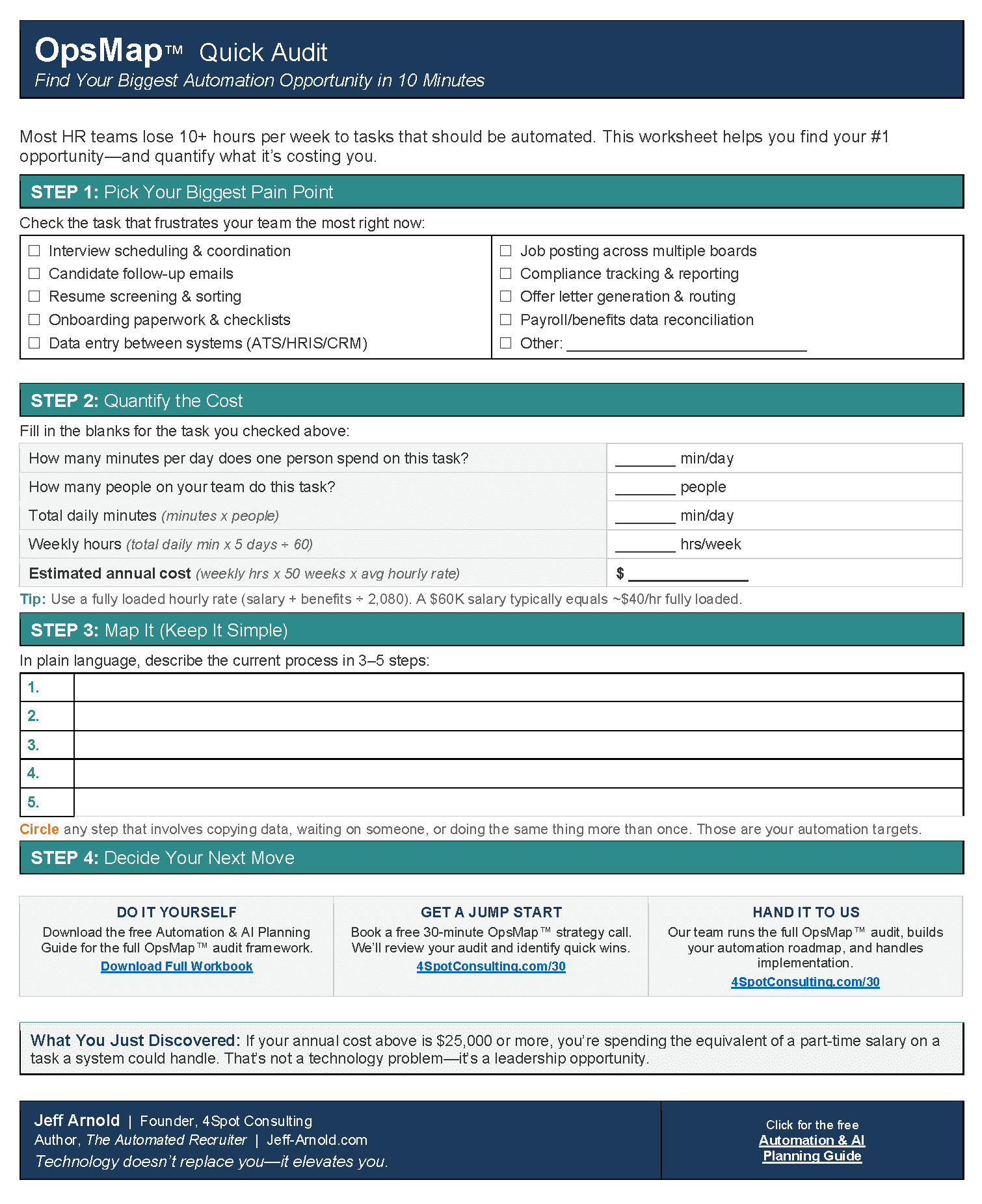
The pervasive challenge of candidate ghosting is no longer an insurmountable hurdle. By strategically integrating AI into your HR and recruiting processes, you can move beyond reactive measures and proactively build a candidate experience that is personalized, efficient, and deeply engaging. These aren’t just futuristic concepts; they are practical, implementable strategies that yield measurable results, saving your organization time, money, and the frustration of losing top talent. At 4Spot Consulting, we specialize in helping high-growth B2B companies like yours implement these kinds of AI-powered automations, transforming your operations and delivering significant ROI. Our OpsMap™ strategic audit can pinpoint exactly where AI and automation can eliminate bottlenecks and elevate your candidate engagement.
Ready to uncover automation opportunities that could save you 25% of your day and drastically improve your hiring outcomes? Book your OpsMap™ call today.
If you would like to read more, we recommend this article: Reducing Candidate Ghosting: ROI Through Automated Scheduling
RELATED POST