Post: Hiring Smarter: 5 AI Applications Revolutionizing HR & Recruitment
5 Transformative AI Applications Revolutionizing HR & Recruitment
The landscape of Human Resources and recruitment is undergoing a radical transformation, largely driven by the strategic integration of Artificial Intelligence and intelligent automation. In an era where talent acquisition is fiercely competitive and operational efficiency dictates bottom-line success, HR and recruiting leaders are no longer just considering AI – they are actively implementing it to gain a decisive edge. The days of manual, repetitive tasks consuming valuable time from highly skilled professionals are rapidly fading. From initial candidate sourcing to intricate onboarding processes and predictive analytics, AI is not merely a tool for incremental improvement; it’s a catalyst for fundamental change, allowing teams to hire smarter, faster, and more profitably. At 4Spot Consulting, we’ve witnessed firsthand how a well-executed automation and AI strategy can save organizations upwards of 25% of their day, freeing up crucial resources to focus on strategic initiatives that truly impact growth and talent retention. This isn’t about replacing human judgment, but augmenting it, providing insights and efficiencies that were once unimaginable. The challenge for many HR and recruiting departments isn’t whether to adopt AI, but how to do so strategically and effectively to avoid common pitfalls and maximize ROI.
For high-growth B2B companies generating $5M+ ARR, the imperative to optimize HR and recruiting operations is paramount. Bottlenecks in hiring, inefficiencies in talent management, and the high cost of manual processes directly impede scalability and profitability. AI, when integrated with robust automation platforms like Make.com, offers a clear path forward. It enables organizations to eliminate human error, drastically reduce operational costs, and build scalable systems that support rapid expansion without compromising quality. This isn’t just theory; it’s the practical application of technology that delivers measurable business outcomes. Our experience has shown that companies embracing these technologies are better positioned to attract top-tier talent, enhance the candidate experience, and ultimately build stronger, more resilient workforces. The following applications illustrate precisely how AI is moving beyond hype to deliver tangible, transformative results in HR and recruitment today.
1. Automated Candidate Sourcing & Personalized Engagement
One of the most significant time sinks for recruiters is the initial phase of candidate sourcing and outreach. Traditionally, this involves manual searches across various platforms, followed by generic emails or LinkedIn messages that often get lost in a sea of similar communications. AI completely redefines this process. Advanced AI algorithms can now scour vast databases, social media, and professional networks to identify candidates who not only possess the required skills but also align with the company’s culture and values, based on publicly available data. This goes beyond simple keyword matching, utilizing natural language processing (NLP) to understand context and nuance in profiles and job descriptions.
Once potential candidates are identified, AI-powered tools can automate initial outreach with a level of personalization previously impossible at scale. By analyzing a candidate’s profile, past roles, and even their online interactions, AI can craft tailored messages that resonate more deeply, increasing engagement rates significantly. This could involve highlighting specific aspects of a role that align with their career trajectory or referencing projects they’ve worked on. Automation platforms like Make.com can then seamlessly integrate these AI insights with CRM systems like Keap, ensuring all interactions are logged, follow-up sequences are triggered automatically, and recruiters have a single source of truth for every candidate journey. This not only saves hundreds of hours for sourcing teams but also improves the quality of leads entering the pipeline, allowing human recruiters to focus their expertise on high-value interactions rather than manual grunt work. The result is a more efficient, targeted, and ultimately more successful top-of-funnel recruitment strategy that reduces time-to-hire and improves candidate quality.
2. AI-Powered Resume Screening & Intelligent Parsing
The sheer volume of resumes received for popular job postings can be overwhelming, leading to a significant bottleneck in the hiring process. Manual screening is not only time-consuming but also prone to human bias and oversight, potentially causing qualified candidates to be missed. AI-powered resume screening tools address this challenge head-on by automating the initial review process with remarkable precision and speed. These systems leverage NLP and machine learning to parse resumes, extracting key information such as skills, experience, education, and even implicit indicators of cultural fit. They can then rank candidates based on predefined criteria and the job description, often identifying patterns and matches that a human screener might overlook.
For example, our work with an HR tech client involved automating their resume intake and parsing. By deploying Make.com to connect various applicant sources with an AI enrichment engine, we enabled them to automatically extract relevant data from hundreds of resumes, categorize skills, and even identify gaps or strengths based on the role requirements. This data was then seamlessly pushed into their Keap CRM, creating a comprehensive candidate profile without any manual data entry. The impact was profound: the client saved over 150 hours per month that were previously spent on manual resume review and data input. This kind of automation ensures a consistent, unbiased, and incredibly fast initial screening process, allowing recruiters to spend their time interviewing the most promising candidates rather than sifting through countless applications. It’s a prime example of how AI eliminates low-value, high-volume work, turning a bottleneck into a streamlined, efficient operation.
3. Intelligent Interview Scheduling & Coordination
The back-and-forth communication involved in scheduling interviews is notoriously cumbersome, eating up significant portions of a recruiter’s day and often delaying the hiring process. Coordinating schedules between candidates, multiple interviewers, and conference rooms (virtual or physical) can feel like a full-time job in itself. AI-powered scheduling assistants eliminate this friction entirely. These intelligent tools can interact directly with candidates via email or chat, understand availability preferences, cross-reference calendars of multiple stakeholders, and automatically book interview slots that work for everyone.
Beyond simple scheduling, these AI systems can also handle all the associated logistics: sending calendar invites, providing links to virtual meeting rooms, sharing pre-interview materials, and sending timely reminders to reduce no-shows. Integration with communication platforms and CRMs ensures that all scheduling activities are logged and visible to the recruitment team, maintaining a clear audit trail. This means recruiters no longer need to spend hours juggling calendars, making phone calls, or sending endless email chains. They can set parameters and let the AI handle the complexities of coordination, ensuring a smooth and professional experience for both candidates and interviewers. This not only dramatically accelerates the time-to-interview but also enhances the candidate experience by providing quick, efficient, and professional scheduling interactions, reflecting positively on the employer’s brand.
4. Personalized Candidate Experience & Automated Onboarding
In today’s competitive talent market, the candidate experience is crucial for attracting and retaining top talent. A personalized, engaging experience can set a company apart, while a clunky, impersonal one can deter even highly qualified individuals. AI and automation play a pivotal role in creating a superior candidate journey, from initial interaction to the critical first days of employment. AI-powered chatbots can serve as 24/7 virtual assistants, providing instant answers to frequently asked questions about company culture, benefits, or the application process. These bots can guide candidates through different stages, ensuring they feel supported and informed, reducing the need for human recruiters to answer basic inquiries.
Once an offer is accepted, the onboarding process traditionally involves a mountain of paperwork and manual data entry, which can be overwhelming for new hires and inefficient for HR teams. Automation frameworks, such as those we build with Make.com, can seamlessly integrate systems like PandaDoc for document generation and e-signatures, CRM (Keap) for new employee data management, and even internal communication tools. This means offer letters, contracts, tax forms, and benefits enrollment can be generated, sent, signed, and filed automatically, based on pre-configured workflows. This not only ensures compliance and reduces human error but also provides a smooth, welcoming, and efficient experience for the new employee, making them feel valued from day one. By removing administrative burdens, HR teams can focus on strategic onboarding elements like cultural integration and mentorship, fostering stronger connections and higher retention rates.
5. Data-Driven Recruitment Analytics & Predictive Insights
The true power of AI in HR and recruitment extends beyond automating individual tasks; it lies in its ability to analyze vast amounts of data to provide actionable insights and make informed, strategic decisions. Traditional recruitment analytics often rely on lagging indicators, telling you what happened. AI-driven analytics, however, moves towards predictive insights, helping you understand what *will* happen and what actions to take. By analyzing historical recruitment data – including source effectiveness, candidate demographics, interview feedback, offer acceptance rates, and even post-hire performance – AI can identify patterns and correlations that are invisible to the human eye.
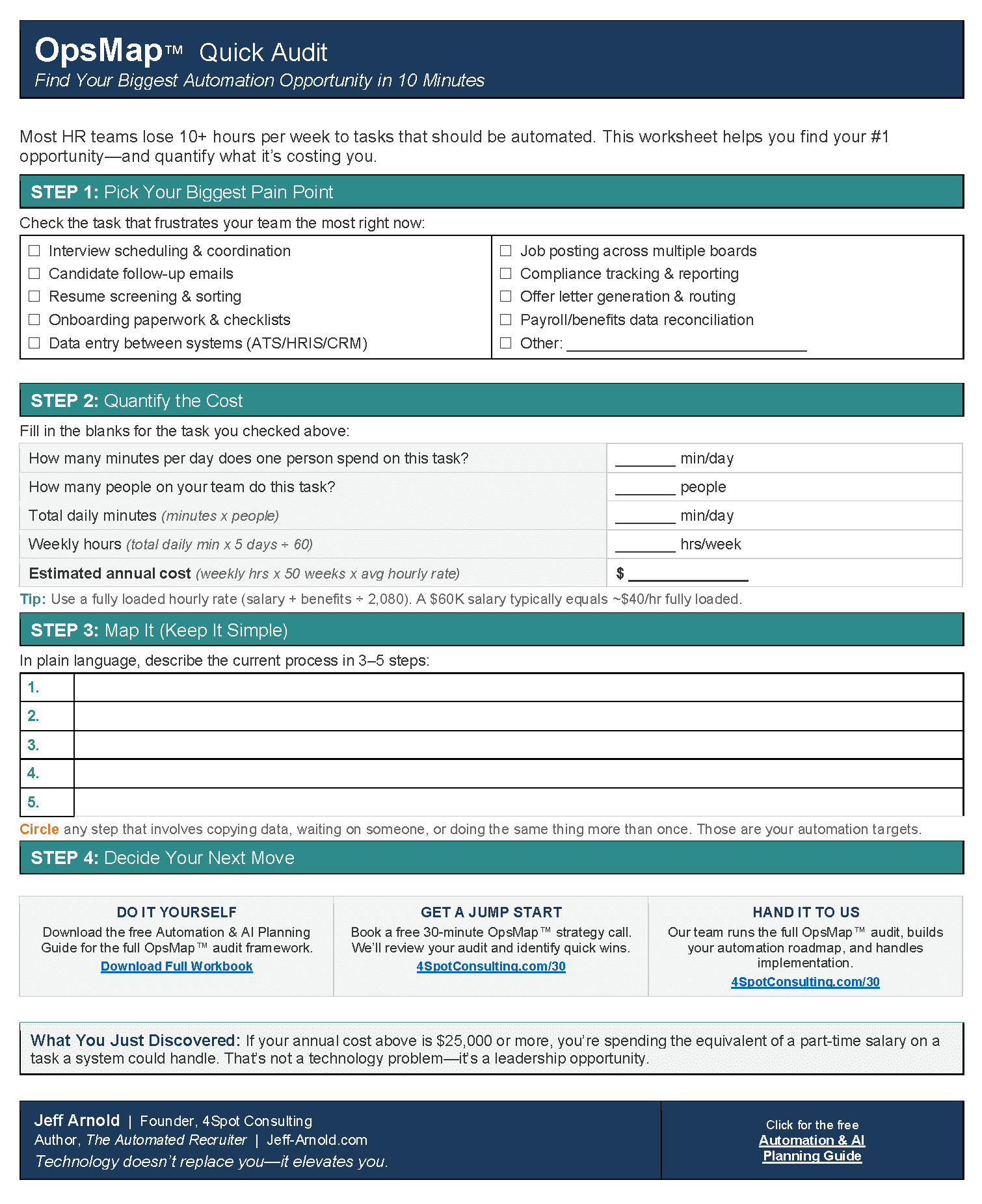
This allows organizations to predict future hiring needs, identify potential bottlenecks in the talent pipeline, forecast turnover rates, and even pinpoint the most effective sourcing channels or interview questions. For example, AI can help identify which interview questions correlate with higher employee performance or which job board delivers the most qualified candidates for specific roles. This strategic data intelligence enables HR and recruiting leaders to optimize their entire talent acquisition strategy, allocate resources more effectively, and proactively address challenges before they impact the business. At 4Spot Consulting, our OpsMap™ strategic audit helps uncover these data points and translate them into actionable automation opportunities, ensuring that every AI implementation is tied directly to measurable ROI and supports the company’s overarching strategic objectives, moving recruitment from a reactive function to a proactive, data-driven engine of growth.
The integration of AI into HR and recruitment is no longer an optional luxury but a strategic imperative for high-growth businesses. As we’ve explored, AI is revolutionizing everything from how we source and engage candidates to how we screen resumes, schedule interviews, onboard new hires, and derive critical insights from our data. These applications are not just about saving time; they are about enhancing the quality of hires, improving the candidate experience, reducing operational costs, and ultimately making the HR and recruiting functions more strategic and impactful to the organization’s bottom line. For organizations striving to scale efficiently and attract top talent in a competitive market, ignoring these advancements is simply not an option.
At 4Spot Consulting, we understand that implementing these technologies effectively requires a strategic-first approach. It’s not just about deploying a tool; it’s about understanding your unique business challenges and designing an automation and AI framework that delivers tangible, measurable results. Our OpsMap™ diagnostic is designed to identify precisely where these transformative AI applications can yield the greatest ROI for your business, ensuring that your investment translates directly into saved time, reduced errors, and increased scalability. Embracing AI intelligently means empowering your HR and recruiting teams to move beyond administrative burdens and focus on building the strong, agile workforce your business needs to thrive. The future of HR is automated, intelligent, and exceptionally human-centric.
If you would like to read more, we recommend this article: The Ultimate Guide to AI and Automation in HR & Recruitment
RELATED POST