Post: **Forging a Single Source of Truth with AI and Automation**
Navigating the Data Deluge: How Automation and AI Forge a Single Source of Truth for Modern Businesses
In today’s fast-paced business environment, data is hailed as the new oil. Yet, for many organizations, it feels more like a chaotic ocean – vast, fragmented, and difficult to navigate. Business leaders often grapple with disparate systems, where customer information lives in one CRM, project data in another tool, and HR records in a third. This data deluge isn’t just an inconvenience; it’s a significant bottleneck, undermining decision-making, increasing operational costs, and stifling the very scalability businesses strive for.
The absence of a “single source of truth” (SSOT) creates a cascade of inefficiencies. Imagine an HR director manually cross-referencing candidate data across multiple spreadsheets and platforms, or a sales leader trying to forecast revenue with incomplete customer histories. This manual reconciliation doesn’t just waste valuable employee time; it introduces human error, leading to outdated information, missed opportunities, and a perpetually reactive operational stance. High-value employees are bogged down in low-value work, diverting their expertise from strategic initiatives to data entry and verification.
The Cost of Fragmentation: More Than Just Time
The impact of fragmented data extends far beyond wasted hours. It directly affects the bottom line. Operational costs skyrocket due to redundant software subscriptions, the need for larger administrative teams, and the inevitable rework caused by inaccurate information. Scalability becomes a distant dream because every new process or client adds another layer of manual data management, rather than leveraging existing, unified systems. Compliance and data security also suffer; without a centralized, controlled environment, it’s harder to track data provenance, ensure privacy, and meet regulatory requirements.
Crucially, fragmented data hinders strategic agility. When insights are buried in silos, identifying trends, predicting market shifts, or understanding customer behavior becomes a speculative exercise rather than a data-driven one. Decisions are made on intuition or incomplete pictures, rather than the robust, real-time intelligence that a unified data ecosystem provides. This isn’t just about integrating tools; it’s about strategically structuring information so it serves as a coherent, actionable asset.
Forging Your Single Source of Truth with Automation and AI
At 4Spot Consulting, we approach the data fragmentation problem with a strategic framework we call OpsMesh™. It’s not about buying more software; it’s about intelligently connecting your existing systems and streamlining your data flows. Our process begins with an OpsMap™ – a deep diagnostic audit that uncovers every inefficiency, every data silo, and every opportunity for automation within your operations. We don’t just look at the symptoms; we identify the root causes of your data chaos.
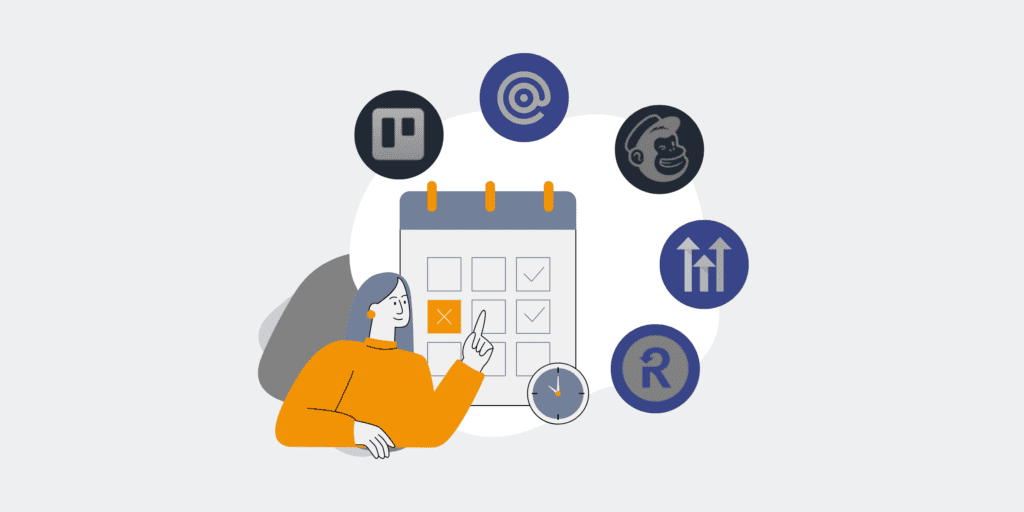
The solution isn’t always complex. Often, it involves leveraging powerful low-code automation platforms like Make.com, combined with targeted AI integrations, to create intelligent bridges between disparate systems. For instance, in recruiting, we’ve helped clients automate resume intake and parsing, enriching data with AI, and then seamlessly syncing it to their CRM like Keap. This transforms a multi-step, error-prone manual process into a single, automated workflow, ensuring every piece of candidate data is immediately and accurately captured in a centralized system.
Real-World Impact: Unifying HR Data for Enhanced Efficiency
Consider an HR tech firm we partnered with that was struggling under the weight of manual resume processing. Resumes arrived from various sources, each requiring manual entry and parsing before being added to their Keap CRM. This wasn’t just slow; it was a major source of data inconsistencies. Through an OpsMap™ analysis, we identified the exact bottlenecks. We then implemented an OpsBuild™ solution, utilizing Make.com to automate the entire process. Incoming resumes were automatically parsed, key data extracted and enriched using AI, and then synced directly into Keap, creating a single, reliable record for each candidate.
The outcome was transformative. The client saved over 150 hours per month, enabling their HR team to focus on strategic talent acquisition rather than administrative tasks. Their data accuracy improved dramatically, leading to better candidate matching and a smoother hiring process. This wasn’t just about saving time; it was about establishing a true single source of truth for their talent pipeline, empowering faster, smarter, and more profitable hiring decisions.
Embrace a Future of Unified Data and Strategic Growth
The path to a single source of truth is a journey that eliminates human error, reduces operational costs, and dramatically increases scalability. It liberates your high-value employees from the mundane, allowing them to focus on innovation and growth. By strategically implementing automation and AI, businesses can transform their data from a chaotic deluge into a clear, navigable stream, providing real-time insights for confident decision-making.
The question isn’t whether your business can afford to unify its data; it’s whether it can afford not to. The competitive landscape demands agility, precision, and efficiency that only a robust, automated, and AI-powered single source of truth can provide. Stop drowning in data and start leveraging it.
If you would like to read more, we recommend this article: The Strategic Imperative of Business Automation in the AI Era


RELATED POST