Post: From Data Chaos to Clarity: Automating for Real-Time Business Insights
Beyond the Spreadsheet: Automating Data Synchronization for Real-Time Business Insight
For too many businesses, critical operational data lives a fragmented existence. Customer records in the CRM, employee data in an HRIS, project statuses in a different tool, and financial figures tucked away in yet another system. The effort required to pull these disparate threads together into a cohesive narrative often falls to high-value employees armed with little more than a spreadsheet and a sigh. This manual dance between systems isn’t just inefficient; it’s a silent drain on productivity, accuracy, and ultimately, strategic growth.
The Silent Drain: Why Disconnected Data Costs More Than You Think
The insidious nature of disconnected data isn’t always immediately apparent. It manifests as a slow erosion of efficiency and opportunity. Think about the cascade of problems: duplicate data entries leading to inconsistent customer communication, outdated employee information causing payroll errors, or sales data that doesn’t sync with marketing efforts, resulting in missed leads. Each instance requires manual intervention, correcting mistakes, cross-referencing information, and delaying crucial reporting cycles. This isn’t just about wasting time; it’s about squandering the potential of your most valuable asset: your people. They’re bogged down in low-value reconciliation work when they should be focused on strategic initiatives that drive revenue and innovation.
Beyond the immediate operational costs, fragmented data poses a significant risk to scalability. As your company grows, the complexity of managing these disconnected systems compounds exponentially. What was once an annoying manual task becomes a full-blown bottleneck, preventing the agility required to respond to market changes or onboard new clients seamlessly. Without a unified view, making informed, real-time decisions becomes a gamble based on incomplete or outdated information.
Unifying Your Digital Ecosystem: The Path to a Single Source of Truth
The solution lies in creating a “Single Source of Truth” – a centralized, reliable repository of all your business-critical data, automatically updated and accessible across all relevant systems. This isn’t about buying one mega-platform that does everything; it’s about strategically integrating your existing best-of-breed tools, like Keap for CRM, your preferred HR platform, and project management software, so they communicate fluidly. The complexity here isn’t in the number of tools, but in the intelligent orchestration of data flow between them.
From Fragmented to Flawless: How Automation Bridges the Gaps
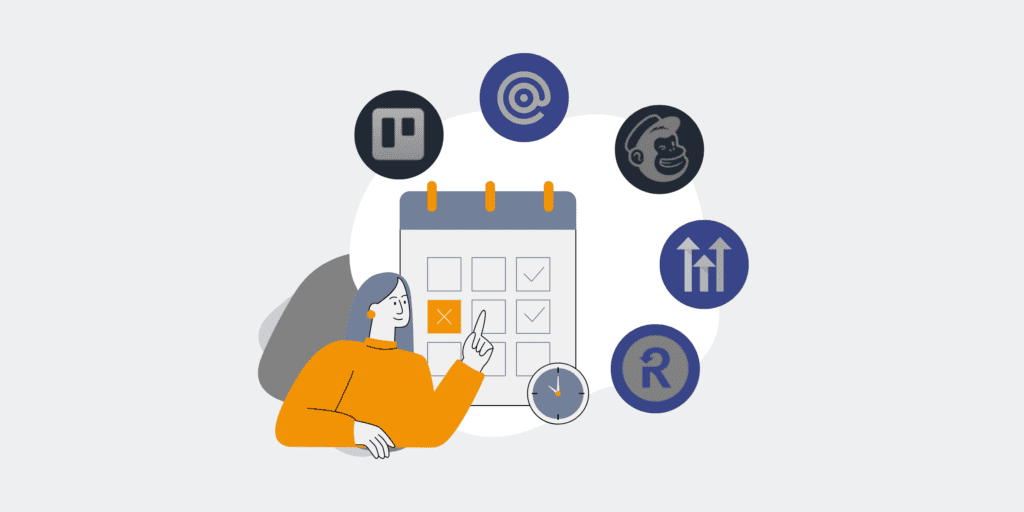
This is where intelligent automation platforms become indispensable. Tools like Make.com specialize in connecting dozens of SaaS systems, building robust bridges where manual data entry once caused chasms. Imagine a scenario where a new client signed in PandaDoc automatically creates a new record in Keap, triggers a project setup in your PM tool, and notifies the relevant sales and operations teams – all without a single copy-paste. This eliminates human error, ensures data consistency, and provides real-time visibility across your organization.
For instance, HR and recruiting operations, often awash in manual data handling, can be radically transformed. Resume intake, applicant tracking updates, onboarding document collection, and syncing employee data from recruitment platforms to HRIS can all be automated. This not only saves hundreds of hours but ensures that every piece of information is accurate and instantly available, freeing up HR leaders and recruiters to focus on strategic talent acquisition rather than administrative drudgery.
Leveraging AI for Enhanced Data Integrity and Insight
Once your data is flowing seamlessly and accurately, the next frontier is leveraging AI for even deeper impact. AI-powered operations can monitor data streams for anomalies, automatically categorize and enrich incoming information (like parsing resume details or extracting key contract clauses), and even predict future trends based on aggregated historical data. This moves businesses beyond mere data synchronization to true proactive intelligence, transforming raw information into actionable insights that inform everything from sales forecasts to resource allocation.
4Spot Consulting’s Approach: Strategic Integration for Measurable Outcomes
At 4Spot Consulting, our approach to data synchronization and operational excellence is rooted in our OpsMesh framework. We don’t just build automations; we architect strategic systems designed to eliminate bottlenecks, reduce operational costs, and significantly increase scalability. Our OpsMap™ diagnostic is the starting point, where we conduct a deep dive to uncover inefficiencies and pinpoint the precise opportunities for automation and AI integration that will yield the highest ROI.
We specialize in connecting platforms like Keap and HighLevel, ensuring your CRM data is always a single source of truth, backed up, and integrated with every other part of your business ecosystem. Our track record includes helping clients achieve significant production increases and substantial cost savings by removing the burden of low-value work from their high-value employees. We believe that technology should serve your business outcomes, not the other way around. Our hands-on leadership ensures you’re not just handed a solution, but guided through its implementation and optimization.
By automating data synchronization, businesses can finally move beyond the limitations of the spreadsheet-driven past. They can achieve real-time insight, make data-driven decisions with confidence, and empower their teams to focus on what truly matters. It’s about saving you 25% of your day, every day, by creating an operational environment that is precise, efficient, and endlessly scalable.
If you would like to read more, we recommend this article: Operational Excellence Through AI and Automation



RELATED POST