Post: AI-Powered Talent Sourcing for Modern HR
Beyond the Resume: How AI Transforms Candidate Sourcing for Modern HR
In today’s fiercely competitive talent landscape, the perennial challenge for HR leaders isn’t just finding candidates, but finding the *right* candidates efficiently and effectively. Traditional sourcing methods, heavily reliant on keyword searches and manual resume reviews, are increasingly proving to be bottlenecks. They consume valuable time, introduce unconscious bias, and often overlook hidden gems in vast talent pools. The pressure to fill critical roles quickly, with high-quality hires, demands a paradigm shift, and that shift is happening at the intersection of Artificial Intelligence and advanced automation.
The impact of outdated sourcing strategies reverberates throughout an organization. Prolonged time-to-hire translates directly into lost productivity and revenue. A suboptimal hire can lead to increased turnover and decreased team morale. For high-growth B2B companies, especially those operating at $5M+ ARR, these inefficiencies aren’t just minor irritations; they’re direct threats to scalability and profitability. Manual processes in candidate sourcing lead to human error, missed opportunities, and a significant drain on the high-value employees whose time should be focused on strategic initiatives, not administrative drudgery.
From Manual Mayhem to Intelligent Talent Discovery
Enter AI-powered candidate sourcing. This isn’t about replacing the human element but augmenting it with unparalleled analytical capabilities and speed. AI goes far beyond simple keyword matching; it understands context, intent, and relevance. Imagine a system that can not only identify a candidate with “marketing experience” but also discern the specific type of marketing, the industries they’ve worked in, the impact of their past roles, and their potential cultural fit – all by analyzing publicly available data, past interactions, and even predicting future performance indicators.
The Nuances of AI in Sourcing
At its core, AI for sourcing leverages machine learning algorithms to process and interpret vast quantities of structured and unstructured data. This includes:
- **Intelligent Resume Parsing & Enrichment:** Moving beyond simple data extraction, AI can deeply understand the content of resumes and cover letters, identifying skills, experiences, and accomplishments with greater accuracy. It then enriches this data by cross-referencing public profiles (LinkedIn, GitHub, etc.), providing a more holistic view of a candidate.
- **Semantic Search & Matching:** Instead of rigid keyword searches, AI uses natural language processing (NLP) to understand the meaning behind job descriptions and candidate profiles. This allows for more intuitive and accurate matching, surfacing candidates who might not use the exact jargon but possess the equivalent skills and experience.
- **Predictive Analytics:** AI can analyze historical data to predict which candidates are most likely to succeed in a given role, which are most likely to accept an offer, and even which might be at risk of turnover. This empowers HR teams to make data-driven decisions at every stage.
- **Passive Candidate Identification:** A significant portion of top talent isn’t actively looking for a job. AI can proactively identify passive candidates who align with future hiring needs, building robust talent pipelines long before a vacancy even arises.
- **Bias Reduction:** When designed and implemented thoughtfully, AI can help mitigate unconscious bias by focusing solely on relevant qualifications and skills, rather than demographic factors that can unintentionally creep into human decision-making.
Integrating these AI capabilities with existing CRM and ATS platforms, like Keap or HighLevel, is where the real power lies. A unified “single source of truth” ensures that all candidate data is up-to-date, accessible, and actionable across the entire recruitment lifecycle, from initial outreach to offer management.
Transforming Recruitment with 4Spot Consulting’s Strategic Approach
At 4Spot Consulting, we believe that technology should serve strategy, not dictate it. Our OpsMesh framework is designed to integrate disparate systems and introduce AI where it delivers tangible ROI. For candidate sourcing, this means an approach that doesn’t just bolt on an AI tool, but strategically embeds it into your existing HR operations, optimizing workflows from end-to-end.
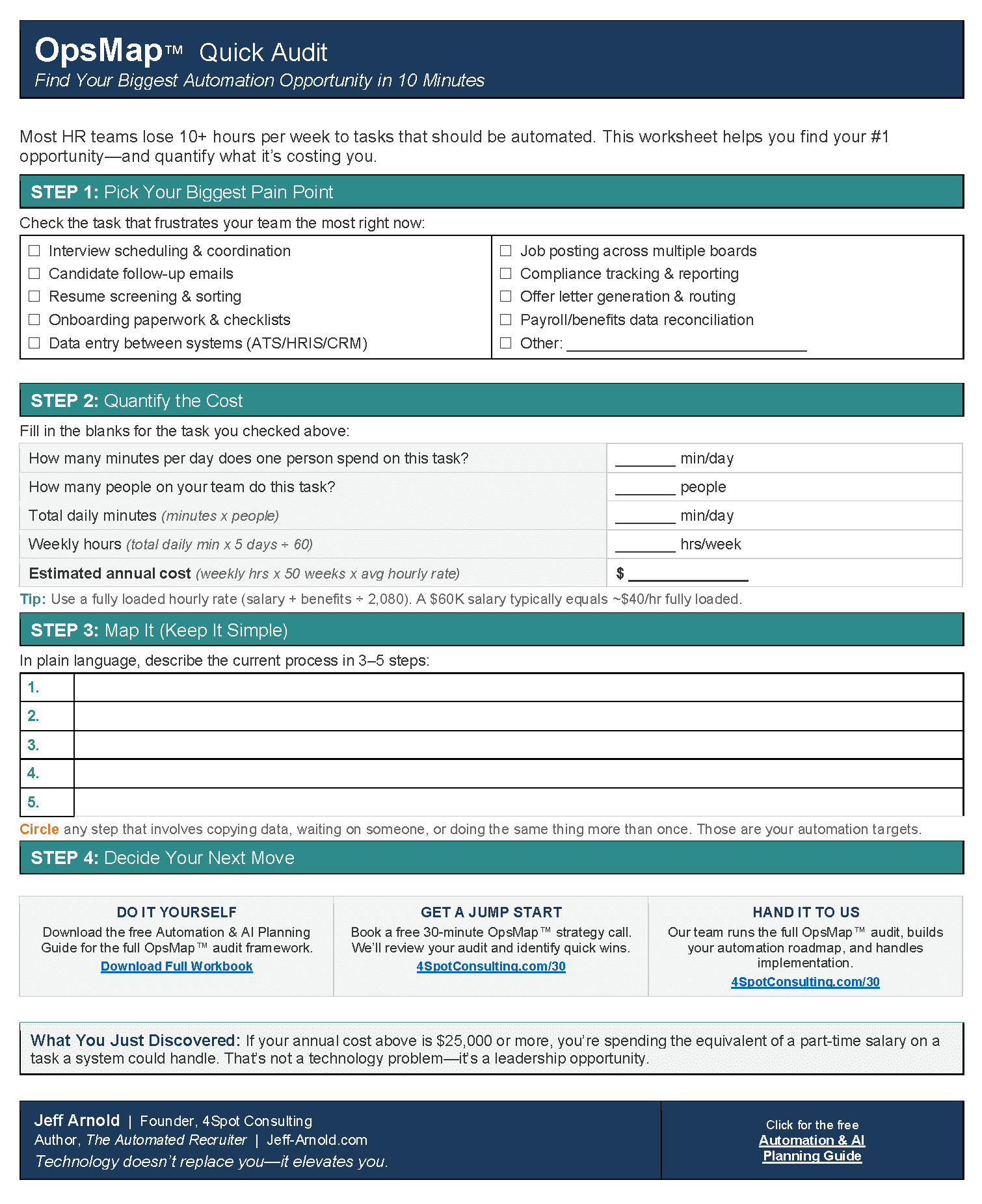
Our OpsMap™ diagnostic identifies the specific bottlenecks in your current sourcing process and uncovers precisely where AI and automation can yield the greatest impact. We then design and implement custom solutions through OpsBuild, connecting tools like Make.com to orchestrate seamless data flows between sourcing platforms, CRMs, and communication tools. This ensures that the insights gleaned by AI are immediately actionable, reducing manual data entry and accelerating the entire recruitment pipeline.
Imagine the HR firm we helped save over 150 hours per month. By automating their resume intake and parsing using Make.com and AI enrichment, then syncing everything to Keap CRM, they transformed from “drowning in manual work to having a system that just works.” This kind of outcome is precisely what we aim for – not just efficiency gains, but a fundamental shift in how you acquire and manage talent, allowing your high-value employees to focus on human connection and strategic talent management.
The future of candidate sourcing isn’t just about finding candidates faster; it’s about finding the *best* candidates more intelligently, more strategically, and with fewer resources. By embracing AI and automation, HR leaders can move beyond the reactive hunt for talent and build a proactive, scalable, and highly effective talent acquisition machine.
If you would like to read more, we recommend this article: OpsMesh: The Integrated Automation Strategy Driving Modern Business Scalability