Post: Shatter HR & Recruiting Data Silos with Intelligent Automation
Beyond the Silo: Unifying HR and Recruiting Data with Intelligent Automation
In today’s fast-paced business environment, the promise of data-driven decision-making is often hampered by a silent, insidious enemy: data silos. While companies invest heavily in specialized software for HR, recruiting, payroll, and performance management, these systems frequently operate in isolation, creating fragmented insights and compounding manual effort. For HR leaders, COOs, and recruitment directors, this isn’t just an inconvenience; it’s a significant drain on productivity, accuracy, and ultimately, your bottom line. At 4Spot Consulting, we’ve witnessed firsthand how this fragmentation stifles growth and introduces unnecessary risk, and we’re committed to demonstrating a more unified, automated path forward.
The Hidden Cost of Disconnected Data
Imagine your recruitment team diligently gathering candidate data in an Applicant Tracking System (ATS), only for the HR team to manually re-enter much of that same information into a Human Resources Information System (HRIS) once an offer is accepted. Now consider payroll, benefits administration, and performance reviews, each potentially residing in its own distinct platform. This scenario is not uncommon; it’s the norm for many high-growth B2B companies. The consequences extend far beyond mere double-entry. Manual data transfers are error-prone, leading to compliance risks, delayed onboarding, and frustrated employees. They also consume valuable time from high-value employees who could be focusing on strategic initiatives rather than administrative drudgery.
Furthermore, without a single source of truth, it becomes incredibly difficult to generate comprehensive reports or derive meaningful insights. How can you accurately measure time-to-hire, cost-per-hire, or employee retention rates if the underlying data points are scattered across disparate systems and presented in incompatible formats? This lack of holistic visibility hinders strategic planning and limits your ability to adapt quickly to market changes or internal challenges. It’s an operational bottleneck that many don’t realize they’re experiencing until they see the alternative.
Building a Unified Data Ecosystem Through Automation
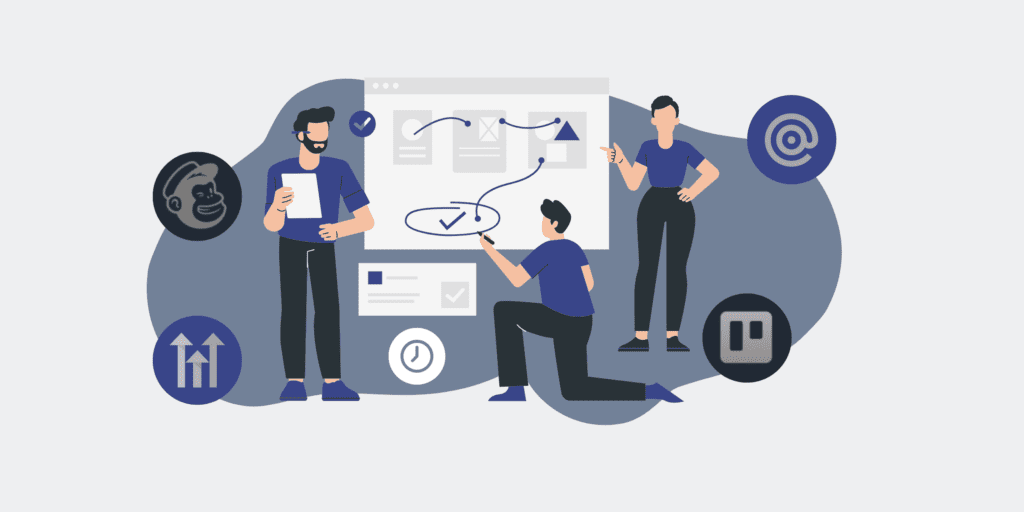
The solution isn’t to buy one monolithic software package that claims to do everything (and often does nothing perfectly). Instead, it’s about intelligently connecting your existing best-of-breed systems to create a cohesive data ecosystem. This is where strategic automation and AI integration come into play. By leveraging powerful low-code platforms like Make.com, we can establish seamless data flows between your ATS, HRIS, CRM (like Keap or HighLevel), payroll, and other critical business applications. This eliminates manual data entry, reduces human error, and ensures that every department operates from the same, up-to-date information.
From Candidate to Employee: An Automated Journey
Consider the journey from a promising candidate to a fully onboarded employee. With a unified automation strategy, once a candidate accepts an offer in your ATS, the system can automatically trigger a series of actions:
- Create a new employee record in your HRIS.
- Initiate background checks and compliance forms via an integrated document management tool (e.g., PandaDoc).
- Set up payroll information.
- Provision necessary IT resources (email, software licenses).
- Notify relevant department heads and send a welcome email to the new hire.
This entire process, which often involves multiple manual touchpoints and significant delays, can be executed with minimal human intervention, ensuring a smooth, positive experience for both the new employee and your internal teams. It’s about leveraging technology to serve your people and processes, not overwhelm them.
4Spot Consulting’s Approach: OpsMesh™ for Data Harmony
At 4Spot Consulting, our OpsMesh™ framework is specifically designed to address these challenges. We start with an OpsMap™ diagnostic, a strategic audit that uncovers every inefficiency and identifies opportunities to connect disparate systems and eliminate manual bottlenecks. We then move to OpsBuild™, where our experts implement robust automation and AI solutions that create a single source of truth for your critical HR and recruiting data. This isn’t about replacing human talent but empowering it, allowing your high-value employees to focus on engagement, strategy, and growth rather than transactional tasks.
One HR tech client, for instance, was able to save over 150 hours per month by automating their resume intake and parsing processes using Make.com and AI enrichment, seamlessly syncing data to their Keap CRM. This tangible outcome wasn’t just about time savings; it was about improving data accuracy, reducing the risk of missing top talent, and providing their recruiters with real-time, comprehensive candidate profiles. The feedback was clear: “We went from drowning in manual work to having a system that just works.” This is the power of a strategically unified, automated operation.
Breaking down data silos in HR and recruiting isn’t merely an administrative goal; it’s a strategic imperative for any business aiming for scalability, accuracy, and operational excellence. By connecting your systems with intelligent automation, you’re not just saving time; you’re building a more resilient, responsive, and ultimately, more profitable organization. The future of efficient operations lies in integration, not isolation.
If you would like to read more, we recommend this article: The OpsMesh™ Framework: Your Blueprint for Business Automation Mastery





RELATED POST