Post: Your Blueprint to AI-Powered Candidate Screening
How to Streamline Candidate Screening with AI Automation: A Step-by-Step Guide
In today’s competitive talent landscape, the sheer volume of applications can overwhelm even the most robust HR teams, leading to missed opportunities, prolonged hiring cycles, and increased costs. Manual candidate screening is not only time-consuming but also prone to human error and unconscious bias. Integrating AI automation into your screening process offers a transformative solution, enabling your organization to efficiently identify top talent, reduce operational load, and focus on high-value interactions. This guide provides a practical, actionable framework for implementing AI-powered candidate screening to save your team valuable time and enhance hiring accuracy.
Step 1: Define Your Ideal Candidate Profile and Screening Criteria
Before deploying any AI tool, a crystal-clear understanding of your ideal candidate is paramount. This isn’t just about job titles; it involves detailing specific skills (both hard and soft), experience levels, educational backgrounds, cultural fit indicators, and any non-negotiable requirements. Beyond resume keywords, consider competencies, project experience, and even subtle indicators of potential. Articulate these criteria in a structured, measurable way. This foundational step ensures that your AI models are trained and configured to accurately identify and prioritize candidates who genuinely align with your needs, preventing the automation of existing biases and maximizing the relevance of the screened pool. A well-defined profile acts as the blueprint for your AI’s decision-making.
Step 2: Select and Integrate AI-Powered Screening Tools
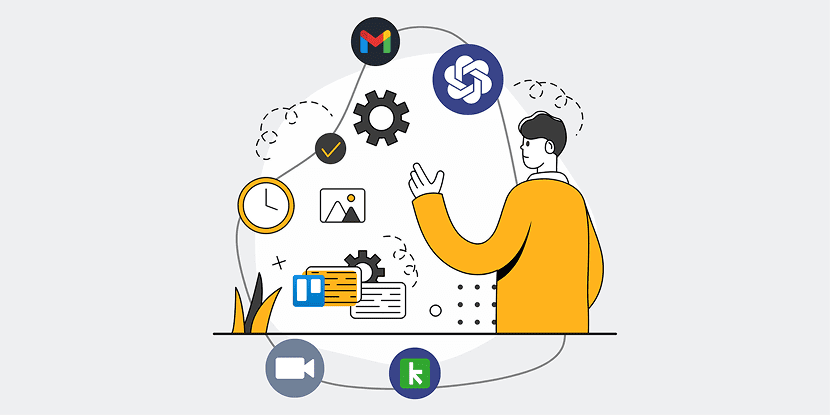
The market offers a range of AI screening solutions, from advanced Applicant Tracking System (ATS) integrations to specialized AI platforms. Your choice should align with your existing tech stack, budget, and specific screening needs. Look for tools that offer natural language processing (NLP) to analyze resumes and cover letters, machine learning for predictive matching, and customizable scoring algorithms. The key is seamless integration. Your chosen AI tool must connect efficiently with your current ATS, CRM, and other HR systems to ensure a continuous, automated workflow. Utilizing powerful integration platforms can bridge gaps between disparate systems, allowing for real-time data flow and preventing data silos, which is critical for a smooth operational transition and accurate candidate assessment.
Step 3: Configure AI for Initial Resume and Application Review
Once integrated, the next critical step is to configure your AI to perform the initial review of applications. This involves training the AI on your defined candidate profiles, keywords, and specific screening criteria established in Step 1. Set parameters for automatic scoring, flagging resumes that meet certain thresholds, or identifying red flags like missing certifications or insufficient experience. Leverage AI’s capability to parse structured and unstructured data, extracting relevant information from resumes, cover letters, and even portfolio links. This initial configuration significantly reduces the manual effort involved in sifting through hundreds or thousands of applications, ensuring that only the most promising candidates proceed to the next stage, thereby optimizing the recruiter’s time for deeper engagement and evaluation.
Step 4: Automate Initial Candidate Communication and Scheduling
Beyond screening, AI can revolutionize the early stages of candidate engagement. Configure your AI system to automate initial communications such as acknowledgment emails, requests for additional information (e.g., skill assessments, video introductions), and even preliminary interview scheduling. By integrating with calendaring tools, AI can identify available slots for both candidates and hiring managers, sending out invites and reminders without human intervention. This not only provides a professional, prompt candidate experience but also frees up significant administrative time for your HR team. Automation at this stage ensures that promising candidates are moved forward swiftly, reducing the risk of them being scooped up by competitors and maintaining momentum in your hiring pipeline.
Step 5: Implement Bias Detection and Mitigation Strategies
While AI offers efficiency, it’s crucial to address the potential for algorithmic bias. Design your AI screening process with explicit strategies for bias detection and mitigation. This involves regularly auditing your AI’s outputs, evaluating its performance across diverse candidate pools, and critically examining the data it’s trained on to ensure fairness. Utilize tools that anonymize certain demographic data during initial screening or flag potentially biased language in job descriptions. Transparency in your AI’s decision-making process is vital. Continuous monitoring and recalibration of your AI models, ideally with human oversight, are essential to ensure that your automated screening remains equitable, diverse, and compliant with fair hiring practices, reinforcing your commitment to an inclusive workplace.
Step 6: Review, Iterate, and Optimize AI Performance
Implementing AI automation is not a one-time setup; it’s an ongoing process of refinement and optimization. Regularly review the performance of your AI screening system by comparing its outcomes with those of human reviewers, analyzing conversion rates, and gathering feedback from hiring managers. Track key metrics such as time-to-hire, candidate quality, and diversity metrics. Use this data to iterate on your AI’s configuration, adjust criteria, and fine-tune algorithms. As your hiring needs evolve or market conditions shift, your AI models should adapt. This continuous loop of evaluation and adjustment ensures that your AI system remains highly effective, delivering consistent value and continuously improving your talent acquisition strategy, keeping your operations lean and agile.
If you would like to read more, we recommend this article: Mastering Recruitment Automation for High-Growth Companies