Post: Transformative AI for HR & Recruiting
12 Transformative Ways AI is Reshaping HR & Recruiting Operations
The landscape of HR and recruiting is undergoing a seismic shift, driven by the relentless pace of technological innovation, particularly in Artificial Intelligence. For too long, HR professionals have been bogged down in repetitive, administrative tasks—from manual resume screening to scheduling endless interviews. This isn’t just inefficient; it’s a drain on valuable human capital and a significant bottleneck to growth for high-growth B2B companies aiming for $5M+ ARR. The promise of AI isn’t to replace the human element but to augment it, freeing up your team to focus on strategic initiatives that truly impact talent acquisition, employee development, and retention. At 4Spot Consulting, we’ve seen firsthand how integrating AI and automation can eliminate human error, reduce operational costs, and dramatically increase scalability. We understand that business leaders value time and outcomes, which is why we approach AI not as a buzzword, but as a practical tool for tangible ROI. This article explores 12 transformative ways AI is not just changing the game, but actively reshaping the future of HR and recruiting operations, providing actionable insights for professionals ready to embrace the next era of efficiency and strategic impact.
1. Intelligent Candidate Sourcing & Matching
The traditional method of sifting through countless resumes and job boards to find the perfect candidate is not only time-consuming but often inefficient. AI is revolutionizing this initial stage by transforming how HR and recruiting professionals identify and engage with top talent. Advanced AI algorithms can now analyze vast datasets from various sources—internal databases, professional networks, and public profiles—to pinpoint candidates whose skills, experience, and even cultural fit align precisely with your job requirements. Instead of keyword matching, AI understands context, nuances, and predicts potential success within your organization. This means moving beyond reactive hiring to proactive talent acquisition, where potential candidates are identified before they even apply. For high-growth companies, this translates into a significantly reduced time-to-hire and access to a more diverse and qualified talent pool that might otherwise be overlooked. Imagine a system that learns from past successful hires and refines its search criteria autonomously, continuously improving its recommendations. This capability not only saves hundreds of hours for recruiters but also ensures a higher quality of initial candidate engagement, setting the stage for more efficient hiring pipelines. At 4Spot Consulting, we integrate such AI capabilities with robust automation platforms like Make.com to create seamless sourcing workflows, eliminating manual data entry and ensuring that every promising lead is nurtured effectively.
2. Automated Resume Screening & Parsing
The sheer volume of applications for a single role can be overwhelming, leading to countless hours spent on manual resume review, which is prone to human error and unconscious bias. AI-powered resume screening tools are changing this paradigm by automating the initial sift. These tools can rapidly parse resumes, extract key information like skills, education, and work experience, and then score candidates against predefined job criteria. Beyond simple keyword matching, modern AI can interpret context, identify transferable skills, and even detect red flags or inconsistencies that might be missed by the human eye. This drastically reduces the time human recruiters spend on low-value tasks, allowing them to focus on evaluating the most qualified candidates. Furthermore, by standardizing the screening process, AI helps mitigate unconscious biases that can creep into manual reviews, ensuring a fairer and more equitable evaluation of all applicants. For businesses, this means faster recruitment cycles, reduced hiring costs, and a more diverse workforce. We’ve helped clients save over 150 hours per month by automating their resume intake and parsing processes, seamlessly syncing enriched data into their CRM systems, proving that AI isn’t just about speed, it’s about precision and fairness.
3. AI-Powered Interview Scheduling & Coordination
Scheduling interviews is notoriously one of the most tedious and time-consuming aspects of the recruitment process, often involving endless email exchanges and calendar conflicts between candidates and multiple interviewers. AI is simplifying this logistical nightmare through intelligent scheduling platforms. These tools can automatically identify optimal interview slots based on the availability of all parties, send out invitations, manage confirmations, and even handle rescheduling with minimal human intervention. Integrating with calendars like Google Calendar or Outlook, AI ensures that everyone involved is aligned and updated in real-time. This not only dramatically improves the candidate experience by providing quick and seamless scheduling but also frees up significant administrative time for recruiters and hiring managers. Beyond basic scheduling, some AI tools can also prepare interviewers with relevant candidate information and even suggest questions based on the candidate’s background and the role requirements. This level of automation means your high-value employees are no longer bogged down in calendar Tetris, but rather focused on engaging deeply with candidates. Our OpsBuild™ framework focuses on implementing these types of automations, eliminating operational bottlenecks that drain productivity.
4. Enhanced Candidate Experience Through Chatbots
In today’s competitive talent market, providing an exceptional candidate experience is paramount. Candidates often have numerous questions about the role, company culture, application status, or interview process, and waiting for human responses can lead to frustration and disengagement. AI-powered chatbots are stepping in to provide instant, 24/7 support. These intelligent virtual assistants can answer frequently asked questions, guide candidates through the application process, provide updates on their application status, and even pre-qualify candidates based on initial responses. By offering immediate assistance, chatbots improve candidate satisfaction and engagement, reducing drop-off rates and portraying your organization as innovative and candidate-centric. For HR teams, this translates to fewer incoming queries, allowing them to focus on more complex, strategic interactions. Furthermore, chatbots can collect valuable data on candidate queries, providing insights into common pain points or areas where communication can be improved. This proactive, always-on support ensures that every candidate feels valued and informed, enhancing your employer brand and attracting top talent. We leverage tools like Bland AI to enable conversational AI experiences, creating responsive and engaging touchpoints throughout the hiring journey.
5. Predictive Analytics for Turnover & Retention
Employee turnover is a significant cost and disruption for any business, and understanding who might leave and why is crucial for proactive retention strategies. AI-driven predictive analytics tools analyze vast amounts of employee data—performance reviews, engagement surveys, tenure, compensation, manager feedback, and even external market factors—to identify patterns and predict which employees are at risk of leaving. These insights allow HR leaders to intervene proactively with targeted retention strategies, such as personalized development plans, mentorship opportunities, or adjustments to compensation and benefits. Beyond predicting turnover, AI can also identify factors contributing to high retention rates, helping organizations replicate success. This shifts HR from a reactive firefighting role to a strategic, data-driven function. For high-growth companies, minimizing unwanted attrition protects institutional knowledge, reduces recruitment costs, and maintains team stability critical for scaling. Understanding these dynamics is a cornerstone of our OpsMesh™ framework, which helps businesses build resilient, data-informed HR strategies. By leveraging these insights, businesses can cultivate a more stable, engaged, and productive workforce, directly impacting the bottom line.
6. Personalized Employee Onboarding Journeys
The onboarding experience is critical for new hires, impacting everything from productivity to long-term retention. A disjointed or generic onboarding process can leave new employees feeling lost and disengaged. AI is transforming onboarding by enabling highly personalized and adaptive journeys. Instead of a one-size-fits-all approach, AI can tailor content, tasks, and resources based on an employee’s role, department, prior experience, and even learning style. This includes delivering relevant training modules, connecting new hires with appropriate mentors, and ensuring all necessary paperwork and system access are completed smoothly and efficiently. AI-powered tools can also monitor progress, answer common questions through chatbots, and send automated reminders, ensuring a consistent and supportive experience. For HR teams, this means less manual coordination and more time to focus on meaningful human connection. For new employees, it means faster integration, higher engagement, and quicker time-to-productivity. This strategic approach to onboarding, empowered by AI and automation, reduces human error, boosts new hire confidence, and significantly improves retention rates right from the start. Our automation expertise ensures these complex, multi-system onboarding processes are seamless and self-driven.
7. AI-Driven Learning & Development Recommendations
In a rapidly evolving business landscape, continuous learning and development (L&D) are vital for keeping employees skilled and engaged. However, identifying the right training for each individual and delivering it effectively can be a challenge. AI is revolutionizing L&D by providing personalized learning paths and recommendations. By analyzing an employee’s current skills, career aspirations, performance data, and the evolving needs of the organization, AI platforms can suggest specific courses, modules, articles, or mentorship opportunities. This ensures that L&D efforts are highly relevant and impactful, fostering continuous skill growth and career progression. For employees, it means access to tailored development opportunities that align with their goals and the company’s strategic direction. For HR and L&D teams, it transforms program management from a broad-brush approach to a precise, data-driven strategy, optimizing training investments and improving ROI. This also helps identify skill gaps within the organization proactively, allowing for targeted upskilling initiatives that future-proof your workforce. By fostering a culture of personalized learning, AI helps retain top talent and builds a more agile and capable workforce. We believe in automating these systems to ensure employees have access to the resources they need, when they need them.
8. Automated HR Help Desks & Employee Support
Employees frequently have questions about benefits, policies, payroll, or IT support, and responding to these queries manually can consume a significant portion of HR’s time, diverting focus from more strategic tasks. AI-powered HR help desks and virtual assistants are transforming employee support by providing instant, accurate answers to common inquiries. Leveraging natural language processing (NLP), these systems can understand and respond to employee questions across various channels, including internal chat platforms, email, or dedicated portals. This ensures employees receive timely support 24/7, improving satisfaction and reducing the need for direct HR intervention for routine matters. Complex or sensitive issues can still be escalated to human HR professionals, but the AI handles the bulk of transactional queries, freeing up HR to focus on high-touch, empathetic support. For businesses, this means increased efficiency, reduced operational costs, and a more responsive and accessible HR function. It also ensures consistent policy application and information dissemination. By automating these first-line support functions, organizations can provide a superior employee experience while optimizing their HR team’s bandwidth, a key differentiator we help high-growth companies achieve.
9. Compliance Monitoring & Risk Management
Navigating the complex and ever-changing landscape of labor laws, industry regulations, and internal policies is a significant challenge for HR, with non-compliance carrying substantial legal and financial risks. AI is emerging as a powerful ally in compliance monitoring and risk management. AI systems can continuously scan and analyze employment contracts, policies, internal communications, and even public data to identify potential compliance breaches or emerging risks. For example, AI can flag unusual activity in expense reports, detect non-adherence to data privacy regulations (like GDPR or CCPA), or monitor for potentially discriminatory language in job descriptions or performance reviews. These systems provide real-time alerts and insights, enabling HR and legal teams to address issues proactively before they escalate into major problems. This not only protects the organization from legal repercussions but also fosters a culture of ethical conduct and fairness. For businesses, AI-driven compliance ensures greater transparency, reduces the burden of manual audits, and provides an essential layer of protection in an increasingly regulated environment. Our focus on eliminating human error through automation naturally extends to ensuring compliance is baked into every automated process.
10. Sentiment Analysis for Employee Feedback
Understanding employee sentiment is crucial for fostering a positive work environment, driving engagement, and preventing issues before they escalate. However, manually analyzing qualitative feedback from surveys, reviews, and open comments can be incredibly time-consuming and subjective. AI-powered sentiment analysis tools are changing this by automatically processing large volumes of text data to identify underlying emotions, attitudes, and themes. These tools can categorize feedback as positive, negative, or neutral, and even pinpoint specific topics causing dissatisfaction or generating excitement. For instance, if many employees express “frustration” about “meeting overload,” AI can highlight this as a prevalent negative sentiment. This provides HR leaders with objective, data-driven insights into employee morale, cultural health, and specific areas for improvement. It allows organizations to move beyond anecdotal evidence and respond strategically to the real concerns of their workforce. By quickly identifying trends and hotspots of sentiment, HR can implement targeted interventions to boost engagement, improve communication, and address systemic issues, leading to a more engaged and productive workforce. Our systems focus on making data actionable, and sentiment analysis is a prime example.
11. Optimizing Workforce Planning & Resource Allocation
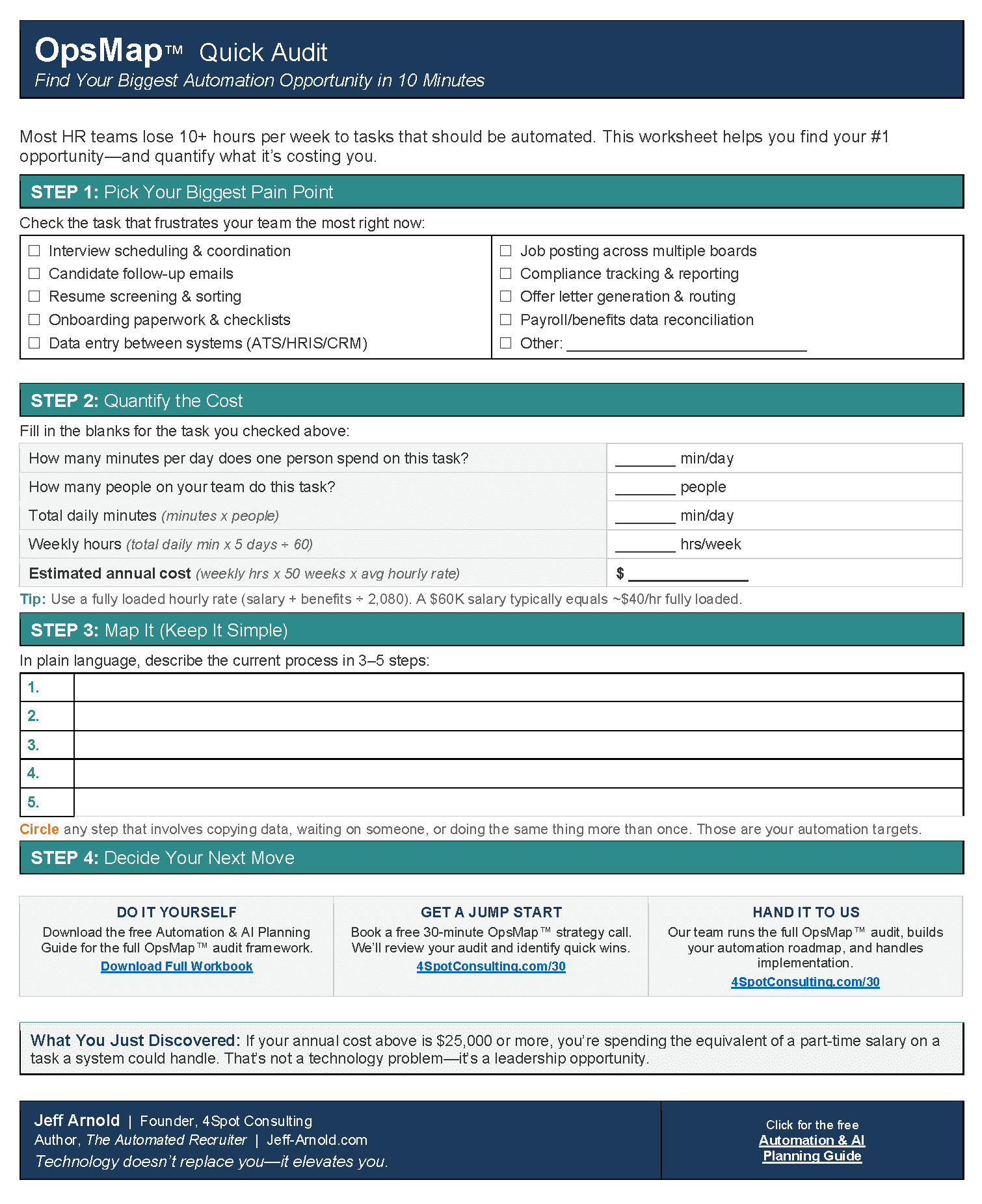
Effective workforce planning is essential for high-growth companies to ensure they have the right talent in the right roles at the right time. Traditional planning often relies on historical data and manual forecasting, which can be inaccurate in dynamic markets. AI is transforming workforce planning by leveraging advanced analytics to predict future talent needs, optimize resource allocation, and identify potential skill gaps. AI models can analyze internal data (employee skills, performance, project assignments) and external factors (market trends, economic forecasts, competitor activity) to create highly accurate staffing projections. This enables HR to proactively develop recruitment strategies, initiate upskilling programs, or plan for contingent workforce needs. For businesses, this means preventing costly overstaffing or understaffing, optimizing talent utilization, and ensuring strategic alignment between HR and business objectives. AI can also simulate different workforce scenarios, helping leaders make informed decisions about organizational design and talent deployment. By providing a data-driven blueprint for future talent needs, AI empowers organizations to build a resilient and agile workforce, ready to meet future challenges and capitalize on opportunities. Our OpsMap™ diagnostic helps identify how these efficiencies can be built into your existing systems.
12. Ethical AI in Hiring to Reduce Bias
While AI offers immense potential for efficiency and objectivity, there’s a critical need to ensure its ethical application, especially in hiring, to prevent the perpetuation or amplification of existing human biases. The promise of ethical AI in hiring is to actively reduce bias, creating a more fair and diverse recruitment process. This involves careful design, training, and continuous auditing of AI algorithms. Ethical AI systems are developed with diverse datasets to avoid bias towards specific demographics and are often programmed with explainable AI (XAI) capabilities, allowing transparency into how decisions are made. They can identify and flag potentially biased language in job descriptions or interview questions, ensuring equitable treatment of all candidates. Furthermore, some AI tools focus on evaluating skills and aptitudes rather than relying on traditional resume filters that might implicitly favor certain backgrounds. The goal is not just to automate, but to automate responsibly, creating a level playing field where talent is recognized irrespective of gender, race, or background. Implementing ethical AI requires vigilance and a commitment to fairness, which is a core value we uphold at 4Spot Consulting, ensuring our automation and AI solutions promote equity and strategic advantage without compromise.
The integration of AI into HR and recruiting is not merely a technological upgrade; it’s a strategic imperative for any high-growth company looking to optimize operations, reduce costs, and gain a competitive edge in the talent market. From intelligent sourcing and automated screening to personalized onboarding and predictive analytics, AI empowers HR professionals to move beyond administrative overhead and embrace a more strategic, data-driven, and human-centric role. By eliminating human error and automating repetitive tasks, AI frees up your most valuable asset—your people—to focus on what truly matters: building relationships, fostering culture, and driving business growth. The future of HR is one where technology and human expertise converge, creating more efficient, equitable, and impactful talent operations. Are you ready to harness these transformations and unlock new levels of productivity and strategic advantage?
If you would like to read more, we recommend this article: Unlock Your Business’s Full Potential with Automation & AI